
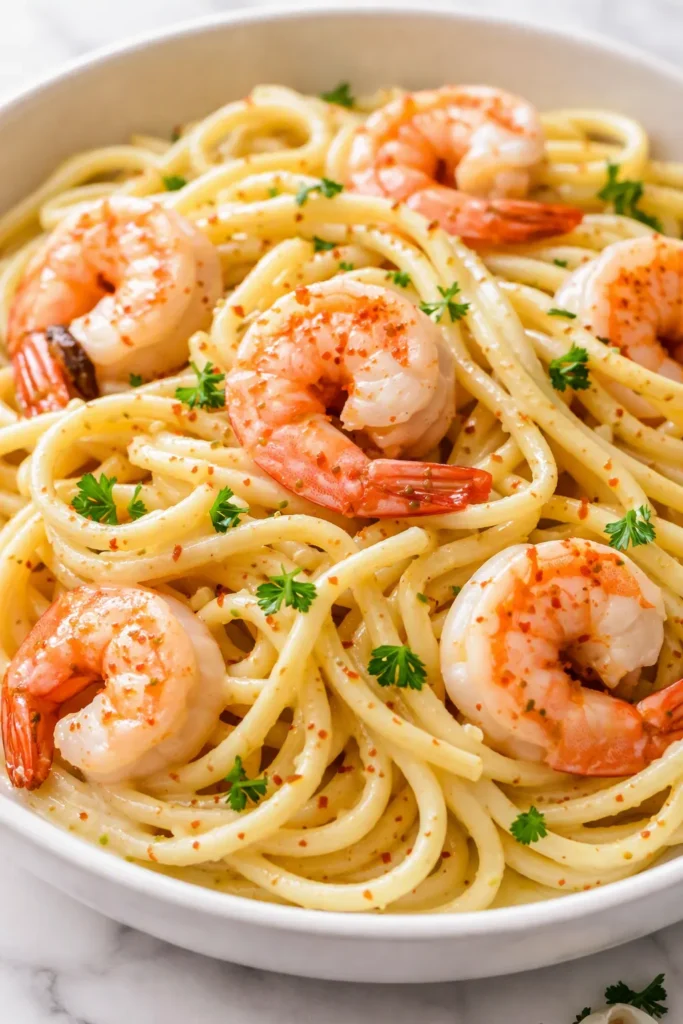
There’s a moment when the garlic hits the butter and the whole kitchen smells like a little Italian bistro — that’s the exact second my family starts drifting in, asking if dinner’s almost ready. This creamy garlic butter shrimp pasta is the reason my kids have stopped asking for takeout on weeknights. It’s rich, it’s garlicky, it tastes like something you’d pay twenty bucks for, and it’s on the table in 25 flat minutes.
The short version: Juicy seared shrimp, silky Parmesan cream sauce, and pasta that soaks up every drop — done in 25 minutes and my kids have never once left leftovers.
I’ve been making this for about three years now, and it’s the dish my husband requests for his birthday every single year. I’ve made it so many times I can almost do it in my sleep, and honestly? The version I’m sharing today is the one I’ve settled on after way too many batches of sauce that broke, shrimp that bounced like rubber, and more than a few garlic disasters.
- Serves: 4 as a main dish
- Hands-On Time: 15 min | Total Time: 25 min
- Difficulty: Easy — even on a school night when everyone’s hungry
- Cost per serving: ~$4.50
- Calories: ~620 per serving
- Dietary Notes: Adaptable for dairy-free and gluten-free (see swaps below)
(Photo above: overhead shot of the finished pasta in a wide white ceramic bowl, creamy sauce coating every strand of fettuccine, a few seared shrimp arranged on top with a sprinkle of fresh parsley and cracked black pepper, shot in warm late-afternoon light on a wooden kitchen table with a linen napkin tucked to the side.)
The One Step Everyone Skips When Making Shrimp Pasta
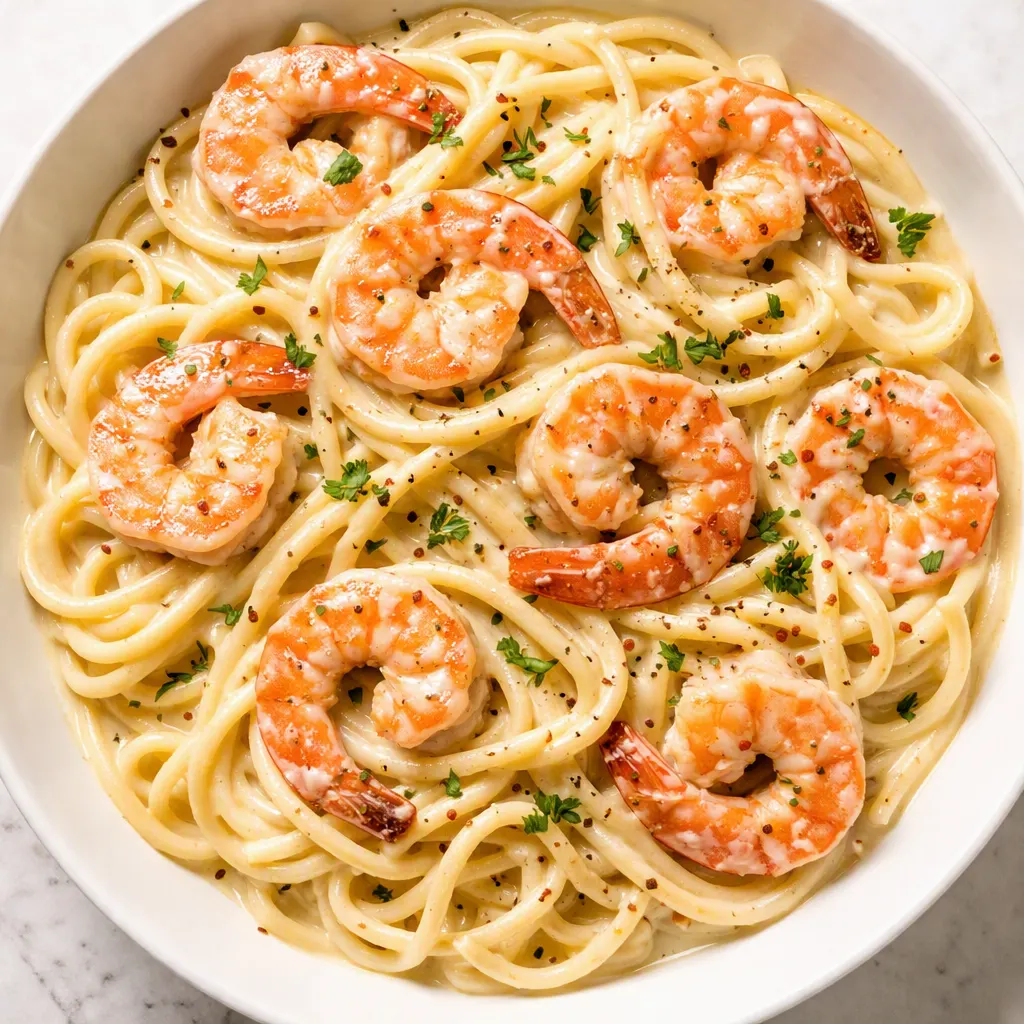
Here’s the thing nobody tells you about creamy shrimp pasta: the order matters way more than the ingredients. Most people throw the shrimp into the sauce and let everything cook together, and that’s exactly why it ends up tasting sad and the shrimp turn into little rubber balls. You don’t need any fancy techniques — you just need to cook the shrimp first, take them out, and build the sauce in the same pan afterward.
That pan still has all those browned bits and garlicky butter flavors stuck to the bottom, and that’s where the real magic is. When the cream goes in, it picks all of that up and becomes something ridiculously flavorful that no sauce packet could ever match. If you skip this step and just toss the shrimp in at the end, you’ll get a flat, one-note sauce — which I learned the hard way after way too many mediocre batches.
The other secret? Save some pasta water. It sounds like something a food magazine would tell you to do, but it genuinely is the difference between a sauce that coats every noodle and a sauce that pools at the bottom of the bowl like a sad puddle. That starchy water is liquid gold, and you’ll thank me.
What Goes In — Plus My Honest Notes
- 1 lb (450g) large shrimp, peeled and deveined: The star of the show. I buy frozen raw shrimp more often than not and thaw it in the fridge overnight. My honest tip: whatever you do, don’t buy pre-cooked shrimp for this. They’ll go rubbery in the sauce and you’ll be so disappointed. I’ve made that mistake exactly once.
- 12 oz (340g) fettuccine or linguine: Either works beautifully. Fettuccine is classic for creamy sauces, but linguine catches the sauce in its own way. My kids actually prefer penne because they can twirl it better — use whatever your family loves.
- 4 tbsp (57g) unsalted butter, divided: Half for searing the shrimp, half for the garlic butter base. Don’t substitute margarine or one of those “spreads” — the sauce needs real butter for that glossy, silky texture.
- 6 cloves garlic, minced: Yes, six. This is a garlic-forward dish and it should taste that way. If you’re using pre-minced garlic from the jar, you’ll need a bit more — it’s less punchy than fresh. My rule? Fresh whenever I can, jarred when I’m tired and the kids are hanging off my leg.
- 1 cup (240ml) heavy cream: This is what makes it luscious. Don’t swap in milk unless you’re okay with a thinner sauce that won’t coat the pasta the same way. Half-and-half works in a pinch, but you’ll want to be careful not to boil it or it can separate.
- ½ cup (50g) grated Parmesan cheese: Please, please buy a block and grate it yourself. The pre-shredded stuff has anti-caking powder that makes it melt into tiny clumps instead of a smooth sauce. I know it’s a little extra effort — but this is the difference between a sauce that feels velvety and one that feels gritty, and my family can tell.
- ½ cup (120ml) reserved pasta water: The unsung hero. It loosens the sauce to the perfect consistency and helps everything cling to the noodles. Scoop it out right before you drain the pasta — trust me on this one.
- ¼ tsp red pepper flakes: Just a tiny warm kick in the background. My kids notice it’s “a little spicy” even at this amount, so if your crew is sensitive, start with a pinch.
- Salt and black pepper: You’ll want about 1 tsp of salt in the pasta water and more to taste in the sauce. Don’t skip salting the pasta water — that’s the only chance the noodles themselves get to have flavor.
- 2 tbsp fresh parsley, chopped: For color and freshness at the end. Dried parsley is a sad substitute — a handful of fresh makes the whole bowl feel alive.
- Juice of half a lemon: The secret finishing touch. A squeeze of lemon cuts through all that richness in a way you can’t quite describe — just do it. I used to skip this and now I never, ever do.
- 1 tbsp olive oil: For searing the shrimp along with the butter. It keeps the butter from burning while the pan is hot — a little thing that makes a big difference.
What to Pull Out Before You Start
- A large skillet or sauté pan — a 12-inch one is ideal. A stainless steel or cast iron pan works great; nonstick works too, though you’ll get fewer of those flavorful browned bits.
- A big pot for boiling pasta — at least 5 quarts, so the noodles have room to move.
- A colander for draining the pasta, obviously.
- A liquid measuring cup to scoop out and hold that pasta water.
- A wooden spoon or heat-safe spatula, plus tongs for the shrimp.
That’s it. No special equipment, no imported Italian gadget — just the basics you already own.
Let’s Make It (Step by Step)
This goes fast once you start, so read through the steps once before you turn on the stove. You’ve got this.
Prep and Boil: Get your big pot of generously salted water on the stove and bring it to a rolling boil while you get everything measured out.
- Pat and Season the Shrimp: Lay the shrimp on a paper towel and pat them completely dry — this is the step that gets them beautifully golden instead of steamed and pale. Season both sides with salt and pepper. Don’t crowd them on the plate; they need to be ready to hit the pan one by one.
- Cook the Pasta: Drop your fettuccine into the boiling water and cook to al dente according to the package directions, usually about 10-12 minutes. Right before draining, scoop out ½ cup of the starchy pasta water and set it aside. Drain the pasta and leave it in the colander for now.
- Sear the Shrimp: Heat the skillet over medium-high heat, then add 2 tbsp of butter and the olive oil. Once the butter’s foamy and the pan is hot, add the shrimp in a single layer. Cook for 2-3 minutes per side until they’re pink with browned edges and just curled. These cook fast — the minute they turn opaque and flop into a C-shape, they’re done. Transfer them to a clean plate. (📸 Photo tip: You want the shrimp to look golden-pink with slightly browned edges in the pan — not pale and gray. That sear is where the flavor lives.)
- Make the Garlic Butter: Turn the heat down to medium-low and melt the remaining 2 tbsp of butter in the same pan. Add the minced garlic and the red pepper flakes, and cook gently for about 1 minute until the garlic is fragrant. Do not let it brown — the moment you smell garlic in the air, you’re ready for the next step. Burnt garlic gets bitter and will ruin the whole sauce, so keep it slow here.
- Build the Cream Sauce: Pour in the heavy cream and bring it to a gentle simmer — not a rolling boil. Reduce the heat to low and whisk in the grated Parmesan a little at a time, letting it melt fully into the sauce. It should look smooth and glossy as the cheese disappears. (📸 Photo tip: The sauce should be the color of pale golden silk and coat the back of your spoon without clumping — that’s the moment you know it’s right.)
- Loosen With Pasta Water: Add about ¼ cup of the reserved pasta water and stir it in. The sauce will look a little thinner, but that’s exactly what you want — it thickens as it clings to the noodles. If it looks too thick later, add the rest.
- Toss Everything Together: Add the drained pasta to the pan and use tongs to toss it through the sauce for a minute or two, making sure every strand gets coated. Drop the shrimp back in and give it one more gentle toss so the shrimp warm through without overcooking.
- Finish and Serve: Turn off the heat, squeeze in the lemon juice, and sprinkle with fresh parsley. Give it a taste — that’s your moment to adjust salt and pepper. Serve it up in warm bowls and get ready for the silent-mouthful applause. (📸 Photo tip: Twirl a generous portion into a nest shape in the center of the bowl, then top with 3-4 shrimp and a pinch more parsley for that restaurant look.)
How I Meal Prep This When Life Gets Busy
Listen, creamy pasta is never going to be a Sunday-batch-prep kind of dish in my house — it’s too good fresh. But I have figured out a few ways to make it easier on busy weeks. I make a double batch of the garlic butter sauce on Sunday, keep the shrimp prepped in the fridge, and then the whole thing becomes a 10-minute dinner on a Tuesday when I’m already running behind.
- Fridge: Store leftovers in an airtight container for up to 3 days. The sauce will thicken as it sits — that’s normal. When reheating, add a splash of cream or pasta water to loosen it back up.
- Freezer: I’ll be real with you — I don’t love freezing this one. Cream sauces can separate when thawed, and pasta gets mushy. If you absolutely must, freeze the sauce and shrimp separately (no pasta) for up to 2 months, then cook fresh noodles and thaw the sauce gently over low heat.
- Reheat: In a skillet over medium-low heat with a splash of cream or water, stirring gently until everything’s warm. The microwave works in a pinch, but it can turn the sauce a little grainy — I’d rather spend the extra three minutes on the stove.
Things I Wish I’d Known the First Time
- Dry shrimp = golden shrimp: This one’s non-negotiable. If your shrimp are wet when they hit the pan, they steam instead of sear, and you end up with pale, mushy shrimp. Pat them dry with paper towels and season them first. My husband thought I was overthinking it until he tasted both versions side by side.
- Low and slow for the garlic: I’ve burned garlic in this dish more times than I care to admit. The fix is embarrassingly simple — keep the heat on medium-low when you’re cooking the garlic and stir constantly. The second it turns golden and smells amazing, pour the cream in. Even if you mess this part up a little, it’ll still taste good — I’ve done it plenty of times. Just avoid the deep-burnt-brown stage.
- Boiling the cream is a recipe for heartbreak: Cream can separate if you let it boil hard, and then you’ve got an oily, curdled-looking mess. Keep it at a gentle simmer and you’re in the clear. I promise it’s not worth rushing — that slow simmer is what gives you the silky, luxurious texture you’re after.
- Shrimp cook in basically no time: The natural tendency is to overthink it and leave them in the pan too long. The instant they turn pink, curl, and feel just barely firm, pull them out. They’ll finish warming through when you toss everything together at the end. Overcooked shrimp get that rubbery bite — softer is always better.
Swaps That Actually Work
- Dairy-Free: Substitute the butter with a good quality dairy-free butter, use full-fat canned coconut cream in place of the heavy cream, and pick a dairy-free parmesan-style shred. The sauce won’t be silky-smooth quite the same way, but it’s genuinely tasty — I’ve made this version for my sister who can’t do dairy and she’s never complained once.
- Gluten-Free: Use your favorite gluten-free pasta — the brown rice and quinoa blends hold up best in creamy sauces. Just make sure you don’t overcook it, because gluten-free noodles are extra forgiving… by which I mean they turn to mush if you blink at the wrong moment.
- Spicy Cajun Version: Add a tablespoon of Cajun seasoning when you cook the shrimp and a little extra red pepper flake in the sauce. This version is dangerously good and I have to fight my husband for leftovers. My kids need the mild version, but I do the Cajun one on date nights after bedtime.
- Kid-Friendly Version: Cut the garlic down to 3-4 cloves, skip the red pepper flakes entirely, and toss a handful of frozen peas into the sauce right before serving. The peas turn it into one of those “it has vegetables in it” dinners that somehow still passes inspection.
- Extra Veggies: Spinach is your friend here — drop a couple big handfuls in right after the cream and let it wilt into the sauce. Or add halved cherry tomatoes in the last minute of cooking for a little burst of acidity.
Questions I Get About This Recipe All the Time
Q: Why did my sauce turn out grainy or separated?
A: Ugh, I’ve been there. Nine times out of ten it’s one of two things: either the cream boiled too hard and separated from getting too hot too fast, or the Parmesan was pre-shredded with anti-caking powder, which clumps instead of melting. The fix for next time: keep the heat low, simmer the cream gently, and grate your cheese from a block. If it happens anyway, try whisking in a splash of warm pasta water and a knob of butter — sometimes you can rescue it. You’ve got this next time.
Q: Can I make this dairy-free?
A: Yes! I’ve tested it, and it works. Swap the butter for a dairy-free version, use full-fat coconut cream in place of heavy cream, and top it with a dairy-free parmesan. One honest note: coconut cream adds a very subtle sweetness, so the flavor shifts just a tiny bit — but it’s still creamy, garlicky, and delicious. My dairy-free sister gives it an enthusiastic thumbs up.
Q: How long does this pasta last in the fridge? Can I freeze it?
A: Keep it in an airtight container in the fridge for up to 3 days, and reheat it gently on the stove with a splash of water or cream to bring the sauce back to life. Freezing, though? I don’t recommend it. Cream sauces separate when frozen and thawed, and the pasta turns mushy. If you want to prep ahead, freeze just the sauce and shrimp (without the pasta) for up to 2 months, then cook fresh noodles when you’re ready to eat.
Q: What do you serve with creamy garlic butter shrimp pasta?
A: We almost always do a simple green salad with a bright lemony vinaigrette — the tang cuts through all that richness beautifully. Garlic bread is another big hit at our table; if there’s any extra sauce left, my kids are basically just using the bread as a spoon. And if you want to make it feel extra special, a glass of crisp white wine on the side never hurts for the grown-ups.
More Recipes My Family Makes on Repeat
If you liked this one, here are a few others that get the same reaction at our table:
- [INTERNAL LINK PLACEHOLDER: One-Pan Lemon Chicken Pasta] — Bright, lemony, and done in one skillet — my go-to when I need a break from cream.
- [INTERNAL LINK PLACEHOLDER: Garlic Butter Steak Bites] — Same garlic-butter magic, but with beef. My husband begs for this one at least twice a month.
- [INTERNAL LINK PLACEHOLDER: Easy Alfredo Without the Fuss] — A lighter twist on creamy pasta that still tastes like a warm hug in a bowl.
I hope this creamy garlic butter shrimp pasta becomes the dish your family requests the way it’s become for mine. Whether it’s a random Tuesday or a birthday dinner, this one never misses — and honestly, that’s the highest compliment I can give any recipe in my kitchen.
If you try it, drop a comment below and let me know how it went! I genuinely love hearing from you all, and reading about your picky eaters cleaning their plates gives me life. Tag me on Pinterest or Instagram too — I love seeing your versions and I always try to share them!
📌 Creamy garlic butter shrimp pasta recipe that’s restaurant-worthy but ready in 25 minutes — save it for your next busy weeknight when everyone’s hungry and you need dinner to be a win.
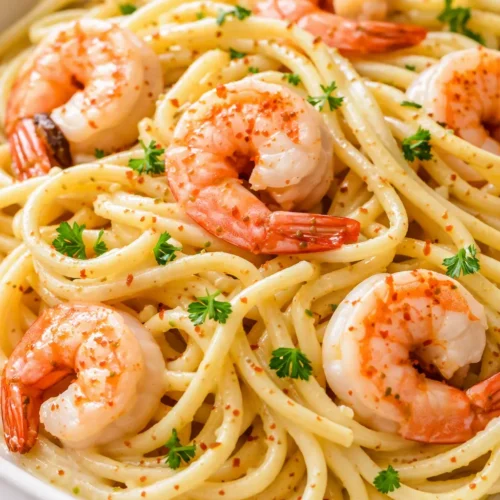
Creamy Garlic Butter Shrimp Pasta
Equipment
- Large Skillet
- Large Pot
- Colander
- Liquid measuring cup
- Tongs
Ingredients
Shrimp and Pasta
- 1 lb large shrimp, peeled and deveined
- 12 oz fettuccine or linguine
- 1 tbsp olive oil
For the Garlic Butter Cream Sauce
- 4 tbsp unsalted butter, divided
- 6 cloves garlic, minced
- 1 cup heavy cream
- 1/2 cup grated Parmesan cheese (preferably grated fresh from a block)
- 1/2 cup reserved pasta water
- 1/4 tsp red pepper flakes
- 1 tsp salt, plus more to taste
- black pepper, to taste
- 2 tbsp fresh parsley, chopped
- 1/2 small lemon juiced
Instructions
- Pat the shrimp completely dry with paper towels and season both sides with salt and pepper. Heat a large skillet over medium-high heat.
- Cook the pasta in generously salted boiling water until al dente, about 10-12 minutes. Right before draining, scoop out 1/2 cup of the starchy pasta water and set it aside. Drain the pasta.
- Add 2 tablespoons of butter and the olive oil to the hot skillet. Once the butter is foamy, add the shrimp in a single layer and cook for 2-3 minutes per side until pink and just curled. Transfer to a clean plate.
- Reduce the heat to medium-low and melt the remaining 2 tablespoons butter in the same pan. Add the minced garlic and red pepper flakes and cook for about 1 minute until fragrant; do not let it brown.
- Pour in the heavy cream and bring it to a gentle simmer. Whisk in the grated Parmesan a little at a time until the sauce is smooth and glossy.
- Stir in about 1/4 cup of the reserved pasta water. The sauce will look thinner, but it will thicken as it coats the pasta; add the rest if needed.
- Add the drained pasta to the pan and toss with tongs until every strand is coated. Add the shrimp back and toss gently just until warmed through.
- Turn off the heat, squeeze in the lemon juice, and sprinkle with fresh parsley. Taste, adjust salt and pepper, and serve warm.
Notes
Related posts:
 The Slow Cooker Cowboy Casserole That Saves Tired Weeknights (No Soggy Tots Allowed)
 Quick Lemon Ricotta Pasta for Busy Weeknights: Creamy, Bright, and on the Table in 20 Minutes
 Lemon Garlic Butter Baked Salmon in Foil That’s Ready in 25 Minutes — No Fuss, No Mess
 Lipton Onion Soup Meatloaf for Tuesday Nights: Moist, Savory, and the Only One You’ll Ever Need
 Quinoa Chicken Sausage Bowls That Are Ready in 30 Minutes (And Actually Keep Well)
 Creamy Chicken Penne Pasta That’s Silky Smooth in 30 Minutes (No Heavy Cream Required)