
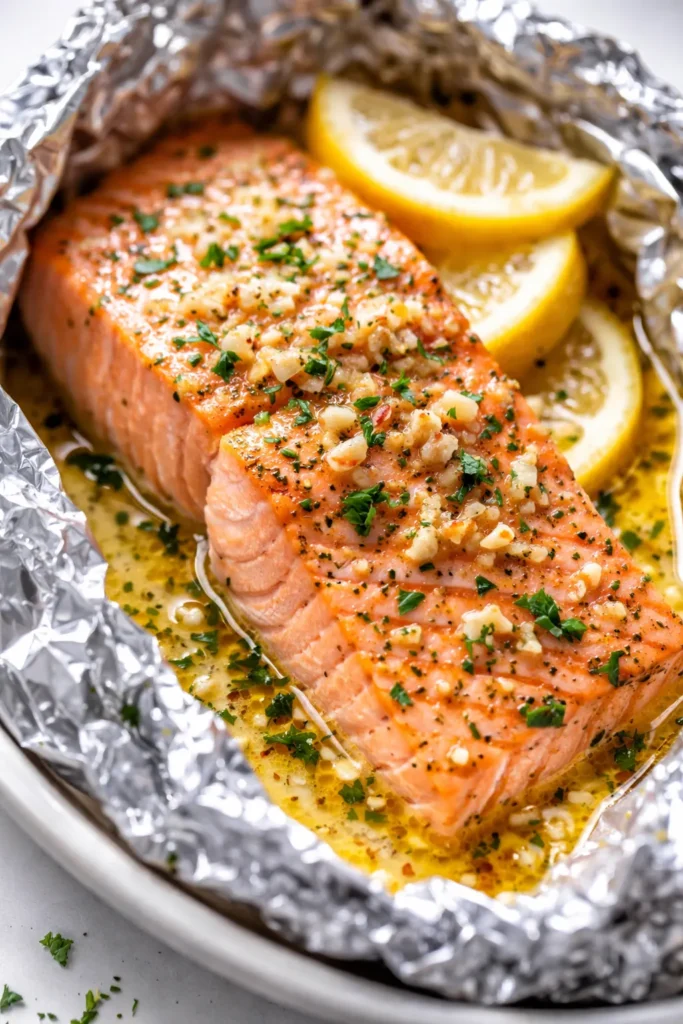
This is the only way I make salmon now. Not because it’s fancy — because it works every single time. The lemon slices soften in the butter, the garlic infuses the fillets without overwhelming them, and the foil packet traps every bit of moisture so the fish comes out fork-tender, never dry. My daughter Nora, who’s picky about fish texture (her words: “the flaky thing freaks me out”), eats this without complaint. That’s the benchmark that matters in my house.
The short version: Tender, buttery salmon with bright lemon and garlic — in foil packets, on one sheet pan, dinner on the table in 25 minutes.
I’ve made this version at least thirty times across different ovens, different fillet thicknesses, even different pans. The foil packet method is forgiving enough for a Tuesday night but good enough for company. Marta would have approved of the simplicity — she was never one for dishes that required more pans than eaters anyway.
- Serves: 4 as a main dish with sides
- Hands-On Time: 10 min | Total Time: 25 min
- Difficulty: Easy enough for a Tuesday — even if you’re new to cooking fish
- Cost per serving: ~$4.50 (with wild salmon; less with farmed)
- Calories: ~380 per serving
- Dietary Notes: Naturally gluten-free, low-carb, adaptable for dairy-free
(Photo above: overhead shot of two opened foil packets on a dark baking sheet, salmon fillets glistening with butter and garlic, lemon slices tucked around the edges, a few fresh parsley leaves scattered on top. Morning light from the left catches the steam still rising from one packet — that’s the shot I always take because it tells you exactly what you’re getting.)
Why Foil Packets Make Better Salmon (And Less Dish Duty)
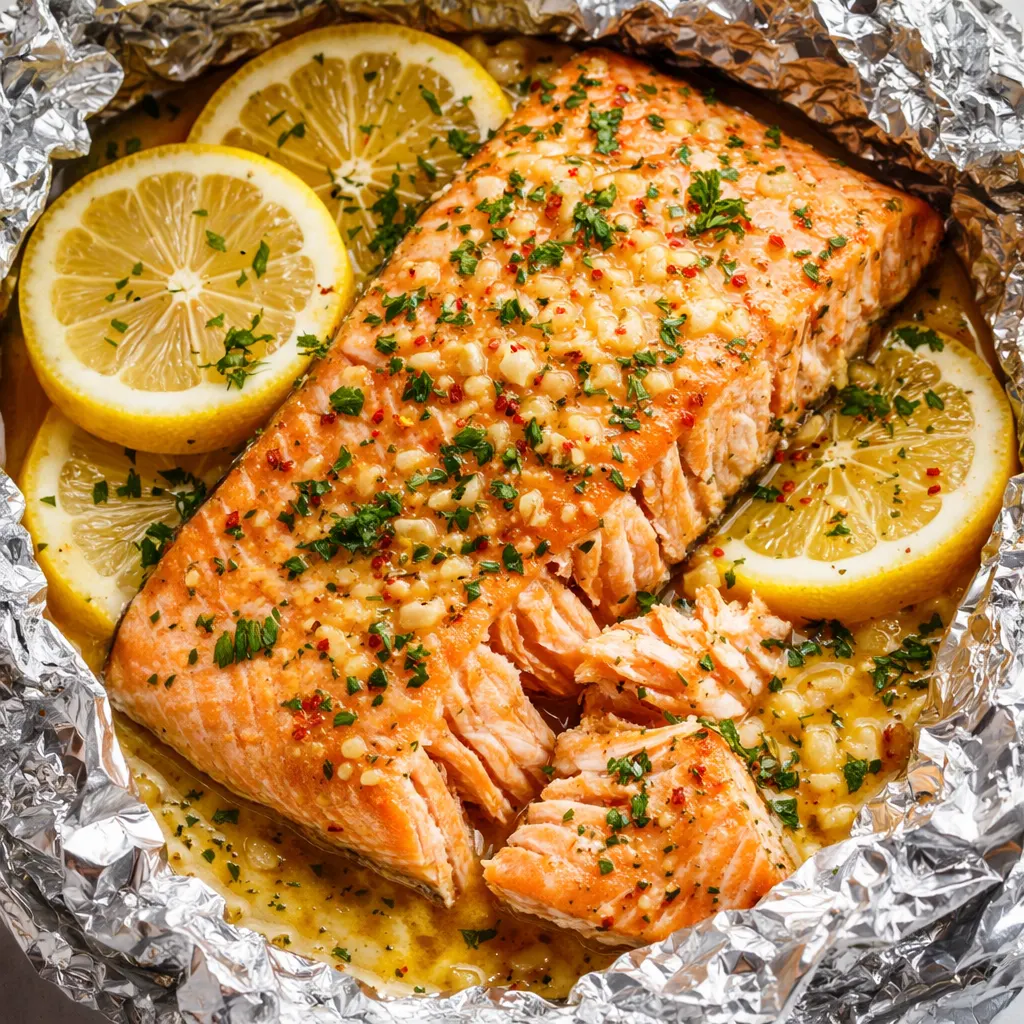
The foil packet isn’t about being clever — it’s about controlling the steam. When you tightly seal the salmon with butter, lemon, and garlic, the heat inside the packet builds gentle steam that cooks the fish evenly from all sides. The bottom doesn’t dry out before the top is done, and the butter stays in the packet instead of running off into the pan where it’d burn. Every time I’ve made this without foil — just on a baking sheet — the thinner ends of the fillet overcook by the time the thick center is ready. The foil solves it.
The other thing nobody tells you: the fish poaches slightly in its own juices and the butter mixture, which means it’s almost impossible to dry out. I’ve accidentally left it in the oven twelve extra minutes (I was on the phone with my sister) and it was still tender. Not as good as at 25 minutes, but not ruined. That’s the kind of forgiveness I need on a weeknight.
One packet per person means everyone gets their own little steam bath of lemon and garlic, and there’s exactly one pan to wash — the baking sheet, which barely gets dirty because the foil catches everything.
Everything You Need — Plus What I’ve Learned About Each Ingredient
- 4 salmon fillets (6 oz each), skin on or off: Skin-on fillets hold together beautifully in the packet and the skin slides right off after cooking if you don’t want to eat it. I buy fillets of even thickness — the tapered tail end cooks faster than the thick center, so uniform thickness matters more than you’d think. My kids prefer skin off, so I buy skinless fillets when I remember — same result, just less work at the table.
- 4 tbsp unsalted butter, softened: Softened butter spreads more evenly than cold, which means every bite gets garlic and lemon. Cold butter melts unevenly and leaves some spots bare. I’ve used salted butter in a pinch and just skipped the extra salt — still good, just watch the sodium.
- 4 cloves garlic, minced: Fresh garlic only — pre-minced in the jar has a different intensity and it won’t infuse the same way in the short cooking time. Three cloves if you’re feeding people who’d rather not taste garlic on their breath the next morning. My husband would use six if I let him. I split the difference at four.
- 1 lemon, thinly sliced (plus extra juice): The slices lay under and around the fillets for gentle citrus flavor — I don’t squeeze the lemon over the top because that much acid right on the fish can turn it opaque and tough. Instead I tuck slices around it and add a small squeeze of juice to the butter mixture. Use a Meyer lemon if you find one — it’s sweeter and less harsh than a regular lemon here.
- Salt and black pepper: I use about ½ teaspoon of kosher salt per fillet, scattered evenly. Black pepper goes on after salting — fresh ground, not pre-ground.
- Fresh parsley for garnish: Optional but worth it — the bright green against the warm salmon is the first thing you’ll see when you open the packet. I chop it fine and scatter it over each packet right before serving. Dill works too, if you have it — my grandmother always used dill with fish and I think of her every time I see it.
- Foil sheets (12×18 inches each, heavy-duty): Heavy-duty foil matters — regular foil can tear when you fold the edges, especially if you have a lot of juice in the packet. I tear off sheets about 18 inches long and fold them in half to create a double layer for extra strength. I learned this the hard way after one leak sent lemon butter all over the oven floor at 8pm on a Wednesday. Don’t be me.
What to Pull Out Before You Start
- Baking sheet (half-sheet size, 13×18 inches — any rimmed baking sheet works, just not a cookie sheet without edges, because the packets can slide)
- Small bowl for the butter mixture
- Sharp knife and cutting board
- Heavy-duty aluminum foil
The only special thing here is heavy-duty foil. If you only have regular foil, double it up — two layers per packet — and fold the edges carefully. I’ve done it. It works.
Here’s How I Do It — Step by Step, No Stress
This goes fast, so read through once before you start. The active time is ten minutes — the rest is just waiting for the oven to do its thing.
Preheat and prep: Heat the oven to 400°F with a rack in the middle position. While the oven warms, take the salmon out of the fridge and let it sit on the counter for 10 minutes — cold fish cooks unevenly, and this short rest helps.
- Make the garlic butter: In a small bowl, combine the softened butter, minced garlic, a squeeze of fresh lemon juice (about a tablespoon), and a pinch of salt. Mash it together with a fork until it’s smooth and evenly mixed. The garlic should be fully incorporated — you don’t want someone biting into a straight garlic clump. (📸 Photo tip: The butter should look like a soft spreadable paste with tiny flecks of garlic throughout — not chunks, not liquid. If it’s too cold and stiff, let it sit for five minutes.)
- Set up the foil packets: Lay out four sheets of heavy-duty foil, each about 18 inches long. Place one salmon fillet in the center of each sheet — skin side down if you kept the skin on. Season each fillet with a pinch of salt and a few grinds of black pepper.
- Add the lemon and butter: Arrange a thin lemon slice or two under each fillet and another on top — the lemon infuses from both sides this way. Spread a quarter of the garlic butter mixture over each fillet, covering the top evenly. It doesn’t have to be perfect — just get it spread across the surface. (📸 Photo tip: The butter should sit on top of the salmon in a thick layer, not melted into a puddle yet — that happens in the oven. You want visible coverage, not streaks.)
- Seal the packets: Fold the foil over the salmon and crimp the edges tightly in a double fold — fold once, then fold again over the first crease. Leave a little air space around the fish (don’t press the foil tight against it). The air pocket is what creates the gentle steam environment. Roll the short ends of the foil toward the center to seal them completely. You want no gaps. I test the seal by gently pressing on the top of the packet — if I hear air escape, I re-fold that edge. Worth the extra ten seconds.
- Bake: Place the packets on the baking sheet — seam side up or down doesn’t matter, just keep them in a single layer with a little space between them for air circulation. Bake for 14-16 minutes depending on thickness. A standard 1-inch thick fillet is done at 15 minutes. For thicker fillets (1½ inches), go to 18 minutes. The doneness signal I watch for: the packet will puff up slightly from steam inside. When I see that puff, I start checking.
- Check for doneness: Carefully open one packet (watch for the steam — it’s hot and it’ll get you if you hover over it). The salmon should flake easily with a fork and the center should be opaque but still moist. If it’s still translucent in the center, re-seal and give it 2 more minutes. I don’t temp salmon with a thermometer — I use the fork test. A properly cooked fillet flakes but doesn’t fall apart into dry chunks. The packet will also feel looser when it’s done — less tight from the internal steam.
- Rest and serve: Let the packets sit closed for 2-3 minutes at room temperature — this carries over the cooking without drying out the fish. Then open each packet, scatter fresh parsley over the top, and serve directly from the foil or transfer to plates with the buttery pan juices spooned over. The juices pooled in the packet are liquid gold — don’t leave them behind.
How I Meal Prep These for the Week
I make extra packets on Sundays when salmon is on sale. They reheat beautifully, and having them pre-made means I can throw a foil packet in the oven straight from the fridge on a night when I’m too tired to chop an onion. My trick: I leave the lemon slices off until baking day because they get bitter after a few days sitting on the fish. Instead I tuck a fresh slice in right before I bake it.
- Fridge: Assemble the packets (without lemon slices) up to 2 days ahead. Store them flat in the fridge. When ready to bake, add a fresh lemon slice to each packet, seal, and bake as directed. Add 2-3 minutes since they’re starting cold.
- Freezer: Yes — assemble the packets completely (with lemon) and freeze flat on a baking sheet for 2 hours, then transfer to a zip-top bag. Bake from frozen at 400°F for 22-25 minutes. Do not thaw first — the texture is better if you go straight from freezer to oven. I freeze them flat so they stack like vinyl records in the freezer door — easy to grab one at a time.
- Reheat: Reheat leftover cooked salmon gently in a covered skillet with a splash of water or lemon juice — 3-4 minutes over medium-low heat. The microwave dries it out, so avoid that if you can. Or just eat it cold on a salad the next day — I actually look forward to that part.
Things I Wish I’d Known the First Time (Learned the Hard Way)
- Don’t skip the softened butter: The first time I made this, I used cold butter straight from the fridge and tried to spread it over the salmon. It ripped the top of the fillet and left bare patches that dried out in the oven. Softened butter spreads like a shawl over the fish — protective and even. Let it sit out for 20 minutes. I set it on the counter when I walk into the kitchen and by the time I’ve prepped everything else, it’s ready.
- Seal the foil like you mean it: Loose foil = leaky packet = dry salmon and a mess on the baking sheet. I triple-fold each edge and press firmly with my fingers. A good foil seal should feel tight enough that you could shake the packet gently without anything coming out. My husband thought I was overthinking it until he tried his first loose packet. He doesn’t skip that step anymore.
- Lemon slices go under, not just on top: Tucking a slice under the fillet keeps the bottom from sticking to the foil AND infuses the underside with citrus. I tried just laying them on top once — the bottom of the fish was plain and the top was almost too lemony. Two slices: one under, one over. That’s the balance.
- Even if the center is slightly underdone after 15 minutes, it’s fine: The carryover heat from the foil will finish it. I’ve opened a packet too early, seen a tiny translucent spot in the middle, re-sealed it, and let it sit on the counter for 3 minutes. By the time it hit the plate, it was perfect. Patience is the ingredient nobody talks about.
Swaps That Actually Work (For Every Kind of Eater)
- Dairy-Free: I swap the butter for a good quality olive oil — 2 tablespoons per fillet, mixed with the garlic and lemon juice. The texture is slightly less rich but still moist and flavorful. My dairy-free friend requests this version specifically, so I keep a jar of good oil on hand. Don’t use coconut oil here — the flavor fights with the lemon.
- Spicy version: Add a small pinch of red pepper flakes or a thin slice of fresh jalapeño tucked under the butter. I do this for the adults when the kids are having something else — the heat stays mellow and doesn’t overpower the lemon. My neighbor Lisa adds a drizzle of sriracha before sealing and swears by it.
- Herb-crusted version: Mix a tablespoon of fresh dill or basil into the softened butter before spreading. Dill and salmon are a classic pairing that my grandmother Marta used — it was her way, and I still love it. For something brighter, I use fresh thyme leaves.
- Kid-friendly adjustment: My younger niece finds lemon too tart, so I use just half a lemon slice per packet and add a tiny pinch of brown sugar to the butter. She’ll eat a whole fillet this way — and her mom texted me for the recipe after the first try.
- Quick weeknight version: If I’m really rushing, I skip the foil and roast the salmon with the same butter mixture in a baking dish at 400°F for 12-15 minutes. The clean-up is slightly more involved but the flavor is the same. Sometimes that extra five minutes of not folding foil is the difference between dinner and takeout, and I’ll take it.
Questions I Get About This Recipe Every Time I Post It
Q: Why did my salmon turn out dry even though I followed the timing exactly?
A: Ugh, I’ve been there — it’s so frustrating. The most likely culprit is a slightly cracked foil seal that let steam escape. Check your crimps on all four edges before it goes in the oven. The other common cause: your fillets were thinner than 1 inch and you used the full 16 minutes. Next time, check at 12 minutes for thin fillets — they cook faster than you expect in a sealed packet. You’ve got this next time; it’s just a timing tweak.
Q: Can I make this with frozen salmon without thawing first?
A: Yes, and I actually prefer it that way for meal prep. Rinse the frozen fillets under cold water briefly to remove any ice crystals, pat dry thoroughly, then proceed with the recipe. Add 5-7 minutes to the baking time and check with a fork at the thickest part. The texture stays just as tender — sometimes even better because the fish releases less moisture as it thaws in the packet. I’ve tested this and it works reliably.
Q: How long will the leftovers keep and what’s the best way to reheat?
A: Leftover cooked salmon keeps in an airtight container in the fridge for up to 3 days. The best reheat method is in a covered skillet with a splash of the reserved pan juices or water — 3-4 minutes over medium-low heat. The microwave makes it dry and sad, so please don’t. For a no-cook option, I flake the cold salmon over a bed of mixed greens with the leftover butter mixture whisked into vinaigrette — lunch sorted in 5 minutes.
Q: What do you serve with this that doesn’t make a lot of extra dishes?
A: I keep it simple and sheet-pan style. Roasted asparagus or green beans tossed in olive oil and salt go right on the same baking sheet during the last 12 minutes of salmon cook time (just push the packets to one side). For starch, I make couscous or quick-cooking quinoa in the same time frame, or I do a bag of microwaveable rice and stir in the leftover pan butter from the salmon packets — my kids call this “fancy rice” and they eat every grain. On weekends I add roasted baby potatoes tossed with garlic and rosemary — they take longer to cook, so I start them 20 minutes before the salmon goes in.
More Recipes My Family Makes on Repeat
If you liked this one, here are a few others that get the same reaction at our table — the kind that never leave leftovers and earn the “make this again” text the next morning:
- Garlic Butter Shrimp and Broccoli Foil Packets — Same foil packet method, ready in 20 minutes, and my kids actually eat the broccoli because it steams right in the garlic butter.
- Sheet Pan Lemon Herb Chicken and Potatoes — One pan, zero foil folding, and the chicken stays juicy the same way — trapped steam and citrus do the work.
- Easy 25-Minute Creamy Tuscan Salmon — A slightly dressier version with a sun-dried tomato cream sauce that comes together in the time the salmon bakes. My go-to when company’s coming and I don’t want to stress.
This is the kind of recipe that makes me feel like I’m actually winning at dinner — even on the days when everything else feels rushed. The lemon and garlic and butter do the heavy lifting, and I get to stand back and pretend I’m a genius. Try it once, and I think you’ll see what I mean.
If you try it, drop a comment below — I love hearing how it goes for you. Tag me on Pinterest so I can see your foil packets in action!
📌 Lemon garlic butter baked salmon in foil recipe that stays tender every single time — save it for your next busy weeknight when you need dinner without the cleanup.
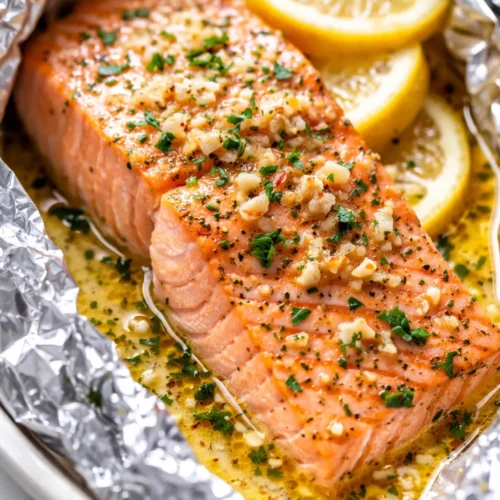
Lemon Garlic Butter Baked Salmon in Foil That’s Ready in 25 Minutes — No Fuss, No Mess
Equipment
- Baking Sheet
- Small bowl
- Sharp Knife
- Cutting Board
- Heavy-Duty Aluminum Foil
Ingredients
Salmon Fillets
- 4 salmon fillets (6 oz each), skin on or off
- 1/2 teaspoon kosher salt per fillet
- fresh black pepper to taste
Garlic Butter Mixture
- 4 tablespoons unsalted butter, softened
- 4 cloves garlic, minced
- 1 lemon (thinly sliced plus 1 tablespoon juice)
Garnish
- fresh parsley, chopped (optional)
Instructions
- Preheat the oven to 400°F with a rack in the middle position. Take the salmon out of the fridge and let it sit on the counter for 10 minutes.
- Make the garlic butter: In a small bowl, combine the softened butter, minced garlic, a squeeze of fresh lemon juice (about a tablespoon), and a pinch of salt. Mash with a fork until smooth and evenly mixed.
- Set up the foil packets: Lay out four sheets of heavy-duty foil (about 18 inches long). Place one salmon fillet in the center of each sheet, skin side down. Season each fillet with salt and a few grinds of black pepper.
- Add the lemon and butter: Arrange a thin lemon slice or two under each fillet and another on top. Spread a quarter of the garlic butter mixture over each fillet.
- Seal the packets: Fold the foil over the salmon and crimp the edges tightly in a double fold. Leave a little air space around the fish. Roll the short ends toward the center to seal completely.
- Bake: Place the packets on a baking sheet in a single layer. Bake for 14-16 minutes for standard 1-inch thick fillets, or 18 minutes for thicker fillets. The packet will puff up when done.
- Check for doneness: Carefully open one packet (watch for steam). The salmon should flake easily with a fork and be opaque but still moist. If still translucent, re-seal and give it 2 more minutes.
- Rest and serve: Let packets sit closed for 2-3 minutes. Open, scatter fresh parsley, and serve with the buttery pan juices spooned over.
Notes
Related posts:
 Mini Quiche Recipe: The Store-Bought Crust Version That Tastes Like You Made It From Scratch
 Easy Shrimp Lo Mein That’s Faster Than Delivery (Ready in 30 Minutes)
 The Slow Cooker Cowboy Casserole That Saves Tired Weeknights (No Soggy Tots Allowed)
 Creamy Beef and Shells for Tuesday Nights: The One-Pot Dinner My Kids Actually Ask For
 Quick Lemon Ricotta Pasta for Busy Weeknights: Creamy, Bright, and on the Table in 20 Minutes
 Juicy Oven Baked Chicken Thighs That Stay Golden and Tender — in 40 Minutes