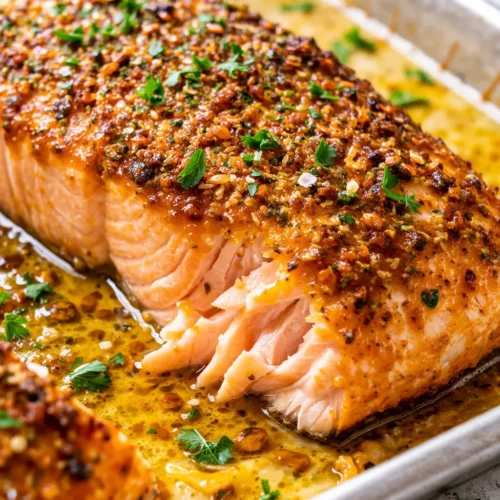
Baked Dijon Salmon with Honey and Garlic
This baked Dijon salmon comes out perfectly flaky every time, with a tangy golden crust that takes just 20 minutes from prep to plate. A honey-mustard glaze seals in moisture while the oven does the work. Serve with a simple salad or roasted vegetables for an effortless weeknight dinner.
Equipment
- Baking Sheet
- Parchment paper or aluminum foil
- Small bowl
- Instant-read thermometer (optional but recommended)
- Fish spatula or two regular spatulas
Ingredients
Salmon
- 1½ pounds salmon fillet (center-cut, skin on or off)
- 1 tablespoon olive oil (for the pan)
- to taste salt and black pepper (about 1/2 teaspoon salt per pound of fish)
Dijon Glaze
- ¼ cup smooth Dijon mustard (not whole-grain)
- 1 tablespoon honey (or maple syrup for paleo/keto)
- 2 cloves garlic, minced
- 1 tablespoon fresh lemon juice
Optional but recommended
- 1 tablespoon fresh dill, chopped (or 1/2 tablespoon dried)
- fresh parsley, chopped (for color)
- lemon wedges (for serving)
Instructions
- Preheat your oven to 425°F. Line a baking sheet with parchment paper or aluminum foil. Drizzle a little olive oil on the paper and spread it around with your fingers to prevent sticking.
- Pat the salmon fillet dry with paper towels on both sides. The surface should look matte, not shiny — this ensures browning, not steaming.
- Sprinkle salt and black pepper evenly over all sides of the salmon, including the sides (the fat cap).
- In a small bowl, whisk together the Dijon mustard, honey, minced garlic, and lemon juice. Taste — it should be tangy with a hint of sweetness. Adjust honey if needed.
- Place the salmon skin-side down (if using skin) on the prepared baking sheet. Spoon the mustard mixture over the top and spread it evenly with the back of a spoon or a pastry brush. There should be no bare spots.
- Bake for 10–12 minutes, depending on thickness. For a 1-inch fillet, 11 minutes is about right. The glaze should bubble and caramelize. If using an instant-read thermometer, pull the salmon at 130°F for medium (it will rise to 135°F as it rests). Without a thermometer, gently press the thickest part — it should flake easily but still look moist, not dry.
- Remove from the oven and let the salmon rest on the baking sheet for 3–5 minutes. Do not skip this step — the carryover cooking finishes the fish and the juices redistribute for the most tender bite.
- Sprinkle with fresh dill and/or parsley, squeeze a lemon wedge over the top, and serve immediately. Leftovers keep in the fridge for up to 3 days — great flaked over salad or reheated gently in a 300°F oven.
Notes
Chef's Tips:
• Let your salmon come to room temperature for 10–15 minutes before baking to ensure even cooking.
• Don't crowd the pan — use two sheets if making more than two fillets to avoid steaming.
• For a spicy version, add a pinch of cayenne or a squirt of sriracha to the glaze.
• Crunchy topping: after glazing, sprinkle with panko breadcrumbs tossed in olive oil.
• No dill? Try fresh tarragon, basil, or dried oregano. Storage: Refrigerate in an airtight container for up to 3 days. Reheat in a 300°F oven for 5–7 minutes or microwave in 30-second bursts with a damp paper towel. Freezing is not recommended — the texture becomes mealy. Leftover glaze can be frozen separately for up to a month.
• Let your salmon come to room temperature for 10–15 minutes before baking to ensure even cooking.
• Don't crowd the pan — use two sheets if making more than two fillets to avoid steaming.
• For a spicy version, add a pinch of cayenne or a squirt of sriracha to the glaze.
• Crunchy topping: after glazing, sprinkle with panko breadcrumbs tossed in olive oil.
• No dill? Try fresh tarragon, basil, or dried oregano. Storage: Refrigerate in an airtight container for up to 3 days. Reheat in a 300°F oven for 5–7 minutes or microwave in 30-second bursts with a damp paper towel. Freezing is not recommended — the texture becomes mealy. Leftover glaze can be frozen separately for up to a month.