
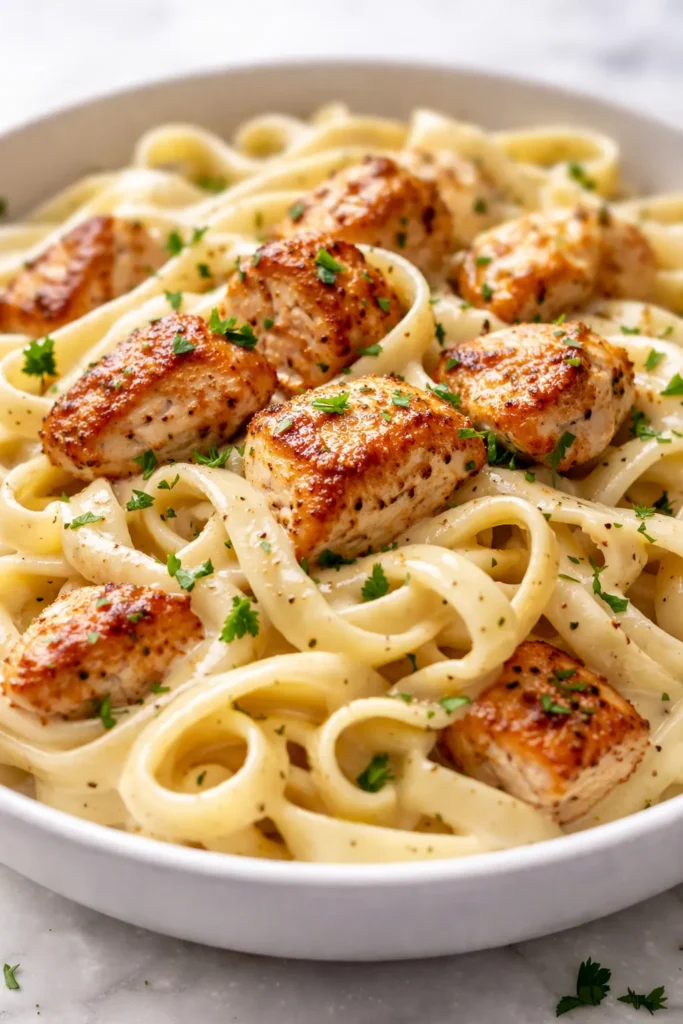
The first time I got this right, I actually did a little dance in my kitchen. Not because I’m a professional chef – I’m definitely not – but because after years of gloopy sauces and dry chicken, I finally cracked the code on a weeknight alfredo that actually tastes like something. My daughter Nora was home from art school for a weekend and she ate a bowl, then immediately walked back to the kitchen to fill it up again. That’s when I knew I’d done something right.
The short version: Golden seared chicken, a silky no-cream-cheese sauce, and fettuccine that soaks up every bit of it in under half an hour.
My grandmother Marta never made pasta – she was German, through and through, and her kitchen ran on dumplings and gravy. This recipe is mine. The one I figured out for my own family, and the one my kids now request the second someone says “what’s for dinner?”
- Serves: 4 as a main
- Hands-On Time: 20 min | Total Time: 30 min
- Difficulty: Easy enough for a Tuesday, impressive enough for company
- Cost per serving: ~$3.75
- Calories: ~720 per serving
- Dietary Notes: Adaptable for gluten-free (use your favorite GF fettuccine)
(📸 Photo above: Overhead shot of a wide white bowl piled high with fettuccine alfredo, golden seared chicken thighs resting on top, a veil of freshly grated Parmigiano-Reggiano and a sprinkle of parsley. A wooden fork resting on the edge. Morning light from a south-facing window.)
The Thing That Makes This Sauce Actually Silky (Not Separated)
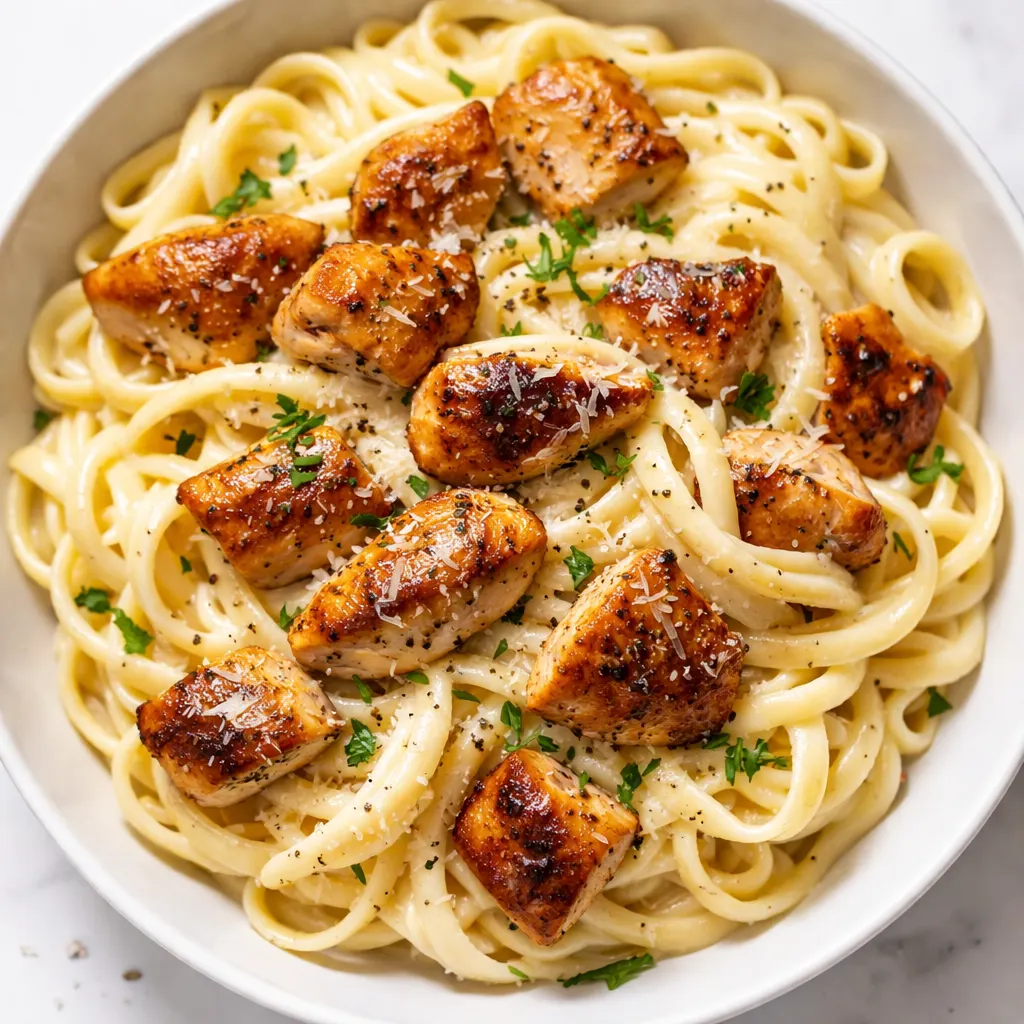
The secret is in the pasta water. You’ll hear this from every food writer, but here’s the honest reason: the starch in that water is what binds the butter and cheese into a creamy emulsion instead of a greasy puddle. You can’t replicate it with anything from a box.
The other non-negotiable? Low heat. If you crank the heat under the cream, it will go from smooth to grainy in about eight seconds. I learned this the hard way – three separate times – before I accepted that alfredo is a low-and-slow kind of sauce.
The payoff is a bowl of pasta that feels like a restaurant dinner but costs a fraction and takes less time than ordering takeout.
Everything You Need (Plus My Honest Notes)
- 1 lb boneless, skinless chicken thighs (or breasts): Thighs stay juicier and have more flavor. I use breasts when that’s what I have in the freezer and they work fine – just watch the cook time so they don’t dry out.
- Salt and black pepper: Don’t skimp on the salt for the pasta water. It should taste like the sea.
- 2 tbsp olive oil: For searing the chicken.
- 1 lb fettuccine: The classic. But I’ve used bucatini and penne when the pantry demanded it.
- 4 tbsp unsalted butter: The foundation of the sauce.
- 4 cloves garlic, thinly sliced: Not minced – thin slices melt into the butter without burning.
- 1 ½ cups heavy cream: I know, I know. But this is a once-a-week indulgence, not a daily thing. My nine-year-old nephew asked for it three weeks in a row, so I’ve accepted my fate.
- 1 ½ cups freshly grated Parmigiano-Reggiano: Block cheese, grated on a microplane. The pre-shredded stuff has cellulose that stops it from melting smoothly. I promise you’ll taste the difference.
- Fresh parsley, for serving: Optional, but it makes it look like you tried.
What to Pull Out Before You Start
- A 12-inch cast iron skillet or heavy stainless steel pan
- Large pot for pasta
- Microplane or box grater
- Long tongs
If you don’t have a 12-inch skillet, a 10-inch will work – the chicken will just need to cook in two batches so it gets properly golden instead of steaming.
Let’s Make It (Step by Step)
This comes together faster than you think, so read through once before you start. It’s worth it.
1. Get the water boiling: Fill your largest pot with water and salt it generously – about 2 tablespoons of kosher salt. Bring it to a rolling boil before you do anything else.
- Season and sear the chicken: Pat the chicken dry with paper towels. Season both sides with salt and pepper. Heat the olive oil in your skillet over medium-high heat. Add the chicken and let it cook without moving for 5-6 minutes, until golden brown and releases easily from the pan. Flip and cook another 4-5 minutes until cooked through. (📸 Photo tip: You’re looking for a deep golden crust, not pale. If it sticks, it’s not ready to flip yet.) Transfer to a cutting board and tent loosely with foil.
- Cook the pasta: Add the fettuccine to the boiling water and cook until al dente – about 8-9 minutes for dried. Just before draining, scoop out 2 cups of the starchy pasta water and set it aside. Drain the pasta but don’t rinse it.
- Start the sauce: In the same skillet you used for the chicken (don’t wipe it out – those browned bits are flavor), melt the butter over low heat. Add the sliced garlic and cook for 30 seconds until fragrant. If the garlic browns too fast, your heat is too high.
- Add the cream: Pour in the heavy cream, stirring constantly. Let it warm through on low heat for about 2 minutes. It should be gently simmering, not boiling.
- Melt in the cheese: Add the grated Parmesan a handful at a time, stirring until each addition is fully melted before adding the next. The sauce will thicken as the cheese melts. If it seems too thick, stir in ¼ cup of the reserved pasta water. (📸 Photo tip: The sauce is ready when it coats the back of a spoon and leaves a clean line when you run your finger through it.)
- Bring it all together: Add the drained pasta to the skillet with the sauce. Use tongs to toss the fettuccine, coating every strand. Add more pasta water a few tablespoons at a time if the sauce gets too tight. Slice the chicken and arrange it on top of the pasta. Shower with a final handful of grated Parmesan and a sprinkle of parsley.
How I Meal Prep This for the Week
This is one of those recipes that’s honestly better made fresh, but I also know we’re all busy and a win is a win. I make a double batch on Sundays and we eat it over two nights.
- Fridge: Store in an airtight container for up to 4 days. The sauce will thicken as it sits – that’s normal.
- Freezer: I don’t recommend it. The cream sauce can separate when thawed and it never quite comes back to the same silky texture.
- Reheat: The best way is in a skillet over low heat with a splash of milk or reserved pasta water. Stir constantly. The microwave works in a pinch, but it’s a 50/50 shot on the texture.
Things I Wish I’d Known the First 10 Times
- Grate your own cheese: I know I’ve said it twice already. I’ll say it once more because it’s that important. Pre-shredded cheese has anti-caking agents that prevent it from melting into a smooth sauce. You’ll end up with a grainy, clumpy mess.
- Reserve more pasta water than you think you need: Every single time I think “2 cups is plenty,” and every single time I end up using at least 1 ½ cups. The starch is what makes the sauce coat the pasta instead of sliding off.
- Low heat is your friend: If the sauce starts to bubble aggressively, you’ve gone too far. Pull the pan off the heat and stir it down. Then return it to low heat.
- Season as you go: Salt the pasta water, season the chicken, taste the sauce before you add the pasta. If something tastes flat, it usually needs salt – but with Parmesan, go easy, because the cheese itself is plenty salty.
Swaps That Actually Work
- Make it gluten-free: Use your favorite gluten-free fettuccine. The rest of the recipe is naturally gluten-free.
- Add vegetables: My kids won’t touch broccoli in this, but they’ll eat peas that I stir in at the end. I’ve also added sautéed mushrooms and spinach on nights when I’m cooking just for myself.
- Swap the protein: Shrimp is incredible here – cook it the same way as the chicken, just 2-3 minutes per side. Leftover rotisserie chicken also works beautifully in a pinch.
- Make it dairy-free: This is tough because the whole thing is built on butter, cream, and cheese. I’ve seen readers use full-fat canned coconut milk and a dairy-free butter substitute, but the flavor is noticeably different. If you try it, use a high-quality coconut cream.
Questions I Get About This Recipe All the Time
Q: Why did my alfredo sauce turn out grainy?
A: Ugh, I’ve been there. The culprit is almost always the cheese. Either it was pre-shredded (which has anti-caking agents) or the heat was too high and the proteins in the cheese seized up. Next time, grate a block of Parmigiano-Reggiano fresh and keep the heat on low. You’ve got this!
Q: Can I use half-and-half instead of heavy cream?
A: You can, but it won’t be as thick or luxurious. Half-and-half has less fat, so the sauce will be thinner and more likely to separate. If that’s all you have, add an extra tablespoon of butter to help stabilize it.
Q: How long does chicken alfredo last in the fridge?
A: Up to 4 days in an airtight container. The pasta will absorb some of the sauce as it sits, so when you reheat it, add a splash of milk or water and stir it gently over low heat to bring it back to life.
Q: What do you serve with chicken alfredo?
A: My family never says no to a simple green salad with lemon vinaigrette to cut through the richness. We also love roasted asparagus on the side – it’s elegant but dead simple. My kids, of course, prefer garlic bread so they can sop up any leftover sauce from the bowl.
More Recipes My Family Makes on Repeat
If you liked this one, here are a few others that get the same reaction at our table:
- [INTERNAL LINK PLACEHOLDER: One-Pan Lemon Herb Chicken & Potatoes] — The pan does all the work, and the leftovers are just as good cold straight from the fridge.
- [INTERNAL LINK PLACEHOLDER: Weeknight Bolognese My Kids Actually Eat] — A slow-simmered ragu that tastes like it cooked all day but comes together in 45 minutes.
- [INTERNAL LINK PLACEHOLDER: Garlic Butter Shrimp Pasta] — Ready in 15 minutes and feels like a special occasion dinner on a random Tuesday.
This is the meal I make when I need a guaranteed win. No stress, no fancy techniques, just a bowl of pasta that makes the whole table quiet in the best way. If you make it, I’d love to hear how it goes – drop a comment below or tag me on Pinterest so I can see your beautiful bowls!
📌 Save this creamy chicken alfredo recipe for your next busy weeknight – it takes 30 minutes and my kids clean their plates every single time.
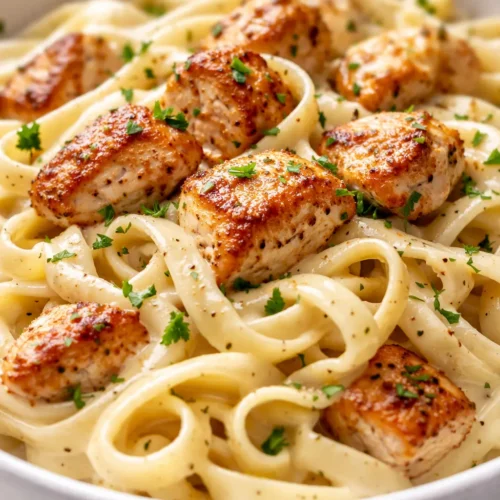
Creamy Chicken Alfredo
Equipment
- Large Pot
- 12-inch cast iron skillet
- Microplane or box grater
- Long Tongs
Ingredients
- 1 lb boneless skinless chicken thighs (or breasts)
- to taste Salt
- to taste Black pepper
- 2 tbsp olive oil
- 1 lb fettuccine
- 4 tbsp unsalted butter
- 4 cloves garlic, thinly sliced
- 1 ½ cups heavy cream
- 1 ½ cups freshly grated Parmigiano-Reggiano
- for serving fresh parsley (optional)
Instructions
- Bring a large pot of salted water to a rolling boil (about 2 tablespoons of kosher salt).
- Pat the chicken dry and season both sides with salt and pepper. Heat the olive oil in a 12-inch skillet over medium-high heat. Add the chicken and cook without moving for 5-6 minutes until golden brown and releases easily. Flip and cook another 4-5 minutes until cooked through. Transfer to a cutting board and tent loosely with foil.
- Add the fettuccine to the boiling water and cook until al dente (about 8-9 minutes). Just before draining, scoop out 2 cups of the starchy pasta water and set aside. Drain the pasta but do not rinse it.
- In the same skillet (do not wipe it out), melt the butter over low heat. Add the sliced garlic and cook for 30 seconds until fragrant. If the garlic browns too fast, the heat is too high.
- Pour in the heavy cream, stirring constantly. Let it warm through on low heat for about 2 minutes – it should be gently simmering, not boiling.
- Add the grated Parmesan a handful at a time, stirring until each addition is fully melted before adding the next. The sauce will thicken. If too thick, stir in ¼ cup of the reserved pasta water. The sauce is ready when it coats the back of a spoon and leaves a clean line when you run your finger through it.
- Add the drained pasta to the skillet and toss with tongs to coat every strand. Add more pasta water a few tablespoons at a time if the sauce gets too tight. Slice the chicken and arrange on top. Finish with a final handful of grated Parmesan and a sprinkle of parsley.
Notes
Related posts:
 The Slow Cooker Cowboy Casserole That Saves Tired Weeknights (No Soggy Tots Allowed)
 Quick Lemon Ricotta Pasta for Busy Weeknights: Creamy, Bright, and on the Table in 20 Minutes
 Lemon Garlic Butter Baked Salmon in Foil That’s Ready in 25 Minutes — No Fuss, No Mess
 Lipton Onion Soup Meatloaf for Tuesday Nights: Moist, Savory, and the Only One You’ll Ever Need
 Kielbasa Sausage Cheesy Potato Casserole That Tastes Like Sunday Dinner — In Under an Hour
 Quinoa Chicken Sausage Bowls That Are Ready in 30 Minutes (And Actually Keep Well)