
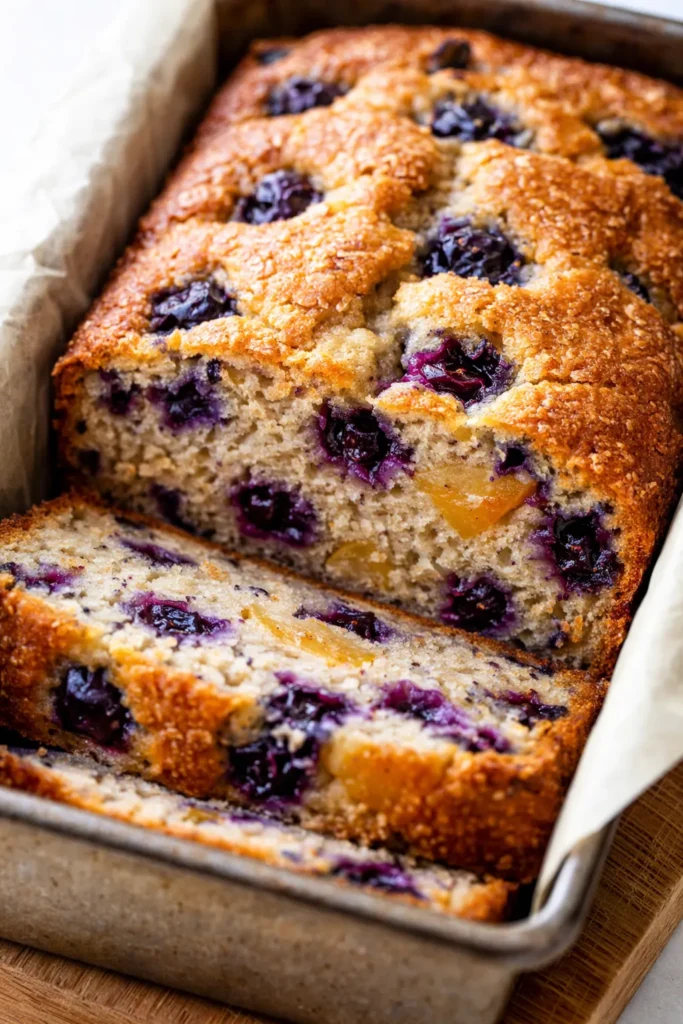
Cutting into a fruit bread where everything has slumped to the bottom is a specific kind of disappointment, isn’t it? I’ve been there more times than I’d like to admit — beautiful berries and soft peaches pooled against the crust like they gave up entirely. This blueberry peach bread is different. The fruit stays suspended right where you can see it, from the first slice to the last. The crumb stays tender and light, not heavy or wet. And the flavor? It tastes like late August in a single slice — sweet, tangy, and warm with vanilla. I make this every summer when the peaches at the farm stand are finally too soft to eat out of hand but too good to do anything else with. This is where they belong.
The short version: Golden, tender, and packed with fruit in every single bite — this is the summer loaf that finally stays put.
I’ve made this exactly eleven times over the last two months, tweaking the fruit-to-batter ratio and the maceration time until my neighbors started texting me for the recipe. Even my daughter Nora, who is famously picky about “wet things in bread,” asked me to freeze a loaf for her trip back to school.
- Serves: 8-10 as a breakfast loaf or afternoon snack
- Hands-On Time: 20 min | Total Time: 1 hr 15 min (plus cooling)
- Difficulty: Easy — seriously, the fruit prep is the only part you can’t rush
- Cost per serving: ~$1.50
- Calories: ~280 per slice
- Dietary Notes: Easily adaptable for dairy-free and whole wheat
(Photo above: a well-lit overhead shot of the loaf sliced on a rustic wooden board, a pat of melting butter on the warm slice, blueberries and peaches visible in the tight crumb, morning light from the side.)
The Difference Is in How You Treat the Fruit
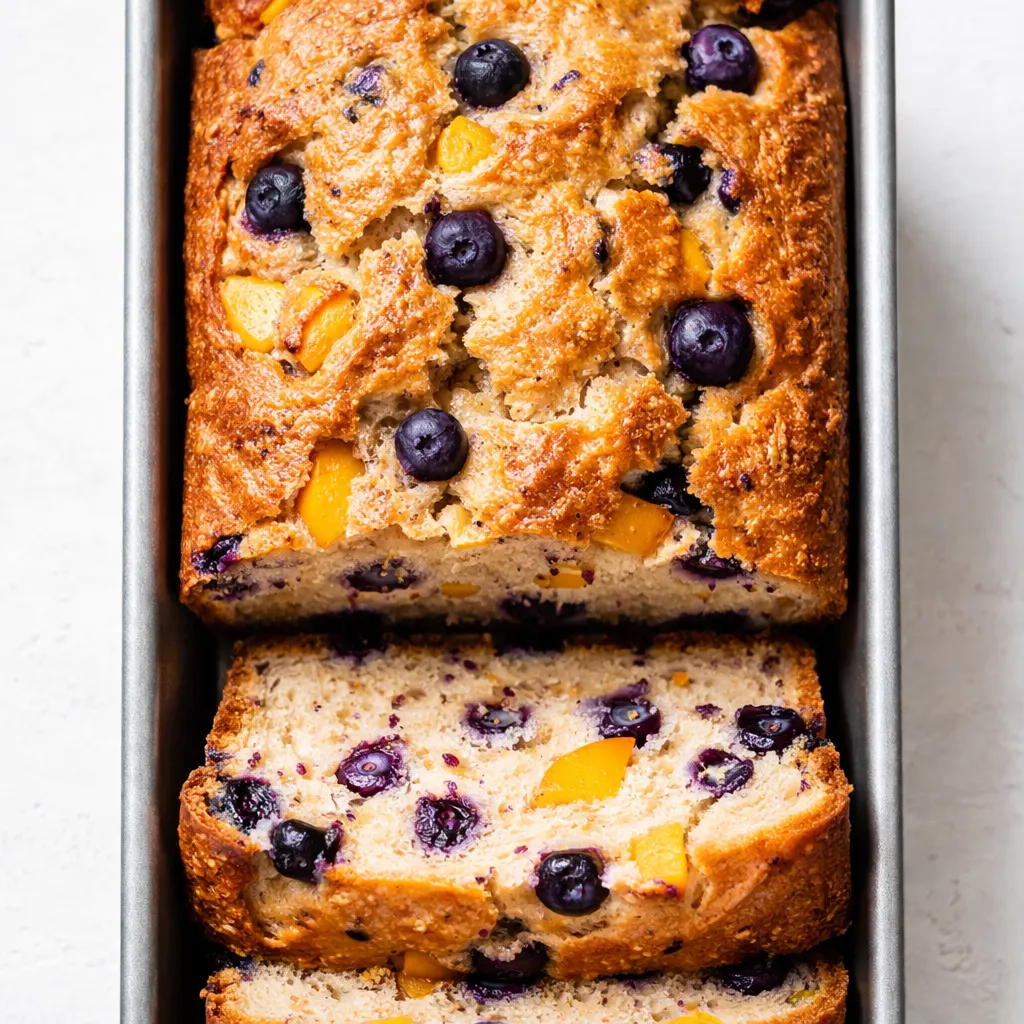
Most quick bread recipes just toss the fruit into the batter and hope for the best. Hope is not a strategy — not when you’ve waited all year for good peaches. The trick with this blueberry peach bread is a quick maceration. Tossing the diced peaches and blueberries with a little sugar and lemon juice draws out their excess moisture before they ever hit the batter. That syrupy liquid gets concentrated and added right back in for flavor, but the fruit itself is dry enough that it won’t weep into your batter and turn it into a pink, soggy mess.
Then we do one more thing: we toss the drained fruit in a tablespoon of flour. That thin coating acts like little anchors. It catches the batter and keeps each piece of fruit exactly where you put it — suspended all the way through the loaf, not slumped at the bottom. I learned this trick from Marta, who used it for her plum cake, and I’ve never made fruit bread any other way since.
Everything You Need (Plus My Honest Notes)
- 2 medium peaches (about 1 cup diced): Firm but ripe. If they’re mushy, they’ll fall apart in the maceration. I like to leave the skin on for color and texture — it softens as it bakes and you won’t even notice it.
- 1 cup fresh or frozen blueberries: If using frozen, don’t thaw them first. My kids love picking through the bowl to find the “juice bombs.”
- 1 cup granulated sugar, divided: 2 tablespoons go into the maceration, the rest goes into the batter.
- 1 tablespoon lemon juice: Fresh is best here. It keeps the peaches from browning and brightens the whole loaf.
- 1 ½ cups all-purpose flour, plus 1 tablespoon for the fruit: Spoon and level your flour — scooping it packs it down and makes the bread dense.
- 1 ½ teaspoons baking powder
- ½ teaspoon baking soda
- ½ teaspoon salt
- 2 large eggs: Room temperature if you remember, straight from the fridge if you don’t.
- ½ cup plain yogurt: Whole milk keeps it tender, but low-fat works too. Greek yogurt is fine, just thin it with a splash of milk.
- ⅓ cup melted butter or neutral oil: Butter gives more flavor. Oil gives a softer crumb. You choose based on your mood.
- 1 teaspoon vanilla extract
What to Pull Out Before You Start
- A 9×5-inch loaf pan — glass, metal, or ceramic all work
- Two mixing bowls (one medium, one large)
- A whisk and a rubber spatula
- A wire rack for cooling (don’t skip this, it keeps the bottom from steaming)
Let’s Make It, Step by Step
This moves quickly once you start, so read through the steps once before you turn on the oven. Trust me — I’ve forgotten the maceration step more than once and regretted it every time.
Prep, Macerate & Preheat:
- Macerate: Dice the peaches into ½-inch pieces (skin on is fine). Add them to a bowl with the blueberries, 2 tablespoons of the sugar, and the lemon juice. Stir gently and let it sit for 15 minutes. This is the step that saves your bread from turning into a soggy loaf.
- Preheat: Set your oven to 350°F. Grease your loaf pan with butter or nonstick spray and line the bottom with a strip of parchment if you want to be extra sure it releases.
- Drain and toss: After 15 minutes, pour the fruit into a fine-mesh strainer set over a bowl. Save that liquid! It’s pure peach-and-blueberry syrup. Toss the drained fruit with the reserved 1 tablespoon of flour until every piece is lightly coated. (📸 Photo tip: The fruit should look dusty, not wet. If it’s still damp, pat it gently with a paper towel.)
The Batter:
- Mix wet: In a large bowl, whisk the remaining sugar with the melted butter (or oil). Add the eggs one at a time, whisking well after each. Whisk in the yogurt, the vanilla, and the reserved maceration liquid.
- Mix dry: In a separate bowl, whisk together the 1 ½ cups flour, baking powder, baking soda, and salt.
- Combine: Pour the dry ingredients into the wet and fold gently with a spatula until just combined. A few streaks of flour are fine — overmixing is the enemy of tender bread. (📸 Photo tip: The batter will be thick and shaggy, not smooth and runny. That’s exactly what you want.)
- Fold in fruit: Add the floured fruit to the batter and fold it in with just three or four strokes. Don’t overwork it. Spread the batter evenly into the prepared pan.
Bake and Cool:
- Bake: Bake for 55 to 65 minutes, or until a toothpick inserted into the center comes out with a few moist crumbs clinging to it — not wet batter. The top should be golden and spring back when you press it gently with your finger. That touch test has never failed me.
- Cool: Let the bread rest in the pan on a wire rack for 10 minutes. Then turn it out onto the rack and let it cool completely. I know the smell is going to make you want to cut into it immediately, but the crumb is still setting. Give it at least an hour. It’s worth the wait.
Make It Ahead (Because Summer Is for Living)
I make this on Sunday nights so we have it for the week ahead. It stays perfect on the counter wrapped in parchment for three days. Baked and wrapped tightly, it freezes beautifully for up to a month. I wrap individual slices in plastic wrap and pull them out for lunchboxes — they thaw in about 30 minutes on the counter.
- Fridge: Wrapped in parchment inside an airtight container, it keeps for 4-5 days.
- Freezer: Wrap the whole loaf or individual slices in plastic wrap, then a layer of foil. Thaws overnight on the counter.
- Reheat: 300°F oven for 10 minutes brings back that fresh-baked feeling. The microwave works in a pinch but it softens the crust — I don’t recommend it.
My Best Advice After Way Too Many Loaves
- Don’t skip the maceration. I know it’s an extra bowl and 15 minutes of waiting. But it’s the single thing that separates this bread from every other soggy fruit loaf you’ve made. That syrupy juice you drain off? Add it to the batter. It concentrates the flavor of the fruit into every bite.
- Fresh vs. frozen. Fresh peaches in season are unbeatable. But frozen blueberries (added straight out of the bag, still frozen) actually work wonderfully here — they stay plump and juicy without bleeding into the batter. Just don’t thaw them first.
- The cool-down is non-negotiable. I let my first loaf cool for exactly 20 minutes before I cut into it. It was still warm, but the texture was gummy. The next one I let cool for a full hour and a half. The difference was night and day. The crumb finishes setting as it cools, and the fruit stops steaming. Patience pays off.
Ways to Make It Your Own
- Whole wheat: Substitute half the all-purpose flour with white whole wheat flour. Add an extra tablespoon of yogurt or milk — whole wheat absorbs more liquid.
- Dairy-free: Use melted coconut oil instead of butter, and a thick plain dairy-free yogurt (I like the one from Silk or Forager). My neighbor’s son can’t do dairy and he ate half a loaf in one afternoon.
- Spice it up: A ½ teaspoon of cinnamon or cardamom in the flour mixture is lovely with the peach. I do this in the fall when I’m craving something warmer.
- Gluten-free: Use a 1:1 gluten-free baking flour blend (the one with xanthan gum already in it). Toss the fruit in the same GF flour so it still has something to grab onto.
- Different fruit combos: Nectarines instead of peaches, blackberries instead of blueberries, or try diced plums in late summer. The maceration trick works for any fruit that’s on the softer side.
Questions I Always Get About This Bread
Q: Why did my fruit sink to the bottom?
A: This usually happens when the batter is too thin or the fruit wasn’t floured. Make sure you toss the fruit in that tablespoon of flour after draining it. Also, your batter should be thick and scoopable — if it looks runny, add an extra tablespoon of flour.
Q: Can I use frozen peaches?
A: You can, but thaw and drain them well first. Frozen peaches hold a lot of water. Pat them dry with a paper towel before macerating. I’d actually recommend using fresh peaches for the best texture, but frozen works in a pinch.
Q: How do I know when it’s done?
A: A toothpick inserted into the center should come out with a few moist crumbs clinging to it — not wet batter. Also, the top should spring back when you gently press it with your finger. If it leaves a dent, it needs another 5-7 minutes.
Q: Can I double this for two loaves?
A: Absolutely. It makes a wonderful gift for neighbors or hostesses. Wrap it in parchment and tie it with twine. If you’re baking two loaves at once, rotate the pans halfway through the bake time.
More Recipes My Family Makes on Repeat
If you liked this one, here are a few others that get the same reaction at our table:
- [INTERNAL LINK PLACEHOLDER: Marta’s Famous Apple Cake] — The one that started it all, with a brown butter glaze you’ll want to put on everything.
- Farmhouse Zucchini Bread — For when the garden is overflowing and you need a loaf that disappears in 15 minutes.
- Brown Butter Banana Bread — The most popular recipe on the blog, and for good reason.
This bread makes the whole house smell like summer. It’s the kind of simple, honest baking that doesn’t need fancy ingredients — just ripe fruit and a little patience. I hope it becomes a staple in your kitchen the way it has in mine. If you make it, drop a comment below and tell me how it turned out. Those stories and stars mean more to me than you know.
📌 Pin this Blueberry Peach Bread recipe for your late-summer baking list — it’s the quick bread that actually keeps the fruit suspended in every single slice, no soggy bottoms.
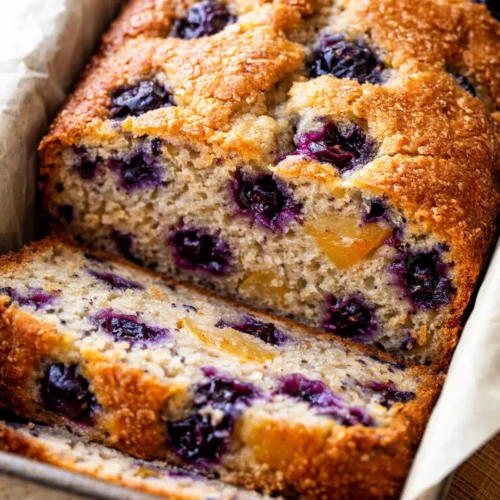
Blueberry Peach Bread
Equipment
- 9×5-inch loaf pan
- Medium Mixing Bowl
- Large Mixing Bowl
- Whisk
- Rubber spatula
- Wire Rack
- Fine-mesh strainer
Ingredients
- 2 medium peaches (about 1 cup diced)
- 1 cup fresh or frozen blueberries
- 1 cup granulated sugar (divided)
- 1 tablespoon fresh lemon juice
- 1 tablespoon all-purpose flour
- 1 1/2 cups all-purpose flour
- 1 1/2 teaspoons baking powder
- 1/2 teaspoon baking soda
- 1/2 teaspoon salt
- 2 large eggs
- 1/2 cup plain yogurt (whole milk preferred)
- 1/3 cup melted butter or neutral oil
- 1 teaspoon vanilla extract
Instructions
- Dice peaches into 1/2-inch pieces (skin on). Combine with blueberries, 2 tablespoons of the sugar, and lemon juice. Let sit 15 minutes. Drain through a fine-mesh strainer, reserving the liquid. Toss the drained fruit with 1 tablespoon flour until lightly coated.
- Preheat oven to 350°F. Grease a 9×5-inch loaf pan with butter or nonstick spray. Line bottom with parchment for easy release.
- In a large bowl, whisk the remaining sugar with melted butter. Add eggs one at a time, whisking well. Whisk in yogurt, vanilla, and reserved maceration liquid. In a separate bowl, whisk together 1 1/2 cups flour, baking powder, baking soda, and salt. Fold dry into wet until just combined — a few streaks of flour are fine.
- Fold in the floured fruit gently with 3-4 strokes. Spread batter evenly into prepared pan.
- Bake for 55-65 minutes, until a toothpick inserted in center comes out with a few moist crumbs (not wet batter) and the top springs back when pressed. Cool in pan on a wire rack for 10 minutes, then turn out onto the rack to cool completely — at least 1 hour before slicing.
Notes
Related posts:
 High-Protein Overnight Oats That Actually Taste Like Breakfast (Not a Chalky Disaster)
 The Slow Cooker Cowboy Casserole That Saves Tired Weeknights (No Soggy Tots Allowed)
 Quick Lemon Ricotta Pasta for Busy Weeknights: Creamy, Bright, and on the Table in 20 Minutes
 Lemon Garlic Butter Baked Salmon in Foil That’s Ready in 25 Minutes — No Fuss, No Mess
 Moist Chocolate Zucchini Bread That Doesn’t Turn Out Rubbery — Finally
 Creamy Homemade Strawberry Dole Whip (That Tastes Just Like the Real Thing)