
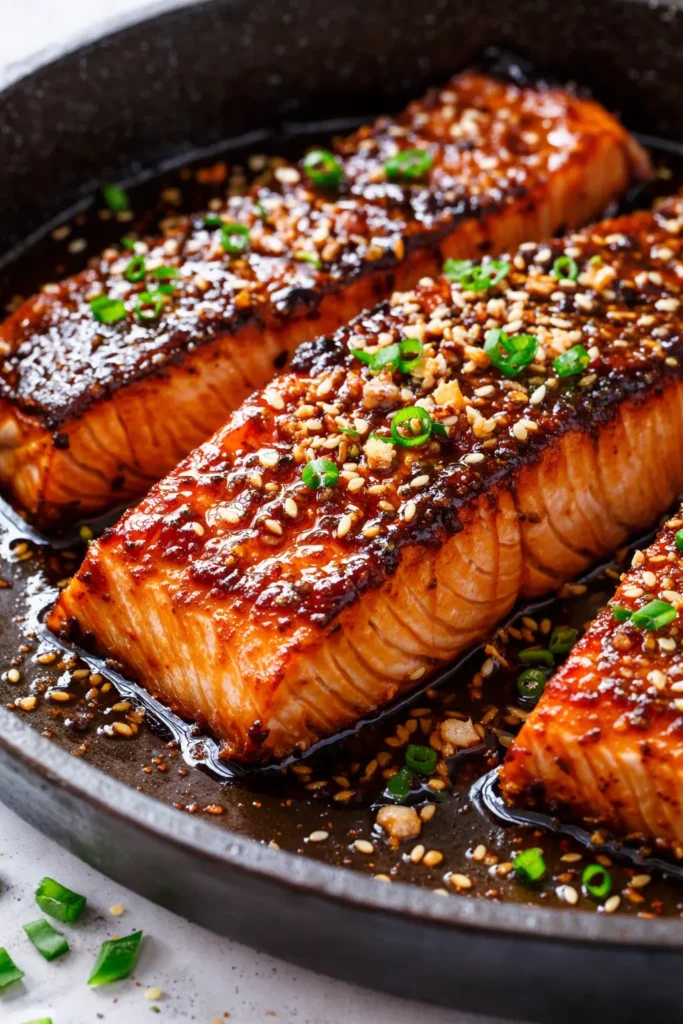
Every time someone asks me for an easy dinner that still feels special, I tell them about this honey garlic soy glazed salmon before I even finish the sentence. The glaze turns glossy and caramelized, the edges of the salmon get that crispy golden crust, and the middle stays buttery and tender. It’s the kind of meal that takes 25 minutes but tastes like you actually tried. I make it on the busiest school nights, and I’d double it for a birthday dinner without blinking.
The short version: Sticky-sweet glaze, crispy-edged salmon, done in 25 minutes — and my kids eat it without a single complaint.
I’ve made this once a week for the past two years, and my nine-year-old now calls it “the sticky fish” and asks for seconds. Every. Single. Time. When a recipe survives that many Tuesdays in my kitchen, it earns its place in the rotation for good.
- Serves: 4 as a main
- Hands-On Time: 15 min | Total Time: 25 min
- Difficulty: Easy, even on a school night
- Cost per serving: about $5
- Calories: ~370 per serving
- Dietary Notes: Naturally dairy-free and nut-free; gluten-free with tamari
(Photo above: overhead shot of two glazed salmon fillets resting over jasmine rice on a white dinner plate, the glossy sauce pooling at the edges and sliced green onions and sesame seeds scattered on top, warm evening light coming from a kitchen window at the left.)
The Secret to a Sticky Glaze That Doesn’t Burn on the Pan
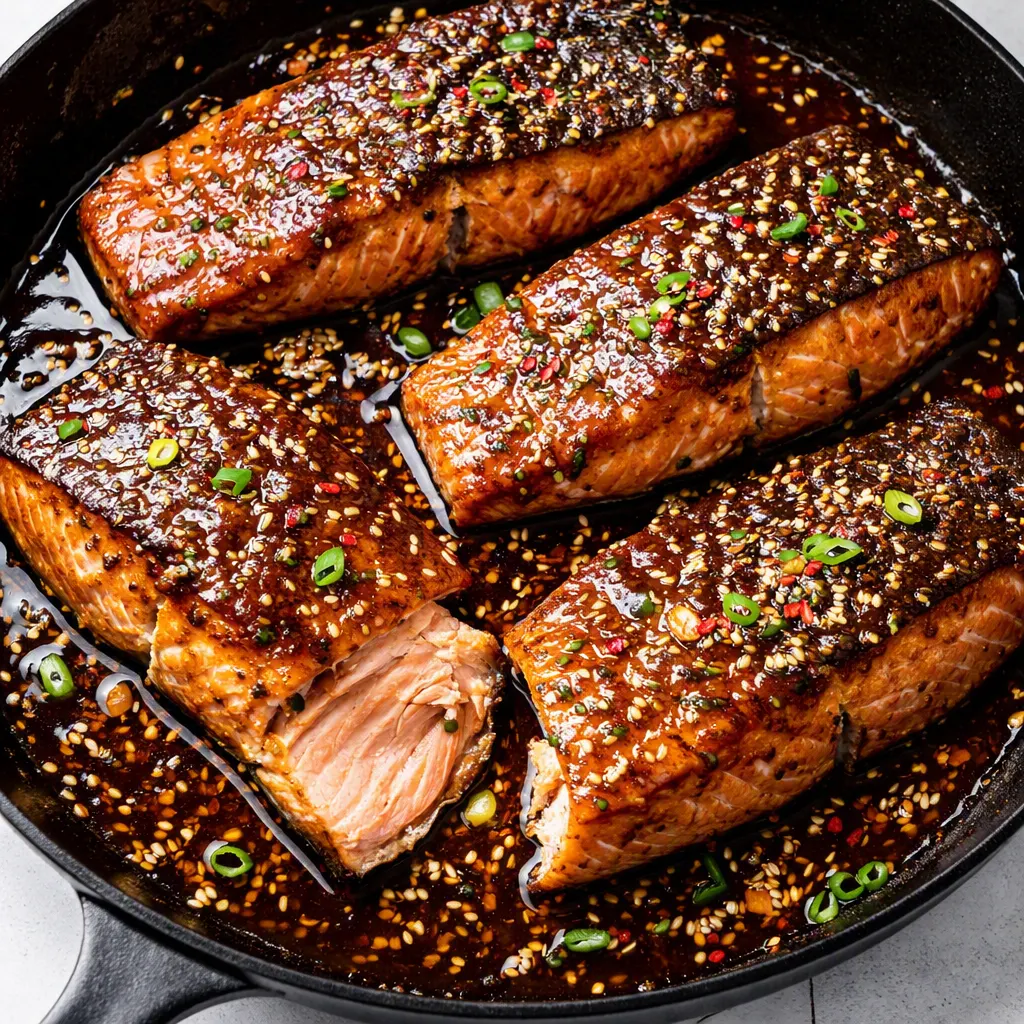
I burned more pans than I want to admit before I figured this out. Honey is delicious, but it’s also the quickest thing on earth to go from beautiful amber to bitter and burnt. The fix is simple: keep the heat at medium-low once the glaze goes into the pan, and don’t walk away. Sixty seconds of simmering is all it takes for the sauce to thicken into a glaze that clings to every fold of the salmon. If you look away, you’ll know it — and so will the smoke detector.
The other non-negotiable is drying the salmon really, really well before searing. If the fillets are wet, they steam instead of sear, and no honey in the world can save a soggy piece of fish. Pat them with paper towels like you mean it. This is the step I skipped for way too long, and it’s the difference between “that’s nice” and “wow, what did you do to this?”
Do both of those things and you get the exact result the recipe promises: crispy-edged fillets, a glossy sauce that tastes like a better version of you, and a meal that looks like you fussed when you absolutely did not.
The Ingredients (Plus My Honest Notes)
- 4 salmon fillets (about 6 oz each), skin-on: The skin is your insurance against a ruined dinner — it crisps up like a little bonus snack and protects the fish while it cooks. Ask your fishmonger for center-cut fillets so they’re roughly the same thickness and cook evenly.
- 1/3 cup low-sodium soy sauce: The salty backbone of the whole thing. You want a bottle, not the takeout packets. If you’re gluten-free, tamari swaps in seamlessly.
- 1/4 cup honey: Use a honey you actually like the taste of, because its flavor is the star here. The clover stuff is fine, but orange blossom honey is next level. (My kids can smell it when I use a cheaper one — I’m not exaggerating.)
- 4 garlic cloves, minced: Fresh garlic makes the glaze sing. Jarred minced garlic will get you to the finish line, but the fresh stuff right from the press is better here. Just know that garlic burns fast, so mince it fine.
- 1 tbsp fresh ginger, grated: Ginger and honey are best friends. I keep a knob in the freezer and grate it straight from frozen — nothing clings to the grater and it’s always ready. If you’re out, 1/2 tsp of ground ginger works in a pinch, though it’s a little less bright.
- 2 tbsp rice vinegar: The quiet brightness that keeps the glaze from being cloying. If you don’t have rice vinegar, a splash of fresh lime juice is a surprisingly good stand-in; it changes the flavor to more Mexican-leaning, which is also delicious in its own way.
- 1 tbsp toasted sesame oil: That warm, nutty, “what IS that?” note that makes the whole dish feel like takeout-quality, but better, because you made it. I’ve accidentally used plain vegetable oil instead, and honestly, don’t do that.
- 1 tsp cornstarch + 1 tbsp water: The “just in case” slurry. If your glaze won’t thicken, this is the rescue. I add it to the pan with a spoon and it puffs up instantly into a glossy finish.
- Sliced green onions and white sesame seeds, for serving: Not optional. They make it prettier and add a little freshness that cuts through the caramelized glaze.
What to Pull Out Before You Start
- A 12-inch skillet — cast iron or heavy stainless steel works best. Nonstick will also do.
- A fish spatula (or a thin slotted spatula)
- A small bowl for the glaze
- Tongs, for flipping
- Paper towels — lots
If you’re missing the fish spatula, a regular thin spatula works fine. Just use the edge to get under the fillet, and don’t force it — the fish will tell you when it’s ready.
Let’s Make It (Step by Step)
This goes fast, so read the whole thing once before you turn on the stove. Trust me — it’s simple, but the timing matters.
Start: Pull your salmon out of the fridge and let it sit at room temperature for 10 minutes.
- Whisk the glaze: In a small bowl, whisk together the soy sauce, honey, minced garlic, grated ginger, rice vinegar, and sesame oil. Set it near the stove — you’ll need it at the right moment. (📸 Photo tip: a small glass bowl of the dark, glossy glaze, light hitting the edges.)
- Dry the salmon: Pat each fillet dry with paper towels — I mean really dry, both sides. Then season both sides lightly with salt and pepper. This step is the whole game; skipping it means the salmon steams instead of searing.
- Heat the skillet: Put the skillet over medium-high heat and add a small drizzle of neutral oil (like canola or avocado). When the oil is shimmering but not smoking, you’re ready. A little test: hold your hand a few inches above the pan. If you can’t keep it there for more than a couple seconds, you’re good.
- Sear skin-side down: Place the fillets in the pan, skin-side down, and let them cook undisturbed for 4-5 minutes. You’ll see the skin turn golden and the edges go a shade lighter. This is where the magic happens — don’t poke at them, don’t flip early. (📸 Photo tip: the salmon skin golden and crisp, glossy with a small pool of oil around each fillet.)
- Flip and pour the glaze: Flip each fillet carefully with your spatula. Turn the heat down to medium-low and pour the glaze into the pan, pouring it around and over each piece. It’ll bubble up immediately — that’s exactly what you want.
- Baste and thicken: Let the glaze simmer gently for 2-3 minutes, spooning it over the tops of the salmon as it goes. You’ll see it change from a thin liquid to a syrupy, glossy glaze. That’s your cue. If it’s not thickening after 3 minutes, whisk in the cornstarch slurry — I’ve never once been sad I had it ready. (📸 Photo tip: the glaze coating the salmon, glossy and thick, a spoon lifting a ribbon of sauce.)
- Rest: Transfer the salmon to plates with a spatula and let it rest for 2-3 minutes. This is non-negotiable if you want the flakes to hold together instead of falling apart.
- Garnish and serve: Sprinkle with sliced green onions and sesame seeds. Serve it over jasmine rice with vegetables on the side, or on its own if you’re keeping things simple.
How I Meal Prep This for the Week
I make a double batch of the glaze on Sundays — it keeps in a jar in the fridge for up to 5 days, and then dinner on Wednesday night becomes just: dry, sear, pour, done. When I really have my act together, I also portion out four fillets on a plate, pat them dry, and keep them in the fridge so the whole thing turns into a 15-minute hands-on dinner. My kids know that “fancy fish night” is less about the meal and more about getting it on the table before homework starts.
- Fridge: Cooked salmon keeps in an airtight container for up to 3 days. Reheat gently so it doesn’t dry out.
- Freezer: Yes, you can freeze cooked salmon for up to 2 months. The skin will lose its crispness in the fridge, but the flavor is still excellent. The glaze itself freezes beautifully too — freeze in a bag, thaw overnight.
- Reheat: Best way is a low oven (275°F) or a skillet with a splash of water over low heat, covered — that keeps the fish moist without microwaving the delicate edges to rubber.
Things I Wish I’d Known the First Time
- Don’t crowd the pan. Four fillets in a 12-inch skillet is the max. If you cram in more, the pan cools down and everything steams instead of searing. Cook in two batches and keep the first batch warm in a low oven. And even if you do crowd it a little, it’ll still taste good — just a little less crispy. I’ve done it, and the kids didn’t complain once.
- Watch the heat like a hawk. Honey goes from golden to burnt-almond-bitter in about 20 seconds. Once the glaze hits the pan, you’re stirring, basting, and staying. I know it sounds like a lot of attention, but the active time is maybe 3 minutes of your life.
- Don’t pre-marinate in the glaze. Acid and salt in the marinade will “cook” the outside of the fish and make it watery. Sear first, then add the glaze. This is the difference between fish that flakes beautifully and fish that’s mealy on the outside. I learned this after ruining a few very expensive fillets.
- Keep the cornstarch slurry handy. If the glaze reduces properly — you’ll see it turn syrupy in the pan — you don’t need it. But it’s the best insurance against a runny glaze, and it takes 10 seconds to stir together. Even if you forget it, the dish will still be good; it just won’t look as glossy in the photos.
Swaps That Actually Work
- Gluten-free: Use tamari or coconut aminos instead of soy sauce. I’ve tested tamari and it works 1:1 — the flavor is essentially identical. Coconut aminos add a slightly sweeter note; if you use it, dial the honey back a touch.
- Spicy: Add 1 teaspoon sriracha or a pinch of crushed red pepper to the glaze. I do this to my portion after the kids get theirs — it turns the whole dish into a different kind of craving.
- Maple twist: Swap the honey for maple syrup, and add an extra tablespoon of rice vinegar. The maple version is a little deeper, a little more fall-ish, and genuinely excellent over roasted brussels sprouts on the side.
- Chicken thighs (if you’ve got chicken people): This glaze is incredible on boneless skinless chicken thighs. Sear them 5-6 minutes per side over medium heat, then add the glaze and finish in a 400°F oven for 5 minutes. Different dish, same energy.
- Low-sugar: Honey and maple are the stars, but if you’re watching sugar, cut the honey to 2 tablespoons and add an extra splash of rice vinegar. It’s less sticky, more savory — still great.
Questions I Get About This Salmon All the Time
Q: Why did my glaze burn and turn bitter?
A: Ugh, I’ve been there too. Nine times out of ten it’s the heat being too high after you pour the glaze in. Honey has a low burn point. Keep the pan at medium-low once the glaze goes in, stay by the stove, and stir continuously for those 2-3 minutes. You’ve got this next time — the first batch still tasted good, right?
Q: Can I make this with frozen salmon?
A: Yes, but thaw it completely first. Thaw in the fridge overnight or in a bowl of cold water for a quick thaw. No matter what, pat it as dry as you possibly can — frozen fish holds extra water and will steam if you don’t dry it well. Then follow the recipe exactly as written.
Q: How long will leftovers keep? Can I freeze them?
A: Cooked salmon keeps for up to 3 days in the fridge in an airtight container. For the freezer, it’ll keep up to 2 months — wrap each fillet in plastic wrap, then keep them all together in a freezer bag. Expect the crispy skin to soften after reheating; the flavor will hold up. Warm it in a 275°F oven for about 10 minutes to bring it back to life without drying it out.
Q: What do you usually serve with this honey garlic soy glazed salmon?
A: Jasmine rice is our go-to — it soaks up the extra glaze. On the side, I do roasted broccoli with a drizzle of sesame oil, or a quick cucumber salad with rice vinegar and a pinch of salt. My kids really like it with buttered noodles — apparently “sticky fish” and buttery pasta is their dream combination. Who am I to argue?
More Recipes My Family Makes on Repeat
If this one wins you over, my family has a few other favorites you might love too:
- [INTERNAL LINK PLACEHOLDER: Garlic Butter Roasted Chicken Thighs] — the weeknight chicken dish that’s crispy on the outside, juicy in the middle, and disappears before anyone says “can I have more?”
- [INTERNAL LINK PLACEHOLDER: One-Pan Lemon Orzo with Spinach] — the side dish that somehow makes a plain Tuesday feel like a little bit of an occasion.
- [INTERNAL LINK PLACEHOLDER: Sheet Pan Fajitas] — my kids ask for this by name at least once a week, and I don’t fight it because the oven does all the work.
Go Make It (and Tell Me How It Went)
When salmon looks this fancy but takes just over 20 minutes, it deserves a permanent place in your dinner rotation — on a busy school night or a Friday you just want something good. The glaze is forgiving once you know the two rules: dry the fish, watch the heat. Everything else is pure joy.
If you try this honey garlic soy glazed salmon, leave me a comment below — I genuinely read every one. And tag me on Pinterest or Instagram with a photo of yours, because I love seeing what other kitchens do with it.
📌 Sticky honey garlic soy glazed salmon in just 25 minutes — save it for your next busy weeknight dinner.
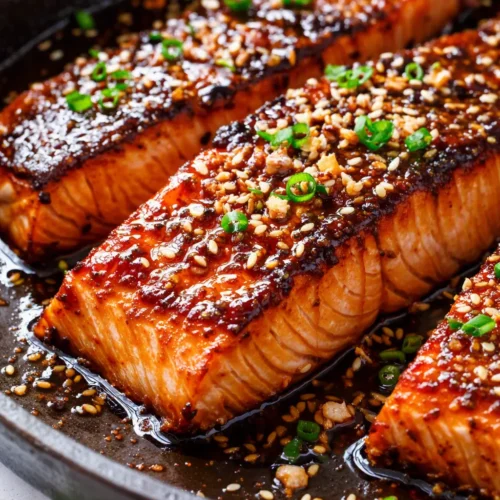
Honey Garlic Soy Glazed Salmon
Equipment
- 12-inch skillet (cast iron or heavy stainless steel)
- Fish Spatula
- Small bowl
- Tongs
- Paper towels
Ingredients
- 4 fillets salmon fillets (about 6 oz each), skin-on
- 1/3 cup low-sodium soy sauce
- 1/4 cup honey
- 4 cloves garlic, minced
- 1 tbsp fresh ginger, grated
- 2 tbsp rice vinegar
- 1 tbsp toasted sesame oil
- 1 tsp cornstarch
- 1 tbsp water
- Sliced green onions and white sesame seeds, for serving
- Neutral oil, like canola or avocado, for searing
- Salt and pepper, to taste
Instructions
- Take the salmon out of the fridge and let it sit at room temperature for 10 minutes while you make the glaze.
- In a small bowl, whisk together the soy sauce, honey, minced garlic, grated ginger, rice vinegar, and toasted sesame oil. Set it near the stove.
- Pat each salmon fillet very dry with paper towels on both sides, then season lightly with salt and pepper.
- Heat a 12-inch skillet over medium-high heat with a small drizzle of neutral oil until shimmering but not smoking.
- Place the fillets skin-side down and cook undisturbed for 4-5 minutes until the skin is golden and crisp.
- Flip carefully, turn the heat to medium-low, and pour the glaze around and over each fillet. Let it bubble gently.
- Simmer for 2-3 minutes, spooning the glaze over the salmon until it turns syrupy and glossy. If needed, whisk in the cornstarch slurry to thicken.
- Transfer the salmon to plates, rest for 2-3 minutes, then garnish with sliced green onions and sesame seeds. Serve over jasmine rice or with vegetables.
Notes
Related posts:
 The Slow Cooker Cowboy Casserole That Saves Tired Weeknights (No Soggy Tots Allowed)
 Quick Lemon Ricotta Pasta for Busy Weeknights: Creamy, Bright, and on the Table in 20 Minutes
 Lemon Garlic Butter Baked Salmon in Foil That’s Ready in 25 Minutes — No Fuss, No Mess
 Lipton Onion Soup Meatloaf for Tuesday Nights: Moist, Savory, and the Only One You’ll Ever Need
 Quinoa Chicken Sausage Bowls That Are Ready in 30 Minutes (And Actually Keep Well)
 Creamy Chicken Penne Pasta That’s Silky Smooth in 30 Minutes (No Heavy Cream Required)