
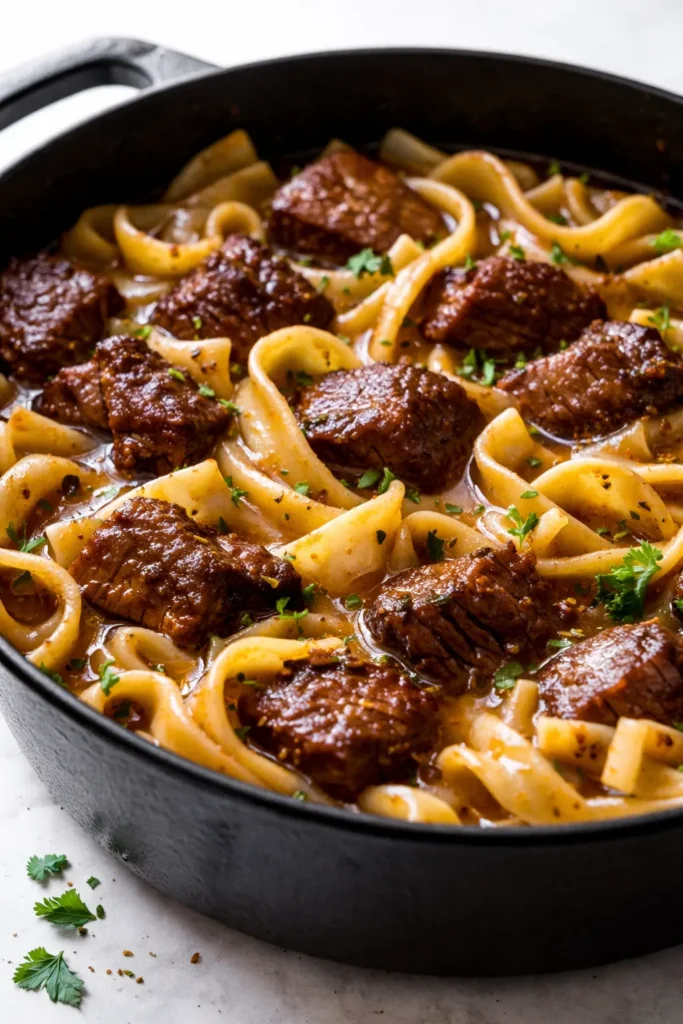
The first time I pulled this pot off the stove, Dan set his fork down after two bites and just looked at me. That’s the quiet you get when something tastes exactly like a memory he didn’t realize he was missing. This beef and noodles recipe doesn’t need a fancy introduction — it’s the kind of dinner that proves itself in a bowl.
The short version: Tender beef, wide noodles, and a rich gravy that tastes like you worked all day — in about 25 minutes of active work.
I’ve made this version close to thirty times now, tweaking the broth until it had that deep, silky quality Marta’s always did. She never wrote down her method for beef and noodles, but I know it started the same way: a hot pan, a cold piece of meat, and the patience to let them work.
- Serves: 6-8 as a main dish
- Hands-On Time: 25 min | Total Time: 2 hr 45 min
- Difficulty: Easy — mostly simmer time, nothing tricky
- Cost per serving: ~$4.50
- Calories: ~520 per serving
- Dietary Notes: Can be made gluten-free with wide rice noodles
(Photo above: A deep ceramic bowl filled with wide egg noodles and large, tender chunks of beef in a dark, glossy gravy. Fresh parsley scattered on top. Steam rising in the cool afternoon light from my kitchen window.)
Why the Broth Matters More Than the Meat (Almost)
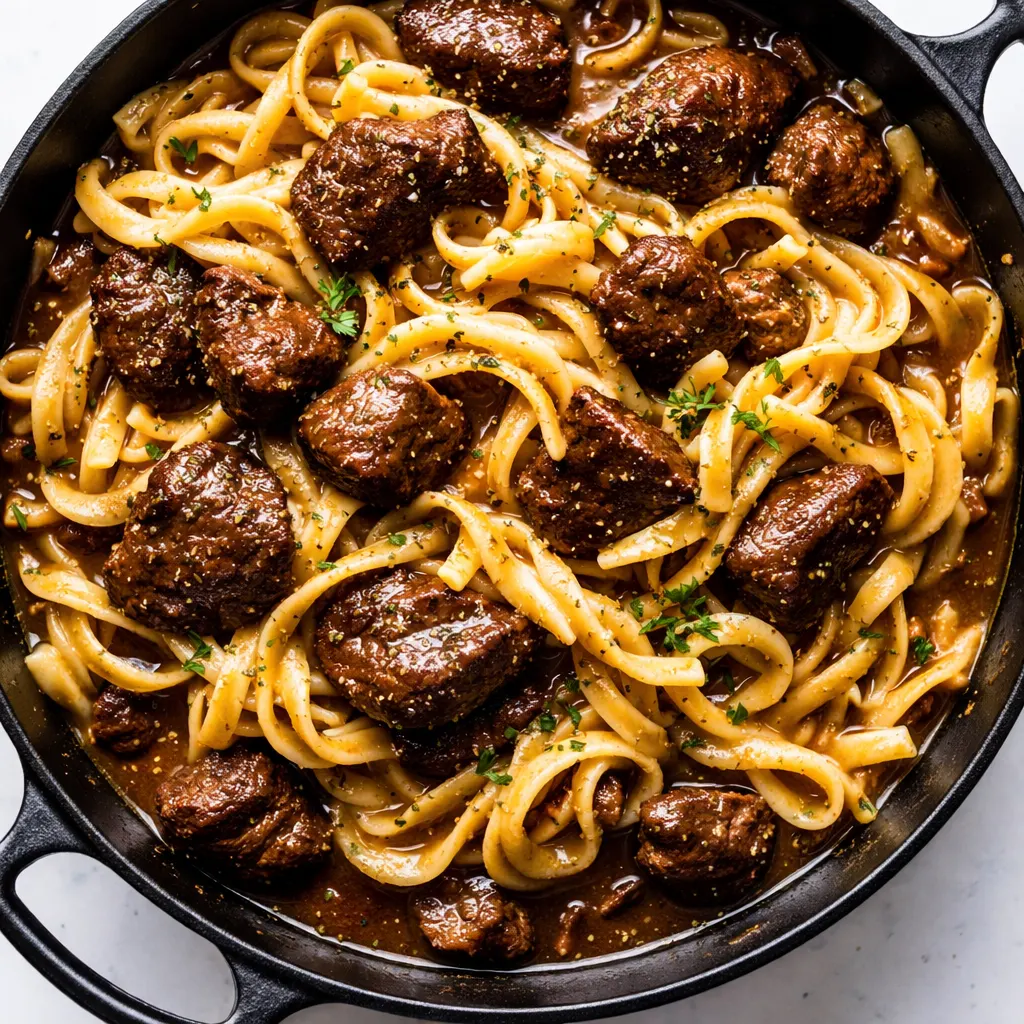
You can use the best cut of beef in the world, but if the broth is thin and watery, you’ve missed the point. This recipe builds flavor from the very first step — searing the meat until it forms a dark, sticky crust on the bottom of the pot. That layer is called fond, and it’s the foundation of everything that comes after.
Deglazing that pan with a splash of broth lifts all that browned goodness back into the liquid. Combined with a long, slow simmer, it transforms into a gravy that clings to the noodles and coats the inside of your bowl. No add-ins needed.
This is the kind of meal that fills the whole house with the smell of something cooking that knows what it’s doing.
What Goes In (And What You Can Skip)
- 2 lbs beef chuck, cut into 1½-inch cubes: The marbling here is key — it breaks down into something you can barely call meat. So tender it almost melts. Generics rule: skip anything labeled “stew meat” if it looks too lean; you need the fat for flavor.
- 1 large yellow onion, diced: The backbone of the savory flavor. I’ve tried this with sweet onions — it works, but yellow gives the gravy a better color and depth.
- 3 cloves garlic, minced: Two is fine in a pinch, but three feels right here.
- 2 tbsp tomato paste: This might sound out of place, but it adds a deep umami richness without tasting like tomatoes at all. My kids have no idea it’s in there, and I’m not telling.
- 3 tbsp all-purpose flour: For thickening the gravy. If you’re gluten-free, a 1-to-1 blend works perfectly here.
- 4 cups low-sodium beef broth + 1 cup water: Low sodium is important so you control the salt level. Better than bouillon is my secret shortcut when I’m out of homemade — it’s that concentrated paste in a jar.
- 2 sprigs fresh thyme (or 1 tsp dried): Earthy and subtle. It doesn’t shout over the beef.
- 12 oz wide egg noodles: The wide ones hold onto the gravy so much better than thin noodles. I’ve tested them side by side, and it’s not even close.
- Salt and pepper, to taste: Season as you go, not all at the end.
- Fresh parsley, for serving (optional but pretty): A little green on top makes the bowl feel complete.
What I Pull Out of the Drawer
- A heavy-bottomed Dutch oven or large pot with a tight-fitting lid — I use my 5.5-quart Le Creuset, but any heavy pot works.
- Tongs for turning the meat.
- A wooden spoon — the fond needs a gentle scrape, not a harsh metal scrub.
- A large pot for boiling the noodles.
The Method — No Fancy Skills Required
This one goes mostly unattended. Read through once, then settle in for a slow afternoon.
Prep and Sear:
- Pat the beef dry with paper towels and season generously with salt and pepper. Don’t skip drying — wet meat won’t brown. Heat 2 tbsp of oil in your Dutch oven over medium-high heat until it shimmers. Add the beef in a single layer — work in batches if you need to — and let it sit undisturbed for 3-4 minutes per side until deeply browned. You’re looking for a dark mahogany color, not just pale brown. Transfer to a plate and set aside. (📸 Photo tip: At this stage you should see a deep brown crust on the bottom of the pot — that’s the good stuff.)
- Reduce heat to medium and add the diced onion. Cook, stirring occasionally, for 5-6 minutes until it softens and starts to brown around the edges. Add the garlic and cook one more minute until fragrant.
- Stir in the tomato paste and cook for 1-2 minutes, until it darkens and smells almost caramelized. Sprinkle the flour over everything and stir constantly for 1 minute — this cooks the raw flour taste out. (📸 Photo tip: The mixture will look thick and pasty — that’s correct.)
- Gradually pour in the beef broth and water, scraping the bottom of the pot with your wooden spoon to lift up all that browned fond. Add the thyme sprigs. Return the beef to the pot, along with any juices that collected on the plate. Bring to a gentle simmer, then reduce the heat to low, cover, and let it cook for 2 hours. Check it once or twice to make sure it’s barely bubbling — a rapid boil will make the beef tough.
Finishing the Noodles:
- After 2 hours, the beef should be fork-tender — it should shred easily with a gentle push. If it’s still a little firm, give it another 20-30 minutes. This is the most forgiving part of the process; the longer it sits, the better it gets.
- Cook the egg noodles in boiling salted water until just al dente, about 6-8 minutes. Drain them well and return them to the pot.
- Pour the beef and gravy over the noodles and stir gently to combine. The gravy should be thick enough to coat each noodle — if it’s too thin, let it simmer uncovered for 5-10 minutes before adding to the noodles.
- Taste and adjust seasoning with salt and pepper. Garnish with fresh parsley if you’re feeling fancy. Serve hot.
How I Make This for the Week
This recipe practically begs to be made ahead. I make a double batch on Sunday and we eat it over the next few days — it gets better as the flavors settle in together.
- Fridge: Store in an airtight container for up to 4 days. Keep the noodles and gravy together — the noodles will absorb some liquid but stay tender.
- Freezer: Yes! But freeze the gravy and beef separately from the noodles. The texture of thawed noodles isn’t the same, so cook fresh ones when you reheat.
- Reheat: Warm the gravy and beef gently on the stove over low heat, adding a splash of broth if it’s too thick. Toss in the cooked noodles just before serving.
Things I Wish I’d Known the First Time
- Don’t rush the sear. The browning on the beef is the single most important flavor-building step. If your pot is crowded, the meat will steam instead of sear. I learned this the hard way after a few gray, sad batches.
- Let it rest before serving. If you can wait 10 minutes after it’s done, the noodles will absorb just enough gravy to become perfectly coated without being soggy.
- Trust the low simmer. I know it’s tempting to crank the heat to get dinner done faster, but that will make the beef tough. Low and slow is the only way to get that melt-in-your-mouth texture. Even if you think it’s taking too long, leave it alone.
- If the gravy isn’t thick enough for your liking, take the lid off for the last 20 minutes of simmering. The evaporation will concentrate the flavors and thicken it naturally.
Swaps That Actually Work (I’ve Tried Them)
- Gluten-Free: Use a 1-to-1 gluten-free flour blend in the roux and swap the egg noodles for wide rice noodles or gluten-free pappardelle. This is the version I make for my sister-in-law — she says it’s better than the original.
- Mushroom Version (Meatless): Replace the beef with 1 lb of sliced cremini or portobello mushrooms. Sear them the same way, then proceed with the recipe. The broth still gets deep and savory.
- Spicy Kick: Add ½ teaspoon of red pepper flakes along with the garlic for a gentle warmth that builds as you eat.
- Herb Swap: No thyme? Use a bay leaf and a sprig of rosemary instead. Remove before serving.
Questions My Readers Keep Asking About This
Q: Why did my beef turn out tough instead of tender?
A: Oh, I’ve been there. It happens when the heat is too high during the simmering phase, or when it hasn’t cooked long enough. Beef chuck needs at least 1½ to 2 hours of gentle, low heat to break down all that connective tissue. If it’s still tough after 2 hours, give it another 30 minutes — it will get there.
Q: Can I use ground beef instead of chuck?
A: You can, but it becomes a completely different dish. Brown the ground beef first, drain the fat, and proceed from the onion step. It’s faster, but you won’t get those big, tender chunks of beef.
Q: How long does this keep in the fridge?
A: In an airtight container, it keeps beautifully for 4 days. The flavors actually deepen overnight. Reheat gently on the stovetop with a splash of broth to loosen the gravy.
Q: What do you serve with beef and noodles?
A: I always pair it with something bright and simple. A crisp green salad with a lemony vinaigrette cuts through the richness perfectly. Sometimes I’ll add buttered peas on the side — my kids love them. And always, always a piece of crusty bread to soak up every last drop of that gravy.
More Recipes My Family Makes on Repeat
If you liked this one, here are a few others that get the same quiet-fork reaction at our table:
- Mom’s Chicken and Dumplings — The fluffiest dumplings in a creamy, peppery broth.
- Sunday Pot Roast with Carrots and Potatoes — The one that fills the house with a whole-day aroma.
- Simple Beef Stew with Herbed Biscuits — Hearty, honest, and so easy on a cold evening.
This is the kind of dinner that doesn’t need a side dish or a special occasion — just a bowl and a spoon and people you love. It’s the meal I turn to when I need something to feel solid and right in the middle of a busy week.
If you make it, drop a comment below and let me know how it went — I love hearing what your family thinks.
📌 Save this Beef and Noodles recipe for the first chilly evening when you need something that feels like a long, slow hug.
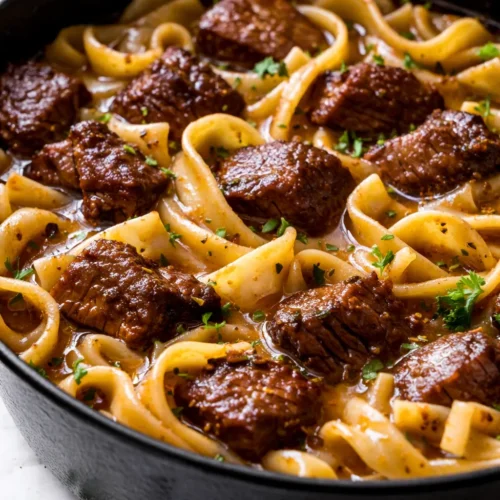
Slow-Simmered Beef and Noodles That Taste Like Sunday Afternoon
Equipment
- Heavy-bottomed Dutch oven or large pot with lid
- Tongs
- Wooden spoon
- Large pot for boiling noodles
Ingredients
For the Beef and Gravy
- 2 lbs beef chuck, cut into 1½-inch cubes
- 2 tbsp vegetable oil or canola oil
- 1 large yellow onion, diced
- 3 cloves garlic, minced
- 2 tbsp tomato paste
- 3 tbsp all-purpose flour
- 4 cups low-sodium beef broth
- 1 cup water
- 2 sprigs fresh thyme (or 1 tsp dried)
- Salt and freshly ground black pepper, to taste
For Serving
- 12 oz wide egg noodles
- Fresh parsley, chopped (for garnish, optional)
Instructions
Prepare the Beef
- Pat the beef dry with paper towels and season generously with salt and pepper. Heat 2 tbsp oil in a Dutch oven over medium-high heat until it shimmers. Add beef in a single layer – work in batches if needed – and let it sit undisturbed for 3-4 minutes per side until deeply browned. Transfer to a plate and set aside.
- Reduce heat to medium. Add the diced onion and cook, stirring occasionally, for 5-6 minutes until softened and beginning to brown. Add the minced garlic and cook one minute more until fragrant.
- Stir in the tomato paste and cook for 1-2 minutes until it darkens and smells caramelized. Sprinkle the flour over everything and stir constantly for 1 minute to cook out the raw flour taste.
- Gradually pour in the beef broth and water, scraping the bottom of the pot with a wooden spoon to lift up the browned fond. Add the thyme sprigs. Return the beef along with any accumulated juices to the pot. Bring to a gentle simmer, then reduce heat to low, cover, and cook for 2 hours. Check occasionally to ensure it’s barely bubbling.
Finish the Dish
- After 2 hours, the beef should be fork-tender – it should shred easily with a gentle push. If still firm, cook another 20-30 minutes.
- Cook the egg noodles in boiling salted water until al dente, about 6-8 minutes. Drain well and return to the pot.
- Pour the beef and gravy over the noodles and stir gently to combine. If the gravy is too thin, let it simmer uncovered for 5-10 minutes before adding to the noodles.
- Taste and adjust seasoning with salt and pepper. Garnish with fresh parsley if desired. Serve hot.
Notes
- Don’t rush the sear – crowding the pot steams the meat instead of browning.
- Let the dish rest 10 minutes before serving so noodles absorb the gravy perfectly.
- If the gravy is too thin, simmer uncovered for the last 20 minutes to reduce.
- Store leftovers in an airtight container for up to 4 days. Reheat gently with a splash of broth.
- Freeze the gravy and beef separately from the noodles for best results.
- Gluten-free: Use 1-to-1 gluten-free flour and wide rice noodles.
- Meatless: Replace beef with 1 lb sliced cremini mushrooms.
- Spicy: Add ½ tsp red pepper flakes with the garlic.
Related posts:
 Mini Quiche Recipe: The Store-Bought Crust Version That Tastes Like You Made It From Scratch
 The Slow Cooker Cowboy Casserole That Saves Tired Weeknights (No Soggy Tots Allowed)
 Quick Lemon Ricotta Pasta for Busy Weeknights: Creamy, Bright, and on the Table in 20 Minutes
 Lemon Garlic Butter Baked Salmon in Foil That’s Ready in 25 Minutes — No Fuss, No Mess
 Lipton Onion Soup Meatloaf for Tuesday Nights: Moist, Savory, and the Only One You’ll Ever Need
 Kielbasa Sausage Cheesy Potato Casserole That Tastes Like Sunday Dinner — In Under an Hour