
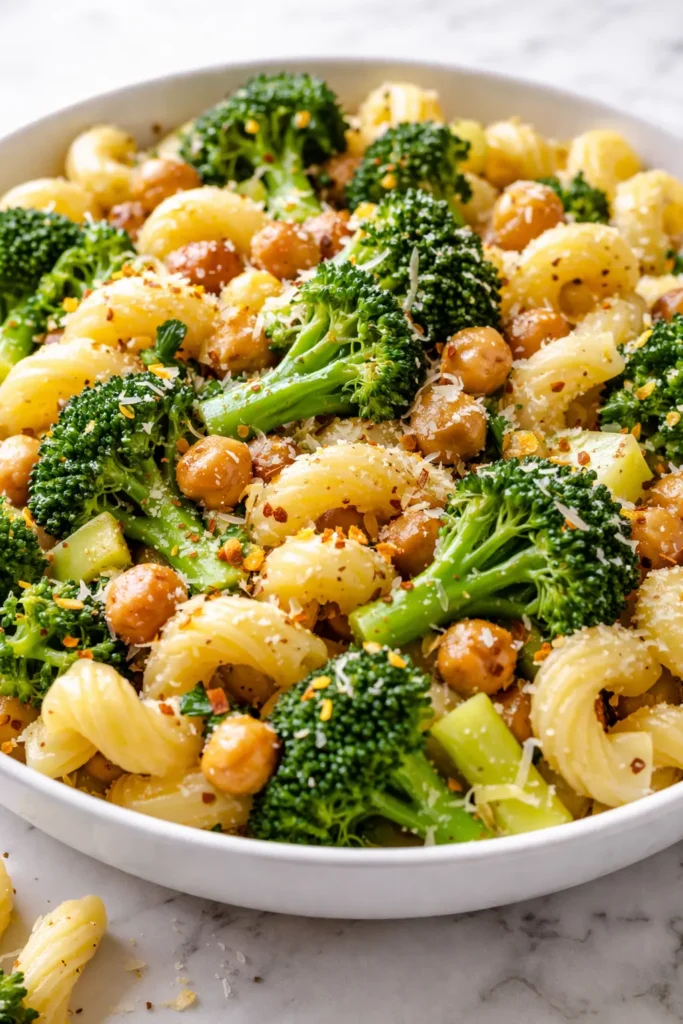
The first time I made this Broccoli Chickpea Pasta, I was trying to clean out the pantry on a Tuesday night. I didn’t expect it to become the most-requested meatless meal in my house. But here we are — almost two years later, and I still get asked for it at least once a week. The sauce clings to every piece of pasta without being heavy, the broccoli gets charred at the edges, and the chickpeas turn just crispy enough to add texture. It’s the kind of dinner that feels good to eat and even better to know you can pull off on a busy weeknight.
The short version: One pot, a single sheet pan, about 20 minutes total, and my kids have never once complained about a meatless dinner. That’s a win in my book.
I’ve made this roughly 30 times since last fall, tweaking the ratio of pasta to broccoli and chickpeas until it felt just right. My husband, who usually wants meat at every meal, asked me to put it in the regular rotation. That’s when I knew it was a keeper.
- Serves: 4 as a main
- Hands-On Time: 10 min | Total Time: 20 min
- Difficulty: Easy enough for a Tuesday
- Cost per serving: ~$2.50
- Calories: ~480 per serving
- Dietary Notes: Naturally vegetarian and easily made vegan
(Photo above: An overhead shot of the finished pasta in a wide, shallow white bowl. A fork rests on the rim, showing off rigatoni nestled among charred broccoli florets and crispy chickpeas, all coated in a light, glossy sauce. Afternoon light filters in from a window on the left, casting soft shadows.)
The Trick That Stops Broccoli Pasta From Being a Watery Disappointment
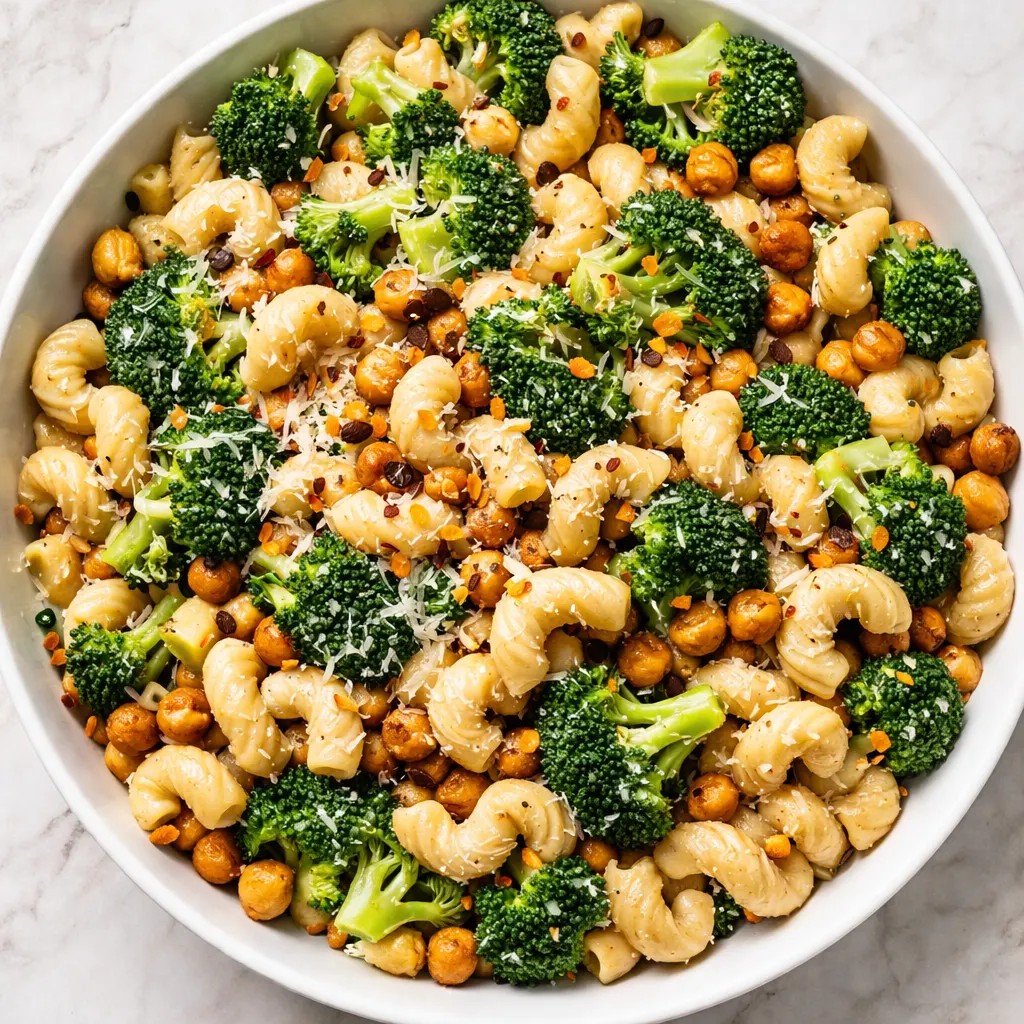
The problem with most versions of this dish is the texture. The broccoli goes grey and mushy, the chickpeas are dry and bland, and the sauce is either watery or gluey. This method fixes all three problems at once by treating the vegetables as the star and using a little pasta water magic to bring everything together. Roasting the broccoli and chickpeas on a sheet pan instead of boiling them keeps the broccoli vibrant and the chickpeas crispy. Then a splash of that starchy pasta water emulsifies into a silky sauce that clings to every ridge of the noodles. No cream required.
It’s forgiving, too. If you overcook the pasta by a minute or forget to reserve enough water, it still works. But get it right — and I’ll show you exactly what to look for — and this becomes the weeknight dinner you’ll look forward to making.
Ingredients Worth Talking About (Plus My Honest Notes)
- 1 lb short pasta (rigatoni or cavatappi): The ridges are key here — they catch the sauce and the little bits of broccoli. My kids call it “fun pasta,” which I fully exploit to get them to eat more vegetables.
- 1 large head of broccoli (about 1 lb): Cut into small, even florets. Don’t toss the stalk — peel it, dice it, and roast it with the rest. It’s sweet and tender when roasted. Marta never wasted anything, and neither do I.
- 1 can (15 oz) chickpeas, drained and patted very dry: Pat them dry with a kitchen towel. If they go into the pan wet, they’ll steam instead of getting crispy. This is the single most important step for the chickpeas. I learned this after too many sad, soggy batches.
- 1 whole lemon: You need both the zest and the juice. I cannot emphasize this enough — the lemon wakes up the entire dish. Don’t skip it just because you don’t have a fresh one. Get one.
- 2 cloves garlic, crushed: For the sauce base.
- Red pepper flakes: A pinch or a big pinch, depending on your family’s heat tolerance. I do a small pinch for the kids and add extra to my own bowl.
- Parmesan cheese (about ½ cup, freshly grated): The pre-shredded stuff in a bag doesn’t melt the same way. Trust me on this. If you’re going dairy-free, a good nutritional yeast works beautifully here.
- Olive oil, butter, salt, and pepper: The basics you probably already have.
What to Pull Out Before You Start
- A large pot for boiling pasta
- A rimmed baking sheet for roasting
- A large skillet (or use the same pot after draining the pasta)
- A microplane or zester for the lemon
- A liquid measuring cup for reserving pasta water
If you have a sheet pan and a skillet, you’re set. No special equipment needed.
Let’s Make It — My Exact Process
Alright, here’s how I do it. This moves fast, so I always start the water boiling while I chop the broccoli. Read through once before you start so you know what’s coming.
Preheat and Prep: Preheat your oven to 425°F. While it heats, bring a large pot of well-salted water to a boil.
- Roast the vegetables: On a rimmed baking sheet, toss the broccoli florets and drained chickpeas with 2 tablespoons of olive oil, a generous pinch of salt, and a few cracks of black pepper. Spread them in a single layer — don’t crowd them or they’ll steam instead of char. (📸 Photo tip: Look for the broccoli and chickpeas spread in one even layer on the sheet pan, glossy with oil. A single layer is your goal here.)
- Cook the pasta: Add your pasta to the boiling water and cook until al dente (about 1 minute less than the package directions). Before you drain it, scoop out about 1 cup of the pasta water and set it aside. This is your sauce maker — don’t forget it.
- Check the vegetables: Roast the broccoli and chickpeas for 15-20 minutes, flipping halfway through. The broccoli should be vibrant green with charred edges, and the chickpeas should be crispy enough to pop in your mouth. If the broccoli looks grey, it’s overcooked. Pull it out when it still has some life in it. (📸 Photo tip: The broccoli is just starting to brown at the tips, and the chickpeas look slightly wrinkled and golden. This is the sweet spot.)
- Build the sauce: In a large skillet (or the now-empty pasta pot), melt 1 tablespoon of butter with a glug of olive oil over medium heat. Add the crushed garlic and a pinch of red pepper flakes. Cook for about 30 seconds, until fragrant but not brown.
- Combine: Add the drained pasta, the roasted broccoli and chickpeas, and about ½ cup of the reserved pasta water. Toss everything together over low heat, letting the water emulsify with the butter and oil. The sauce will look watery for a moment, but keep tossing — it will magically come together into a silky coating. This is my favorite part of the whole process.
- Finish and serve: Turn off the heat. Add the grated Parmesan, the zest of half the lemon, and a generous squeeze of lemon juice. Toss again. Taste it. Add more salt, more lemon, or more pepper until it feels bright and alive. Serve immediately, with extra Parmesan on top if that’s your thing.
How I Prep This for the Week (Because Life is Busy)
This one is a weeknight dream for meal prep. I roast the broccoli and chickpeas on Sunday and store them in a container in the fridge. Then on Tuesday, I just cook the pasta, make the sauce, and toss. Dinner in 10 minutes flat.
- Fridge: Store leftovers in an airtight container for up to 4 days. The chickpeas will soften, but the flavor is still wonderful. Reheat with a splash of water or broth in a skillet over medium heat.
- Freezer: I don’t recommend freezing this one — the broccoli turns mushy when thawed.
- Reheat: A skillet over medium heat with a splash of water brings it back to life better than a microwave ever could. The microwave works in a pinch, but the stovetop keeps the texture closer to the original.
A Few Things I Learned the Hard Way (So You Don’t Have To)
- Don’t crowd the sheet pan: If the broccoli and chickpeas are piled on top of each other, they’ll steam instead of roast. Use two pans if you need to, or roast in batches. The charred edges are where the flavor lives.
- The pasta water is liquid gold: I cannot stress this enough. The starch in that water is what binds the sauce to the pasta without needing a ton of cream or cheese. If you forget to reserve it, you’ll end up with a watery or clumpy sauce. Set a timer if you have to.
- Season in layers: Salt the pasta water, salt the vegetables before roasting, and taste the final dish before serving. If it tastes flat, it almost always needs another squeeze of lemon and a pinch of salt. That’s the secret to making it taste like you fussed.
- Watch for the gloss: When you’re tossing the pasta with the water and fat, it will look separated and thin for about 30-45 seconds. Then, suddenly, it will turn glossy and coat every piece of pasta evenly. That visual cue is your signal that the sauce is ready. Trust it.
Swaps That Actually Work (For Every Situation)
- Vegan version: Use a good quality olive oil instead of butter, and swap the Parmesan for 2-3 tablespoons of nutritional yeast. It’s genuinely just as good — I’ve tested it side by side.
- Add protein: Grilled chicken, Italian sausage, or a fried egg on top turns this into a heartier meal. My husband adds a fried egg with a runny yolk and it’s his new favorite version.
- Different vegetables: Cauliflower works beautifully here. Cut it into small florets and follow the same roasting method. I’ve also done a mix of broccoli and cauliflower when I had both in the fridge.
- Gluten-free: Use your favorite gluten-free pasta. Just be careful not to overcook it, and reserve extra pasta water — gluten-free pasta tends to be thirstier and needs more liquid to stay saucy.
- Nut-free: This recipe is naturally nut-free if you use the Parmesan version. The nutritional yeast version is also nut-free.
Questions I Get About This Recipe All the Time
Q: Why did my sauce turn out watery?
A: Ugh, I’ve been there. The most common reason is that the pasta wasn’t drained well enough, or there wasn’t enough starch in the water to help it emulsify. Make sure you’re tossing everything over low heat, and add the pasta water gradually. The starch needs heat and a little agitation to bind with the fat. If it’s still watery, toss in another small handful of Parmesan — the cheese helps thicken it too.
Q: Can I use frozen broccoli?
A: I don’t recommend it for the roasting step — frozen broccoli releases too much water as it thaws and ends up steaming instead of charring. If that’s all you have, roast it directly from frozen on a higher rack (closer to the heating element) for about 25-30 minutes, and expect a softer texture. It’s still edible, just not as vibrant.
Q: How long does this last in the fridge?
A: Up to 4 days in an airtight container. The chickpeas will soften over time, but the flavor actually deepens. Reheat in a skillet over medium heat with a splash of water or broth to bring back the silkiness. I’ve eaten it cold straight from the fridge on busy days — it makes a great lunch.
Q: What do you serve with this?
A: A simple green salad with a lemony vinaigrette is my go-to — it balances the richness of the pasta. Sometimes I add a piece of crusty garlic bread on the side for dipping into the leftover sauce. If I’m really hungry, I’ll top it with a fried egg. My kids love it with a side of roasted carrots.
More Recipes My Family Makes on Repeat
If you liked this one, here are a few others that get the same reaction at our table — the kind of recipes you’ll find yourself making every single week.
- [INTERNAL LINK PLACEHOLDER: One-Pot Lemon Orzo with Spinach] — Creamy, bright, and ready in 20 minutes. My go-to when I need something that feels fancy but takes no effort.
- [INTERNAL LINK PLACEHOLDER: Sheet Pan Pesto Chicken and Vegetables] — Everything roasts on one pan, and the pesto keeps the chicken tender and flavorful. Perfect for busy nights.
- [INTERNAL LINK PLACEHOLDER: Simple Lentil Soup with Lemon] — Hearty enough for dinner, light enough for lunch. The lemon at the end makes all the difference, just like in this pasta.
This Broccoli Chickpea Pasta has become a staple in my kitchen for a reason. It’s forgiving, it’s fast, and it turns simple pantry ingredients into something that feels like a real meal. I hope it becomes a staple in yours too.
If you try it, drop a comment below — I love hearing how it goes for you and which swaps your family loved. Tag me on Pinterest so I can see your version!
📌 Save this creamy broccoli chickpea pasta recipe for those busy weeknights when you need a healthy, fast dinner that everyone at the table will actually eat.
Broccoli Chickpea Pasta (20 Minutes, One Pot)
Equipment
- Large Pot
- Rimmed Baking Sheet
- Large Skillet
- Microplane or zester
- Liquid measuring cup
Ingredients
- 1 lb short pasta (rigatoni or cavatappi)
- 1 large head broccoli (about 1 lb), cut into small florets, stalk peeled and diced
- 1 can (15 oz) chickpeas, drained and patted very dry
- 1 whole lemon (zest and juice)
- 2 cloves garlic, crushed
- 1/2 teaspoon red pepper flakes (or to taste)
- 1/2 cup freshly grated Parmesan cheese
- 2 tablespoons olive oil (plus more for the sauce)
- 1 tablespoon butter
- Salt and black pepper
- Reserved pasta water (about 1 cup)
Instructions
- Preheat your oven to 425°F. Bring a large pot of well-salted water to a boil.
- On a rimmed baking sheet, toss the broccoli florets and drained chickpeas with 2 tablespoons olive oil, a generous pinch of salt, and a few cracks of black pepper. Spread in a single layer – do not crowd. Roast for 15-20 minutes, flipping halfway, until the broccoli is vibrant with charred edges and the chickpeas are crispy.
- Add the pasta to the boiling water and cook until al dente (1 minute less than package directions). Before draining, scoop out about 1 cup of the pasta water and set it aside. Drain the pasta.
- In a large skillet (or the now-empty pasta pot), melt the butter with a glug of olive oil over medium heat. Add the crushed garlic and a pinch of red pepper flakes. Cook for about 30 seconds until fragrant but not brown.
- Add the drained pasta, the roasted broccoli and chickpeas, and about 1/2 cup of the reserved pasta water. Toss everything over low heat. The sauce will look watery at first; keep tossing until it turns glossy and coats the pasta evenly (about 30-45 seconds).
- Remove from heat. Add the grated Parmesan, zest of half the lemon, and a generous squeeze of lemon juice. Toss again. Taste and adjust with more salt, lemon, or pepper until it tastes bright and alive. Serve immediately with extra Parmesan if desired.
Notes
Related posts:
 The Slow Cooker Cowboy Casserole That Saves Tired Weeknights (No Soggy Tots Allowed)
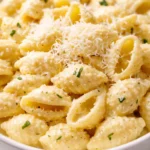 Quick Lemon Ricotta Pasta for Busy Weeknights: Creamy, Bright, and on the Table in 20 Minutes
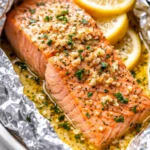 Lemon Garlic Butter Baked Salmon in Foil That’s Ready in 25 Minutes — No Fuss, No Mess
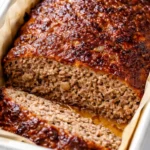 Lipton Onion Soup Meatloaf for Tuesday Nights: Moist, Savory, and the Only One You’ll Ever Need
 Kielbasa Sausage Cheesy Potato Casserole That Tastes Like Sunday Dinner — In Under an Hour
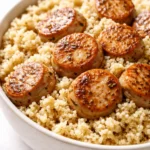 Quinoa Chicken Sausage Bowls That Are Ready in 30 Minutes (And Actually Keep Well)