
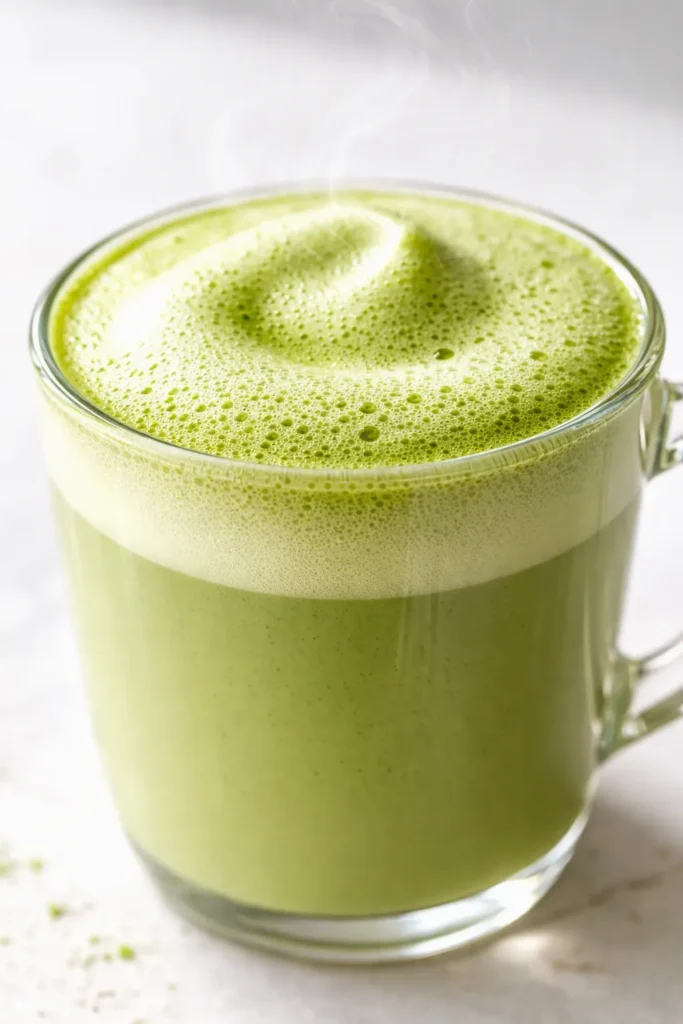
For the first year, every matcha green tea latte I made at home tasted like grass clippings stirred into warm milk. Clumpy, bitter, that sad gray-green color that looks nothing like the vivid jade at the café counter. I’d nearly given up when Nora — my daughter, home for the summer — watched me make one and said, “Mom, you’re using boiling water.” That’s the whole story. The fix is embarrassingly simple: cooler water, a proper sifting, one minute of patient whisking. Five flat minutes from kettle to mug, and the little ritual is half of what makes it worth making at home.
The short version: Sift ceremonial-grade matcha, whisk it with 175-degree water into pale green foam, then pour warm milk over the top. Five minutes, zero bitterness, café not required.
I’ve made this exact latte every morning for two years now — over 700 cups, by my count — since Nora brought me a bag of matcha from a shop in Savannah. I stopped ordering matcha out entirely. Mine is better, and I don’t have to leave the house.
- Serves: 1 as a morning drink (scales up easily)
- Hands-On Time: 5 min | Total Time: 5 min
- Difficulty: Easy once you learn the three little tricks below
- Cost per serving: About $1.75 at home (the café downtown charges $6.50)
- Calories: ~150 per serving with oat milk and maple
- Dietary Notes: Naturally gluten-free and vegetarian — easily dairy-free
(Photo above: a warm ceramic mug of matcha latte on a pine farmhouse table, the foam a pale jade with a few stray bubbles, a bamboo whisk and small blue bowl of sifted matcha powder beside it, soft morning light from the left casting long shadows across the wood.)
Why This Version Isn’t Bitter or Clumpy (I Learned Both the Hard Way)
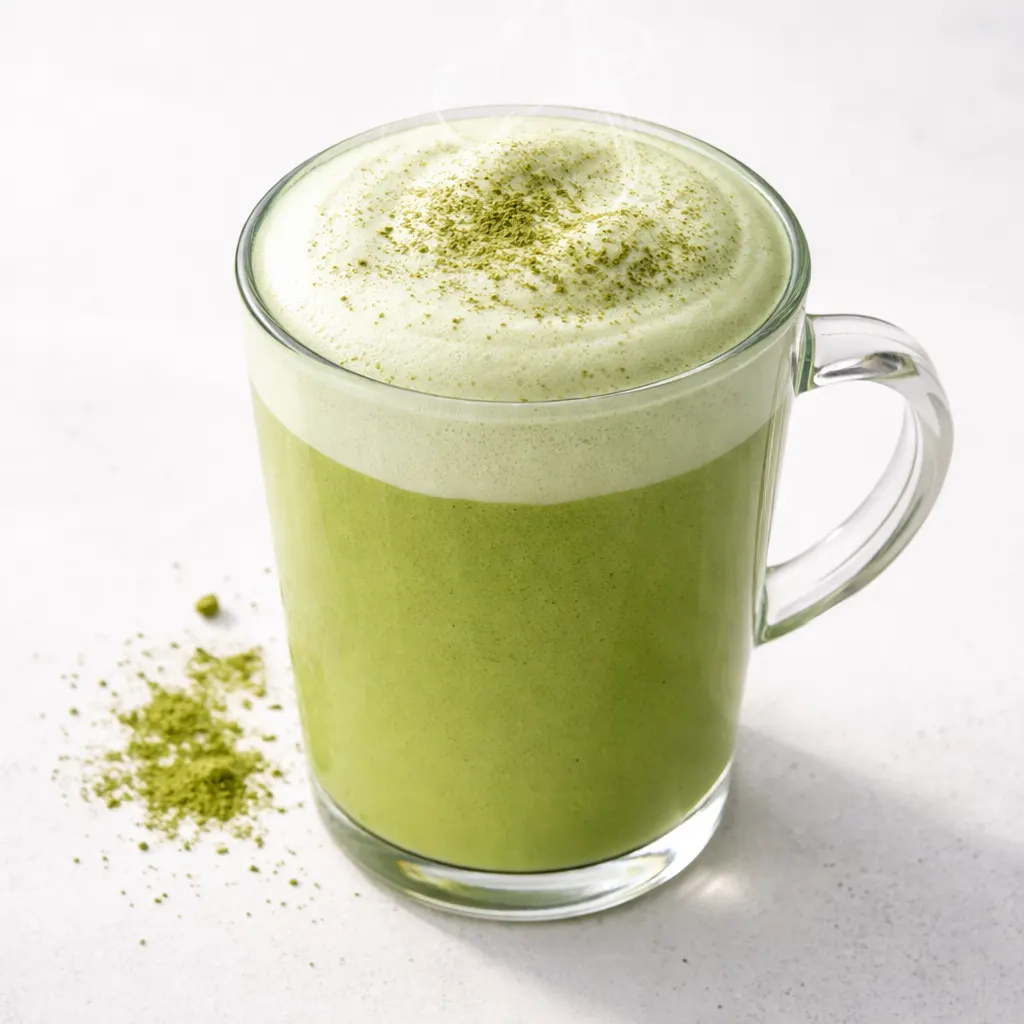
The bitter hitch in most homemade matcha comes from water that’s too hot. Boiling water scorches the leaves the way it scorches anything delicate, pulling out that harsh, astringent bite. Drop the temperature about thirty degrees and the sweetness appears — that soft, grassy, almost buttery note that made matcha famous in the first place.
The other enemy is clumping. Matcha clumps even when it looks smooth in the tin, and once those lumps hit water they never really dissolve. A quick sift through a fine strainer takes four seconds and prevents a grainy mouthful that lasts the whole cup.
Then there’s the whisking. Circles feel natural, but they push the foam to the edges and leave the middle flat. A fast zig-zag — an M or a W across the bowl — pulls air through everything, and that’s exactly where the thick, pale jade froth comes from.
What You Need (Plus the Matcha Mistakes That Cost Me Ten Bucks)
- 1 teaspoon ceremonial-grade matcha powder: The one ingredient worth spending on. Ceremonial grade is bright green and smooth with a naturally sweet finish; culinary grade is darker, more bitter, and better in muffins than in your mug. Keep the tin in the fridge, buy the smallest size you can find.
- 2 ounces hot water (¼ cup), about 175°F: Not boiling. No thermometer? Boil the kettle and let it sit two full minutes before pouring. This is the step Nora called me out on — she took one look at my steaming mug and said, “Mom, that’s a rolling boil.” She was right.
- ¾ cup milk of your choice: Whole milk gives the creamiest mouthfeel and the best foam. Oat milk is the closest dairy-free option — it steams well and doesn’t split. My kids drink this with whole milk and extra maple; Nora switched to oat years ago, so oat may have won in this house.
- ½ to 1 teaspoon maple syrup or honey, to taste: Optional, but I never skip it. A little sweetness rounds the grassy edge and makes the cup feel like a café treat instead of a health-drink compromise. I use maple for its molasses note; honey is lovely too.
- Tiny pinch of salt: My weird trick. A few granules in the bowl before whisking quietly dial back any lingering bitterness — the same reason we salt caramel. You won’t taste it. Everything just gets rounder.
The Small Setup (Most of It Lives in My Dish Rack)
- A small bowl, 8 to 12 ounces — a rice bowl or a small cereal bowl works perfectly
- A bamboo whisk (chasen) — cheap, and it builds foam better than any fork or regular whisk
- A fine-mesh strainer or sifter for the matcha
- A milk frother or a jar with a tight lid for milk foam
- Your favorite mug — rinse it with hot water first if you want your latte to hold its temperature
If you only own a fork and a good attitude, you can still make this work — sift well, whisk fast, and accept thinner foam. But the bamboo whisk costs less than one café trip and makes the whole routine feel like the ceremony it deserves to be.
Let’s Make It (the Exact Routine, Start to Finish)
This goes fast once you’ve done it twice. Read through once so you know where you’re headed, then set the kettle on and let it cool while you sift.
- Sift: Put the matcha in a fine strainer over your bowl and tap it gently until all the powder has passed through. (📸 Photo tip: a fine, even layer of bright grassy-green powder across the bottom of the bowl — no lumps, no dry islands.) Yes, it’s fussy. It’s also what keeps you from drinking grainy matcha, so it stays.
- Heat the water: If you just boiled the kettle, wait two full minutes. The water should steam gently with lazy bubbles gathering at the bottom — not a rolling boil. This is the most important step in the recipe, and the easiest to skip when you’re half-awake.
- Whisk: Pour the hot water over the sifted matcha. Holding the whisk between your palms, move it in a fast zig-zag — an M or a W — for twenty to thirty seconds. (📸 Photo tip: the top should be covered in pale jade foam with tiny, uniform bubbles — no dry patches of powder floating on top.) You’ll hear the sound change from a wet slosh to a lighter, airier whisper as the foam builds. That’s your cue.
- Warm the milk: Heat it in a small saucepan until the first little bubbles ring the edges, or microwave it in a jar for about sixty seconds. For extra foam, use a frother or shake the warm milk in a covered jar for thirty seconds. When I’m really tired, this is where I cut corners — microwave for the milk, jar-shake for the foam. Still tastes right.
- Combine: Pour the matcha concentrate into a warmed mug, then pour the milk in slowly. Stir in maple or honey now. Watch the layers: jade at the bottom, white swirling through, foam settling on top. It’s a small visual moment that makes a weekday feel less hurried.
- Taste: Take a sip. Need more sweetener? Add it half a teaspoon at a time. Taste bitter? Your water was too hot — cool the kettle a little longer next time, and know this cup is still fine with an extra drizzle of maple. I’ve salvaged plenty that way.
Can You Make This Ahead? My Honest Answer
Matcha is the one drink I refuse to batch. The powder oxidizes fast and the vibrant green dulls within hours, even refrigerated. What I do instead is prep the pieces on Sunday: sift the week’s portions into tiny jars, measure the maple into a little dish, and keep milk in a lidded bottle for the shake-foam trick. The weekday morning stays exactly five minutes.
- Fridge: Whisk the matcha concentrate (matcha plus water) and store it covered for up to 24 hours for iced lattes. It loses brightness and gains a bit of edge — fine for iced, less ideal for hot.
- Freezer: You can freeze pre-sifted matcha powder in small portions for up to two months. Do not freeze the finished drink — it separates and turns grainy.
- Reheat: For hot lattes, make it fresh. That’s the whole point of a five-minute recipe. The fridge concentrate is really only for the iced version.
The Mistakes I Made So You Don’t Have To
- Boiling water: Ruined my first ten lattes. The bitter, astringent note comes straight from water that’s too hot. Let the kettle rest two minutes. If you’d need to blow on the water before sipping, it’s too hot for matcha.
- Skipping the sift: Matcha hides its clumps right up until they hit water, and then they never un-clump. It’s a four-second step that buys you a smooth cup. I know it looks like extra work at 6 a.m. Do it anyway.
- Whisking with your whole arm: The zig-zag wants to be fast and small, not big and aggressive. It’s a wrist motion, like whisking eggs. If your whole arm is moving, you’re working too hard and the foam won’t build right.
- Buying the big tin: The larger size always seems like the better deal, but matcha goes dull within a couple of months of opening. A faded powder makes a faded latte — no amount of technique fixes that.
- Panicking over a bad cup: Even at its worst, this drink is drinkable. The bitter version becomes fine with a little extra maple and a splash more milk. I’ve made every mistake above in a single cup and still finished it. The second or third try will be the one you remember.
Make It Yours (the Versions We Actually Drink Around Here)
- Iced matcha latte: Whisk the matcha with a splash of hot water and the maple first, then pour it over ice and cold milk. Don’t whisk the powder directly into cold milk — it won’t dissolve, and you’ll get green flecks instead of a smooth drink.
- Dairy-free: Oat milk is the closest to whole milk and doesn’t split when it gets hot. Almond is thinner; coconut brings its own sweetness. Nora’s dairy-free and she’ll tell you oat is the winner.
- Vanilla: Stir a quarter teaspoon of vanilla into the milk before warming. The whole cup suddenly tastes like the pastry case at the café.
- Kid version: Halve the matcha, keep the milk full, and don’t be shy with the maple. My kids drink this like a milkshake for breakfast, which honestly delights me.
- Spiced: Add a tiny pinch of cinnamon to the matcha before you sift — the sifting mixes it in for you. I do this in December and pretend I’m at a ski lodge.
The Matcha Questions My Readers Keep Asking (and That I Asked Myself)
Q: Why did my matcha latte turn out bitter and brownish?
A: Ugh, I’ve been there. The most common cause is water that’s too hot; the runner-up is matcha that’s past its prime. Boil the kettle, let it sit two full minutes, then pour. And if the powder itself looks flat and dull instead of bright green, it’s time for a fresh tin. There’s nothing wrong with your technique, friend — you’ve got it next time.
Q: Can I use culinary-grade matcha instead of ceremonial?
A: In a pinch, yes, but expect a darker, more bitter drink. Ceremonial grade is meant to drink straight — smooth and naturally a little sweet. Culinary grade is designed for baking and smoothies, where stronger flavor and a lower price make sense. Spend the extra few dollars on the good stuff for your latte; save the culinary tin for muffin batter.
Q: How long does an opened tin of matcha last?
A: About two months, stored airtight in the fridge. Once opened, matcha oxidizes — the green fades, the aroma dulls, and the flavor flattens. Buy the smallest tin you can find, even when the bigger one tempts you with a better price per ounce. I’ve tossed big tins with more shame than I care to admit.
Q: What do you serve with your morning matcha?
A: Half the time, nothing fancier than a thick slice of banana bread or toast with butter and honey. When I want the full café feeling, I’ll do ricotta toast with honey and a few berries. The kids want theirs with cinnamon toast, and honestly, that pairing is hard to beat.
More Recipes My Family Makes on Repeat
If this one earned a place in your morning, these are the others that get the same steady rotation at our house:
- Brown Butter Banana Bread — the loaf I reach for when I want something to stand up to a cup of matcha.
- Golden Milk Turmeric Latte — the same warming ritual for evenings when I want something earthy and caffeine-free.
- Overnight Oats in Jars — the no-cook breakfast that starts the night before, so the morning needs only the five-minute latte.
The first quiet cup of the day — the rhythm of the whisk, the pale green froth growing in the bowl, the five minutes that belong to no one but you — is the part worth making room for. It’s a small ceremony in the middle of a busy house, and it’s why the bamboo whisk stays within reach even on mornings when I’m running behind.
If you make this one, come back and tell me how it went. I love hearing about someone’s first properly green, properly smooth matcha at home — I’d be genuinely glad to see yours!
📌 This matcha green tea latte recipe is creamy, never bitter, and ready in five flat minutes — save it for your next slow morning when you want the café feeling at home.
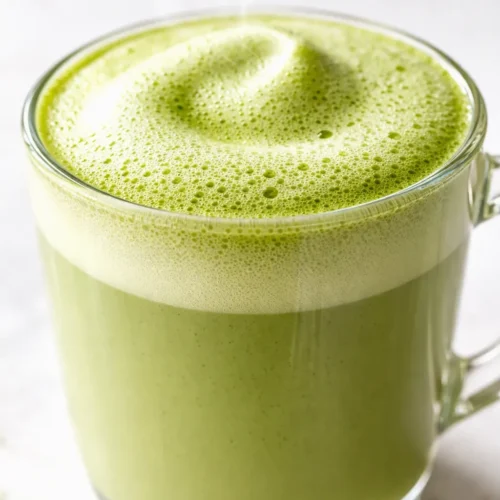
Creamy Café-Style Matcha Green Tea Latte
Equipment
- Small Bowl (8-12 ounces)
- Bamboo Whisk (Chasen)
- Fine-mesh strainer
- Milk Frother or Jar with Lid
- Mug
Ingredients
For the Matcha Base
- 1 teaspoon ceremonial-grade matcha powder
- 2 ounces hot water, about 175°F
- 1 tiny pinch fine salt
For the Milk
- 3/4 cup milk of choice (whole milk or oat milk)
- 1/2 to 1 teaspoon maple syrup or honey, to taste
Instructions
- Sift 1 teaspoon ceremonial-grade matcha through a fine strainer into a small bowl. Tap until every bit falls through — no dry islands, no lumps. This is the four-second step that keeps your cup smooth.
- Heat water to about 175°F. If you boiled the kettle, let it sit two full minutes until the bubbles are lazy and small, not rolling. Boiling water scorches the leaves and turns your latte bitter.
- Pour 2 ounces of the hot water over the sifted matcha. Holding the whisk between your palms, move it in a fast zig-zag — an M or a W — for 20 to 30 seconds. You will hear the sound shift from wet slosh to lighter air as pale jade foam builds.
- Warm 3/4 cup milk in a small saucepan until tiny bubbles ring the edges, or microwave in a jar for about 60 seconds. For extra foam, shake the warm milk in a covered jar for 30 seconds.
- Pour the matcha concentrate into a warmed mug, then pour in the milk slowly. Stir in maple syrup or honey to taste. Watch the layers swirl — jade below, white through the middle, foam settling on top.
- Taste before you add anything else. If it is even slightly bitter, the water ran too hot — cool the kettle longer next time and add an extra drizzle of maple to this cup. Every early-morning mistake is salvageable.
Notes
Related posts:
 The Slow Cooker Cowboy Casserole That Saves Tired Weeknights (No Soggy Tots Allowed)
 Lemon Garlic Butter Baked Salmon in Foil That’s Ready in 25 Minutes — No Fuss, No Mess
 Moist Chocolate Zucchini Bread That Doesn’t Turn Out Rubbery — Finally
 Creamy Homemade Strawberry Dole Whip (That Tastes Just Like the Real Thing)
 Blueberry Peach Bread That Doesn’t Sink or Turn Mushy — Finally
 Quinoa Chicken Sausage Bowls That Are Ready in 30 Minutes (And Actually Keep Well)