
That first whiff of crushed basil, garlic, and pine nuts — it hits you before you even take a bite, and suddenly summer is in your kitchen. This is the pesto sauce that makes my family crowd around the food processor with spoons, and the pasta is really just the vehicle for getting it into our mouths faster.
The short version: Twenty minutes, one pot, and a sauce so bright and alive you’ll never look at a jar the same way again.
I’ve been making this version for close to fifteen years, ever since my neighbor dropped off a grocery bag full of basil that I had no idea what to do with. This is what I came up with — and it’s the recipe my daughter Nora texts me for from Savannah when she’s homesick and needs a taste of summer.
- Serves: 4 as a main, 6 as a side
- Hands-On Time: 15 min | Total Time: 20 min
- Difficulty: Easy — especially if you have a food processor
- Cost per serving: ~$2.50
- Calories: ~450 per serving
- Dietary Notes: Vegetarian. Adaptable for dairy-free and nut-free (see Variations).
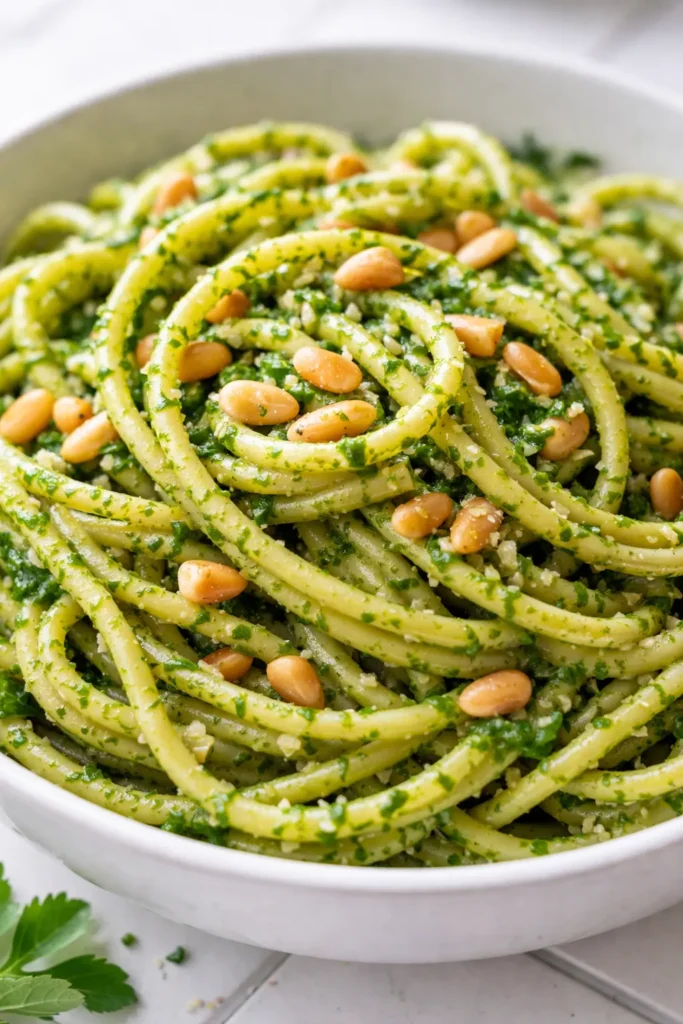
(Photo above: An overhead shot of a white ceramic bowl filled with bright green pesto pasta, a fork twisted high with the spaghetti, scattered with a few extra pine nuts and torn basil leaves, morning light streaming in from the left across the aged wooden table.)
Why I Stopped Buying Pesto (And You Will Too)
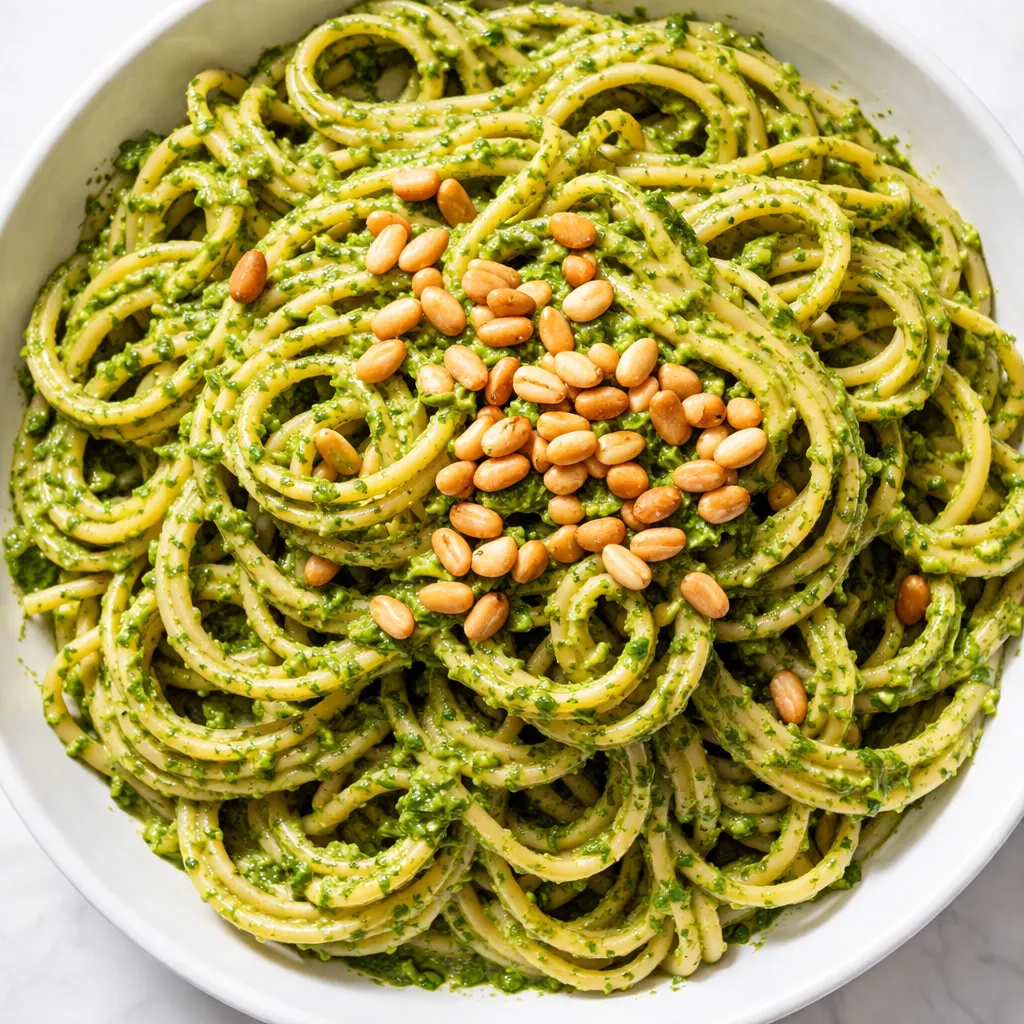
The thing about jarred pesto is it’s been pasteurized. It’s been sitting. That bright, almost grassy flavor you get from a fresh basil leaf? It’s muted, replaced by a slightly flat, oily taste. Homemade pesto is alive. It’s vibrant. It tastes like the garden smells.
The trick that makes this one stand out is how we treat the basil. No hot blades. No food processor running for minutes on end. We pulse it gently, or — if I have the time and stillness for it — I use my grandmother Marta’s mortar and pestle. The gentler the handling, the less bitter the basil gets. It stays bright, sweet, and almost creamy on its own.
This is the pesto that makes you understand why people in Italy have been making the same recipe for generations. It’s simple. It’s honest. And it’s the best version of itself.
Everything You Need (And a Few Notes From Me)
- 2 cups fresh basil leaves, packed: This is the whole show. If you have a garden, pick it the morning you make this. If you’re buying it, look for leaves that are perky and deep green, not wilted or dark. I wash mine and spin it dry in my salad spinner — any extra water will make the pesto watery and sad.
- 1/3 cup pine nuts: Toast them dry in a skillet until they’re just fragrant and lightly golden. It takes about three minutes and it makes all the difference between a flat pesto and one that has depth. My kids love sneaking them off the plate while I’m not looking.
- 2 cloves garlic, small to medium: I grate mine on a microplane instead of chopping it — it melts right into the sauce. A large clove can overpower the whole thing, so stick to medium or small.
- 1/2 cup freshly grated Parmesan-Reggiano: Please don’t buy the pre-grated stuff. It has anti-caking agents that ruin the texture of pesto. Grate it yourself — you’ll feel the difference in your fingers before you taste it.
- 1/3 cup extra-virgin olive oil: Use a good one here. Not your most expensive finishing oil, but something you’d be happy to dip bread in.
- 1 lb pasta (spaghetti, linguine, or trofie if you’re being traditional): Whatever shape catches your eye. I like spaghetti because it holds the pesto in every twist.
What to Pull Out Before You Start
- A large pot for the pasta
- A dry skillet for the pine nuts
- A mortar and pestle or a food processor
- A microplane or fine grater for the garlic and cheese
- A liquid measuring cup or mug for reserving pasta water
Let’s Make It (Step by Step, the Way I Do It)
This goes fast, so get your water on to boil before you do anything else. I like to read through the steps once so nothing surprises me.
- Boil the pasta: Salt a large pot of water until it tastes like the sea. Cook your pasta until al dente. Before you drain it, scoop out a mugful of the pasta water. You’ll use it to loosen the sauce.
- Toast the pine nuts: While the pasta cooks, put the pine nuts in a dry skillet over medium heat. Shake them around until they’re golden and smell like warm buttered toast. Set them aside to cool. (📸 Photo tip: You want them the color of light honey — not dark brown. They’ll go from perfect to burnt in about 30 seconds, so watch closely.)
- Make the pesto (mortar & pestle method): If you have one, this is the way Marta would do it. Smash the garlic with a pinch of salt until it’s a paste. Add the pine nuts and crush them into the garlic. Add the basil leaves in handfuls, grinding them against the sides of the mortar until a dark green paste forms. Stir in the cheese, then slowly work in the olive oil.
- Make the pesto (food processor method): Pulse the garlic, cooled pine nuts, and basil together until roughly chopped. Don’t let it run. Pulse. Add the cheese and pulse once or twice. With the motor running, drizzle in the olive oil. Stop the second it comes together. (📸 Photo tip: At this stage it should look like a rough, bright green sauce — not a completely smooth puree. A little texture is what you want.)
- Combine: Toss the hot drained pasta with a few spoonfuls of pesto. Add a splash of the reserved pasta water. The water helps the pesto coat every strand without needing more oil. Taste and add more pesto as needed.
- Finish: Serve it in warm bowls, with extra Parmesan grated on top and a few toasted pine nuts scattered over. That crunch on top? It matters.
How I Meal Prep This for the Week
I make a double batch of the sauce on Sundays. It keeps the whole week interesting — one day on pasta, the next spread on a sandwich, the last spooned over roasted vegetables or swirled into a bowl of minestrone.
- Fridge: Store the pesto in a jar with a thin layer of olive oil on top to keep it bright green. It lasts about a week.
- Freezer: Yes! Spoon the pesto into an ice cube tray, freeze, and pop the cubes into a bag. Drop a cube or two into soups, sauces, or straight into hot pasta for an instant dinner.
- Reheat: Pesto is best served at room temperature or gently warmed. If you’re tossing it with hot pasta, it doesn’t need reheating at all — the heat of the pasta does the work.
Things I Learned the Hard Way So You Don’t Have To
- Don’t wash the basil until you’re ready to use it: Moisture is the enemy of a good pesto. It makes it watery and separates the oil. Wash it, dry it thoroughly in a salad spinner or with a tea towel, then proceed.
- Garlic can be a bully: A huge clove of garlic can overpower the entire sauce. I stick to small or medium cloves, and I always grate them so there are no harsh chunks that sneak up on you.
- The pasta water is liquid gold: It’s seasoned and starchy, and it helps the pesto emulsify into a creamy sauce without adding more oil. Don’t skip it, even if you think the sauce looks wet enough.
- Taste as you go: Your basil might be more or less peppery than mine. Your cheese might be saltier. The pesto is yours — adjust it until it tastes right to you. Even if you mess it up a little, it’ll still be better than anything from a jar.
Swaps That Still Taste Like Love
- Nut-free: Use toasted sunflower seeds or pepitas instead of pine nuts. They’re both rich and nutty, and they blend beautifully. I make this for my niece who has a tree nut allergy and she loves it.
- Dairy-free: Leave out the Parmesan and add an extra tablespoon of nutritional yeast for that savory, cheesy depth. I make this version for my brother-in-law who can’t do dairy, and he always asks for seconds.
- Different greens: Swap half the basil for arugula or spinach for a different flavor profile. Arugula adds a peppery kick that’s wonderful on a hot night when you want something that bites back a little.
- Make it a meal: Toss it with cherry tomatoes that have been roasted with balsamic, or top it with grilled chicken and a squeeze of lemon. My kids love it spooned over seared salmon or stirred into a bowl of white beans with cherry tomatoes.
Questions You Deserve Honest Answers To
Q: Why did my pesto turn out bitter?
A: A few things can cause bitterness. The most common is over-processing the basil — the heat from the blades can make it bitter. Pulse instead of running the processor. Another culprit is olive oil that’s too grassy or a garlic clove that was sprouting in the middle.
Q: Can I make this without a food processor or mortar?
A: Absolutely. Chop the basil, garlic, and nuts together on a cutting board with a big chef’s knife until they’re a coarse paste. Transfer it to a bowl and stir in the cheese and oil. It’s a little rustic, but it’s just as delicious.
Q: How long does homemade pesto last in the fridge?
A: About five to seven days, if you store it right. Press a piece of plastic wrap directly onto the surface of the pesto to keep it from turning brown, or pour a thin layer of olive oil over the top.
Q: What do you serve with pesto pasta besides more pasta?
A: A simple green salad with a lemony vinaigrette is my go-to. We also eat it on crusty bread with fresh mozzarella, like an elevated grilled cheese. Or keep it simple — just a glass of cold white wine and a quiet evening.
More Recipes My Family Makes on Repeat
If this pesto pasta finds a regular spot in your kitchen (and I think it will), here are a few others that get the same weekly rotation treatment at our house:
- [INTERNAL LINK PLACEHOLDER: Lemony White Bean Soup with Parmesan Broth] — My go-to for the nights I need something brothy and no-fuss.
- [INTERNAL LINK PLACEHOLDER: The Only Roasted Chicken You’ll Ever Need] — Juicy, crisp-skinned, and it fills the house with the exact right kind of smell.
- [INTERNAL LINK PLACEHOLDER: Summer Tomato Galette with Herbed Ricotta] — For when the farmers market gets the best of you and you need a plan for all those tomatoes.
This is the pesto sauce that summer is made of. Bright, garlicky, satisfying in a way that feels like sitting still on a warm evening. I hope it becomes as much of a staple in your kitchen as it has in mine.
If you make it, let me know below — I love hearing about it, especially the versions you make your own. That’s the whole point of a recipe like this. It’s a starting place. Make it yours.
📌 Pin this fresh pesto pasta recipe for your next summer dinner — it comes together in 20 minutes and tastes like pure sunshine.
Pesto Pasta with the BEST PESTO SAUCE (The One We Make Every Single Week)
Equipment
- Large Pot
- Skillet
- Food processor
- Mortar and Pestle
- Microplane
- Liquid measuring cup
Ingredients
Pesto Sauce
- 2 cups fresh basil leaves, packed
- 1/3 cup pine nuts
- 2 cloves garlic (small to medium)
- 1/2 cup freshly grated Parmesan-Reggiano
- 1/3 cup extra-virgin olive oil
Pasta
- 1 lb pasta (spaghetti, linguine, or trofie)
- 1 tablespoon salt (for pasta water)
Instructions
- Fill a large pot with water, salt it generously (it should taste like the sea), and bring to a boil. Cook the pasta until al dente. Before draining, reserve a mugful of the pasta water.
- While the pasta cooks, toast the pine nuts in a dry skillet over medium heat, shaking frequently, until golden and fragrant, about 3 minutes. Watch closely – they burn fast. Set aside to cool.
- Make the pesto: If using a mortar and pestle, smash the garlic with a pinch of salt into a paste, then crush in the pine nuts, add basil leaves in handfuls grinding against the sides, stir in cheese, then slowly work in olive oil. If using a food processor, pulse the garlic, cooled pine nuts, and basil until roughly chopped (do not over-process). Add cheese, pulse once, then with motor running drizzle in oil until combined. Stop as soon as it comes together – a little texture is good.
- Toss the hot drained pasta with a few spoonfuls of pesto and a splash of reserved pasta water. The water helps the sauce coat every strand without needing more oil. Add more pesto to taste.
- Serve immediately in warm bowls, topped with extra grated Parmesan and a scattering of toasted pine nuts.
Notes
Related posts:
 Mini Quiche Recipe: The Store-Bought Crust Version That Tastes Like You Made It From Scratch
 The Slow Cooker Cowboy Casserole That Saves Tired Weeknights (No Soggy Tots Allowed)
 Quick Lemon Ricotta Pasta for Busy Weeknights: Creamy, Bright, and on the Table in 20 Minutes
 Juicy Oven Baked Chicken Thighs That Stay Golden and Tender — in 40 Minutes
 Lemon Garlic Butter Baked Salmon in Foil That’s Ready in 25 Minutes — No Fuss, No Mess
 Lipton Onion Soup Meatloaf for Tuesday Nights: Moist, Savory, and the Only One You’ll Ever Need