
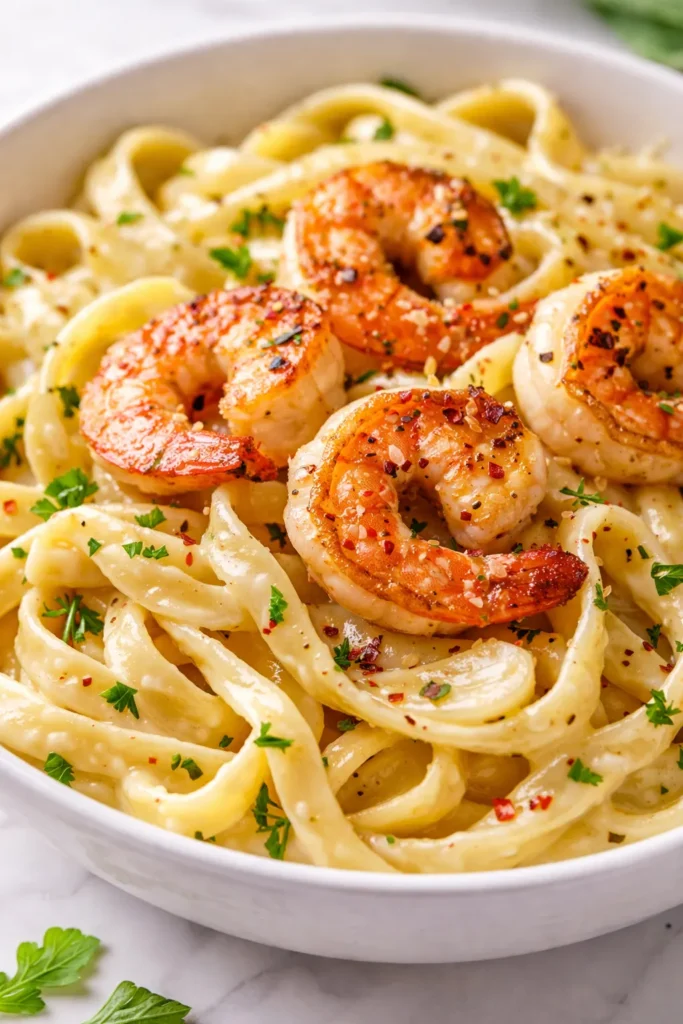
The thing about a creamy shrimp pasta: it lives or dies by the sauce and the shrimp themselves. If the shrimp are cooked right, they have that specific snappy sweetness that cuts through the richness. If the sauce is right, it coats every strand without feeling like a paste. This version came from a rainy Tuesday when Nora was home from school and we needed something that felt special but came together between laundry loads. I’ve made it about fifteen times since then, tweaking the garlic-to-cream ratio until it hit the sweet spot.
The short version: 30 minutes, one wide skillet, and it tastes like something you’d order at that little Italian place downtown.
I’ve made this on a weeknight when we had exactly 30 minutes between soccer practice and homework, and it still felt like a weekend indulgence. That’s the goal here — something that feels special but doesn’t ask for more than you have to give on a Tuesday.
- Serves: 4 as a main
- Hands-On Time: 15 min | Total Time: 30 min
- Difficulty: Easy enough for a Tuesday
- Cost per serving: ~$5.50
- Calories: ~620 per serving
- Dietary Notes: Contains dairy and gluten (can adapt with GF pasta)
(Photo above: An overhead shot of the pasta in a wide, shallow enamel bowl, the sauce clinging to the fettuccine, a few shrimp perched on top with a scatter of fresh parsley and a crack of black pepper — taken in the late afternoon light on my blue-speckled enamel table, with a linen napkin folded to the side.)
The One Step That Keeps the Sauce Silky (Not Gritty)
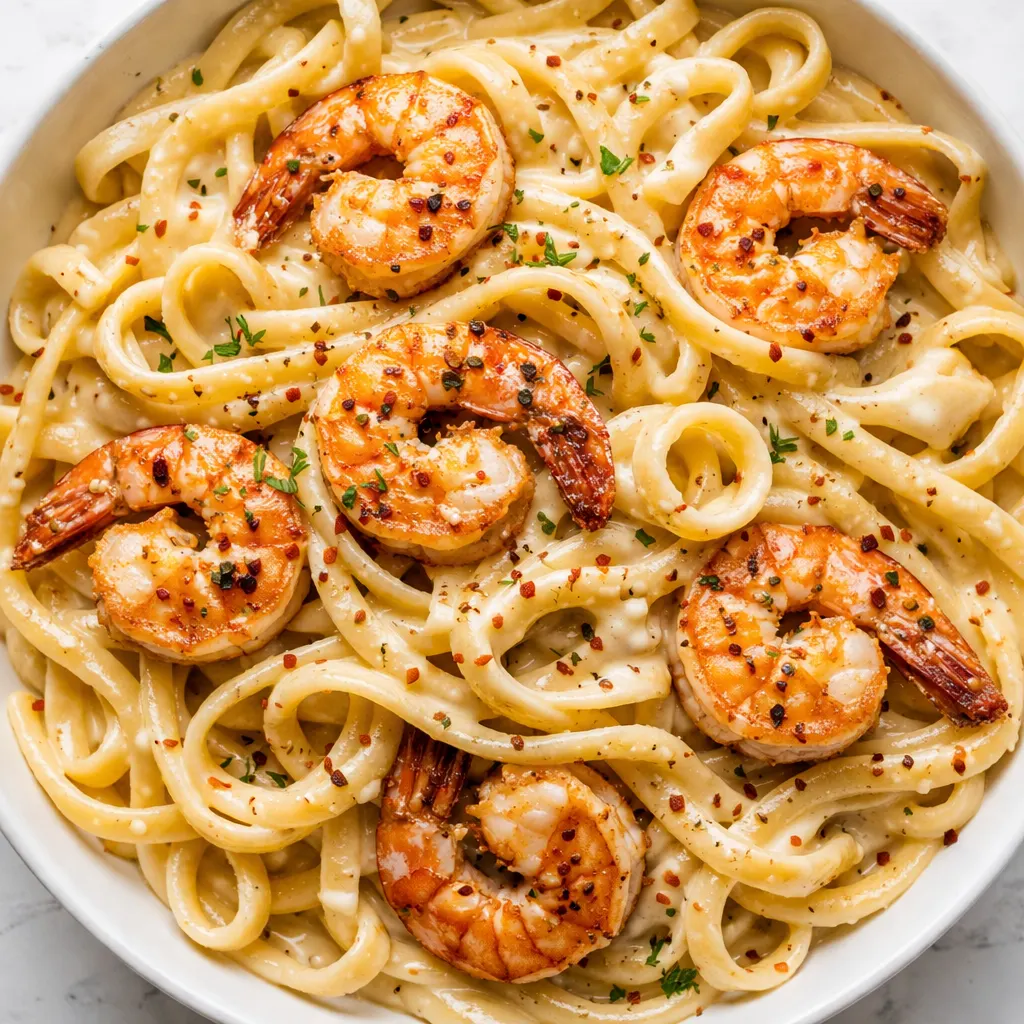
The biggest mistake people make with a cream-based pasta sauce is adding the Parmesan over high heat. The second the cheese hits heat that’s too aggressive, the proteins tighten up and you’re left with a grainy, clumpy mess instead of something that pools smoothly. The fix is simple: pull the pan off the heat before you add the cheese, and whisk it in gently. The residual heat is plenty to melt it without breaking it.
The other secret is the pasta water. That starchy, salty liquid is the bridge between the sauce and the noodles. It thins the cream just enough to coat every strand rather than sitting on top, and it adds a silkiness you can’t get from cream alone. I reserve a full cup before I drain, even if I only end up using half. It’s cheap insurance against a sauce that’s too thick.
Ingredients Worth Talking About (Plus My Honest Notes)
- 1 lb large shrimp, peeled and deveined: Pat them completely dry with paper towels. Wet shrimp steam. Dry shrimp sear. That golden-brown crust is where the flavor lives.
My kids can tell the difference between seared shrimp and boiled shrimp immediately — the texture is that different. - 6 cloves garlic, thinly sliced: Thin slices infuse the butter better than minced, and you get little sweet, tender bites of garlic throughout.
If you’re in a hurry, minced works, but the slices disappear into the sauce more gently. - 1 cup heavy cream: Don’t use half-and-half here. You need that fat content to handle the acid from the pasta water and the lemon without curdling.
I’ve tested this with half-and-half. It works in a pinch but the sauce isn’t as stable. - 1 cup finely grated Parmesan: Pre-shredded has anti-caking agents that make sauces grainy. Grate it yourself from a block.
I know it’s an extra step. It’s also the step that makes the difference between a sauce that looks glossy and one that looks sandy. - 1/2 cup reserved pasta water: This is the secret weapon. It’s salted and full of starch, which binds the sauce to the pasta in a way that plain water never could.
- 12 oz fettuccine or linguine: Long, flat noodles are ideal for this kind of sauce. They catch the cream and hold onto it.
What to Pull Out Before You Start
- A 12-inch skillet or wide sauté pan
- A large pot for boiling pasta
- A box grater or microplane for the Parmesan
- Tongs for tossing the pasta
Here’s How I Do It (30 Minutes Start to Finish)
Read through once before you start. The active parts go fast, and having everything measured and ready makes this a genuinely easy weeknight dinner.
Prep and pasta water:
- Boil and reserve: Bring a large pot of generously salted water to a boil. Cook the pasta until 1 minute shy of al dente. Before you drain, scoop out 1 full cup of the pasta water and set it aside. Drain the pasta (don’t rinse it).
(📸 Photo tip: The water should taste like good sea salt — that’s your only chance to season the pasta from the inside out.)
The shrimp and the sauce:
- Pat and season: Pat the shrimp completely dry. Season generously with salt, black pepper, and a pinch of red pepper flakes.
- Sear the shrimp: Melt 2 tbsp butter in the skillet over medium-high heat. Arrange the shrimp in a single layer. Cook for 90 seconds per side, until pink and just cooked through. Transfer to a plate.
(📸 Photo tip: If the shrimp release easily from the pan, they’re ready to flip. If they stick, give them another 20 seconds.) - Bloom the garlic: Reduce heat to medium. Add 3 tbsp butter and the sliced garlic. Cook for 1 minute until fragrant. The butter should smell nutty, not burnt.
- Build the cream base: Pour in the heavy cream. Bring it to a gentle simmer — not a rolling boil. Add 1/2 cup of the reserved pasta water and whisk. Let it bubble for 2 minutes, until it has thickened just slightly.
- Add the cheese off the heat: Remove the pan from the heat completely. Add the grated Parmesan and whisk until melted and smooth. The sauce should look glossy and coat the back of a spoon.
- Bring it all together: Add the drained pasta and the cooked shrimp to the skillet. Use tongs to toss everything until every strand is coated. If the sauce feels too thick, add a splash more pasta water to loosen it.
- Taste and finish: Taste and adjust the salt and pepper. Squeeze half a lemon over the top — the acid wakes up the whole dish. Serve immediately with a scatter of fresh parsley and extra Parmesan on the side.
Make-Ahead Notes (For When You Need a Shortcut)
This is one of those pastas that’s truly best the minute it hits the bowl. The pasta keeps absorbing the sauce as it sits, so leftovers will be a different (still delicious, but different) experience. Here’s how I handle it when I want to get ahead:
- Fridge: Store in a sealed container for up to 2 days. Add a splash of cream or pasta water when reheating to bring the sauce back to life.
- Freezer: I don’t recommend it. The cream sauce can separate upon thawing and the shrimp lose their texture.
- Reheat: Low and slow on the stovetop with an extra splash of milk or cream. The microwave works in a pinch but it will make the shrimp rubbery. I’d rather eat it cold than microwaved, honestly.
Things I Learned the Hard Way (So You Don’t Have To)
- Pat those shrimp completely dry. I know it’s an annoying step. But if you skip it, the shrimp release moisture into the pan and steam instead of searing. That golden-brown crust? That’s flavor. Don’t steam it away.
- Grate your own Parmesan. Pre-shredded cheese is coated with cellulose and other anti-caking agents that prevent it from melting smoothly. You will end up with a grainy, clumpy sauce. I’ve done it. It’s deeply sad. A block of good Parmesan and a microplane takes 30 seconds and the result is incomparably better.
- Reserve more pasta water than you think you need. I always save a full cup, even if I only use half. The starch in that water is what makes the sauce cling to the pasta instead of puddling at the bottom of the bowl. It’s your single best tool for adjusting the sauce consistency at the end.
Make It Yours (Easy Swaps That Actually Work)
- Gluten-Free: Swap in your favorite gluten-free fettuccine or linguine. Cook it 1 minute less than the package instructs so it doesn’t get mushy in the sauce.
- Dairy-Free: Use full-fat canned coconut milk (the creamy kind, not the carton kind) and a dairy-free butter substitute. The sauce will be slightly different — coconut has its own personality — but it’s genuinely delicious in its own right.
- Protein Swap: Thin chicken cutlets work beautifully here. Season and cook them through in the skillet, then slice and add at the end alongside the pasta.
- Veggie Boost: Toss in a handful of baby spinach or halved cherry tomatoes right before you add the Parmesan. The residual heat will wilt the spinach and soften the tomatoes perfectly.
Questions I Get About This Recipe All the Time
Q: Why did my sauce turn out grainy and separated?
A: I’ve been there. It usually comes down to two things: the Parmesan was pre-shredded, or the heat was too high when you added it. Pre-shredded cheese has anti-caking agents that don’t melt. And if the cream is boiling when you add the cheese, the proteins tighten up and clump. Pull the pan off the heat completely before you add the cheese, and whisk gently.
Q: Can I use half-and-half instead of heavy cream?
A: You can, but the sauce won’t be as stable. Heavy cream has the fat content to handle the heat and the acid from the lemon and pasta water without curdling. Half-and-half is thinner and more likely to separate. If that’s all you have, use it, but keep the heat low and don’t let it boil.
Q: How long does this keep in the fridge?
A: About 2 days in a sealed container. The pasta will absorb the sauce overnight, so leftovers will be richer and less saucy. I actually like it the next day, but the shrimp do lose some of their snap. Add a splash of cream or milk when you reheat to loosen the sauce back up.
Q: What do you serve with this?
A: A simple arugula salad with lemon vinaigrette is my go-to. The peppery greens cut through the richness of the cream. We also do crusty bread on the side — partly for the salad, partly so no one has to leave any sauce behind in the bowl.
More Recipes My Family Makes on Repeat
If this one found its way to your table, here are a few others that get the same kind of reception at mine:
- One-Pan Lemon Chicken and Rice — The crispiest chicken skin with a lemony, garlicky rice that cooks right underneath it.
- Garlic Butter Salmon with Roasted Asparagus — A sheet pan dinner that feels like a special occasion but takes about 20 minutes of active work.
- Easy Stovetop Mac and Cheese — The one Nora requests every single time she comes home from school. No roux, no baking, just a silky, perfectly cheesy sauce.
This is the kind of meal that makes everyone at the table slow down a little — the pasta twirls, the shrimp disappears, and someone usually asks if there’s more. That’s the moment I’m always cooking toward.
If you give it a try, I’d love to hear how it went for you. Drop a comment below or tag me on Pinterest so I can see your beautiful bowls.
📌 Creamy garlic butter shrimp pasta that comes together in just 30 minutes — save this recipe for the next time you need a weeknight dinner that feels like a weekend indulgence.
Creamy Garlic Butter Shrimp Pasta
Equipment
- 12-inch Skillet
- Large Pot
- Box Grater or Microplane
- Tongs
Ingredients
For the Pasta and Shrimp
- 1 lb large shrimp, peeled and deveined
- 12 oz fettuccine or linguine
For the Sauce
- 5 tbsp butter, divided
- 6 cloves garlic, thinly sliced
- 1 cup heavy cream
- 1 cup finely grated Parmesan (fresh)
- 1/2 cup reserved pasta water
Seasonings and Garnish
- salt and black pepper, to taste
- 1 pinch red pepper flakes (optional)
- 1/2 lemon
- fresh parsley, chopped, for garnish
- extra Parmesan for serving
Instructions
- Bring a large pot of generously salted water to a boil. Cook the pasta until 1 minute shy of al dente. Before draining, scoop out 1 full cup of the pasta water and set it aside. Drain the pasta (do not rinse).
- Pat the shrimp completely dry with paper towels. Season generously with salt, black pepper, and a pinch of red pepper flakes.
- Melt 2 tablespoons of the butter in a 12-inch skillet over medium-high heat. Arrange the shrimp in a single layer and cook for 90 seconds per side, until pink and just cooked through. Transfer to a plate.
- Reduce heat to medium. Add the remaining 3 tablespoons butter and the sliced garlic. Cook for 1 minute until fragrant, being careful not to burn the garlic.
- Pour in the heavy cream and bring to a gentle simmer. Add 1/2 cup of the reserved pasta water and whisk. Let it bubble for 2 minutes, until slightly thickened.
- Remove the pan from the heat completely. Add the grated Parmesan and whisk until melted and smooth. The sauce should be glossy and coat the back of a spoon.
- Add the drained pasta and cooked shrimp to the skillet. Use tongs to toss everything until every strand is coated. If the sauce seems too thick, add a splash more pasta water to loosen it.
- Taste and adjust salt and pepper. Squeeze half a lemon over the top. Serve immediately with a scatter of fresh parsley and extra Parmesan on the side.
Notes
Related posts:
 Mini Quiche Recipe: The Store-Bought Crust Version That Tastes Like You Made It From Scratch
 The Slow Cooker Cowboy Casserole That Saves Tired Weeknights (No Soggy Tots Allowed)
 Quick Lemon Ricotta Pasta for Busy Weeknights: Creamy, Bright, and on the Table in 20 Minutes
 Lemon Garlic Butter Baked Salmon in Foil That’s Ready in 25 Minutes — No Fuss, No Mess
 Lipton Onion Soup Meatloaf for Tuesday Nights: Moist, Savory, and the Only One You’ll Ever Need
 Kielbasa Sausage Cheesy Potato Casserole That Tastes Like Sunday Dinner — In Under an Hour