
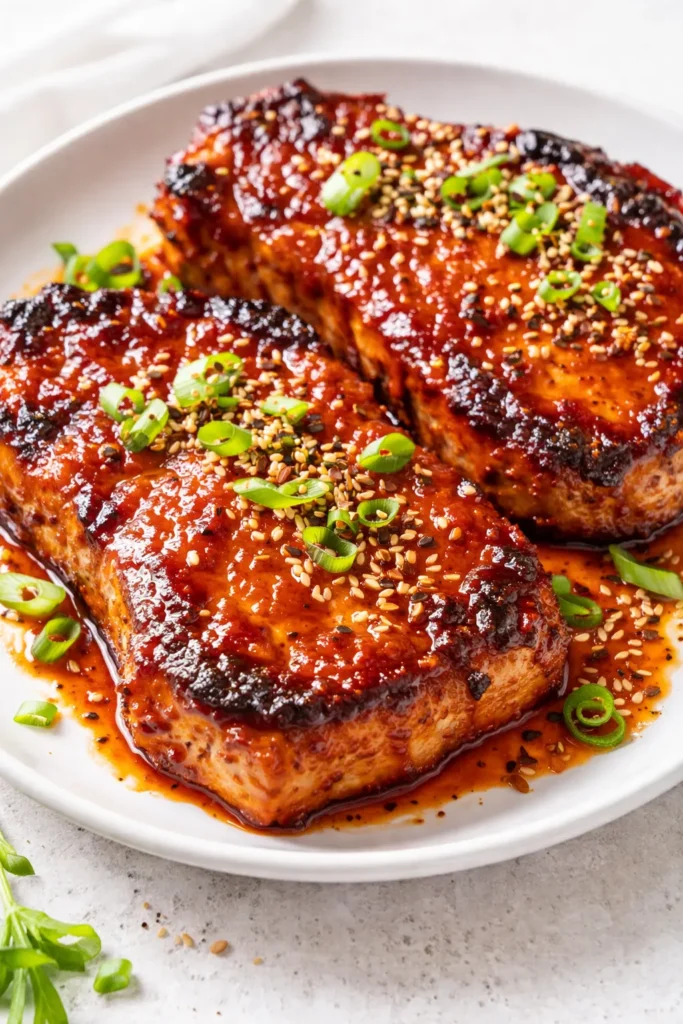
The first time I made these, my husband walked into the kitchen and just stood there for a second, sniffing the air. “What is that?” he said. It was the smell of gochujang caramelizing in a hot skillet—spicy, sweet, a little pungent, and completely irresistible. These Korean pork chops have become our go-to weeknight treat. They taste like something you’d queue up for at a BBQ joint, but they come together in the time it takes to make rice.
The short version: A sticky, spicy-sweet glaze turns ordinary pork chops into a skillet dinner your family will request on repeat.
I’ve made these more times than I can count, with every cut of pork chop you can imagine. Thick-cut bone-in is my favorite. They stay so juicy, and that caramelized crust? It’s the reason I love cooking.
- Serves: 4 as a main
- Hands-On Time: 15 min | Total Time: 30 min
- Difficulty: Easy, even on a busy Tuesday
- Cost per serving: ~$4.50
- Calories: ~350 per serving
- Dietary Notes: Naturally dairy-free and nut-free
(Photo above: overhead shot of two glazed pork chops resting on a wooden cutting board, scattered with toasted sesame seeds and sliced scallions, a small bowl of extra gochujang glaze on the side, warm afternoon light from the kitchen window.)
Why This Sticky, Spicy Glaze Works So Darn Well
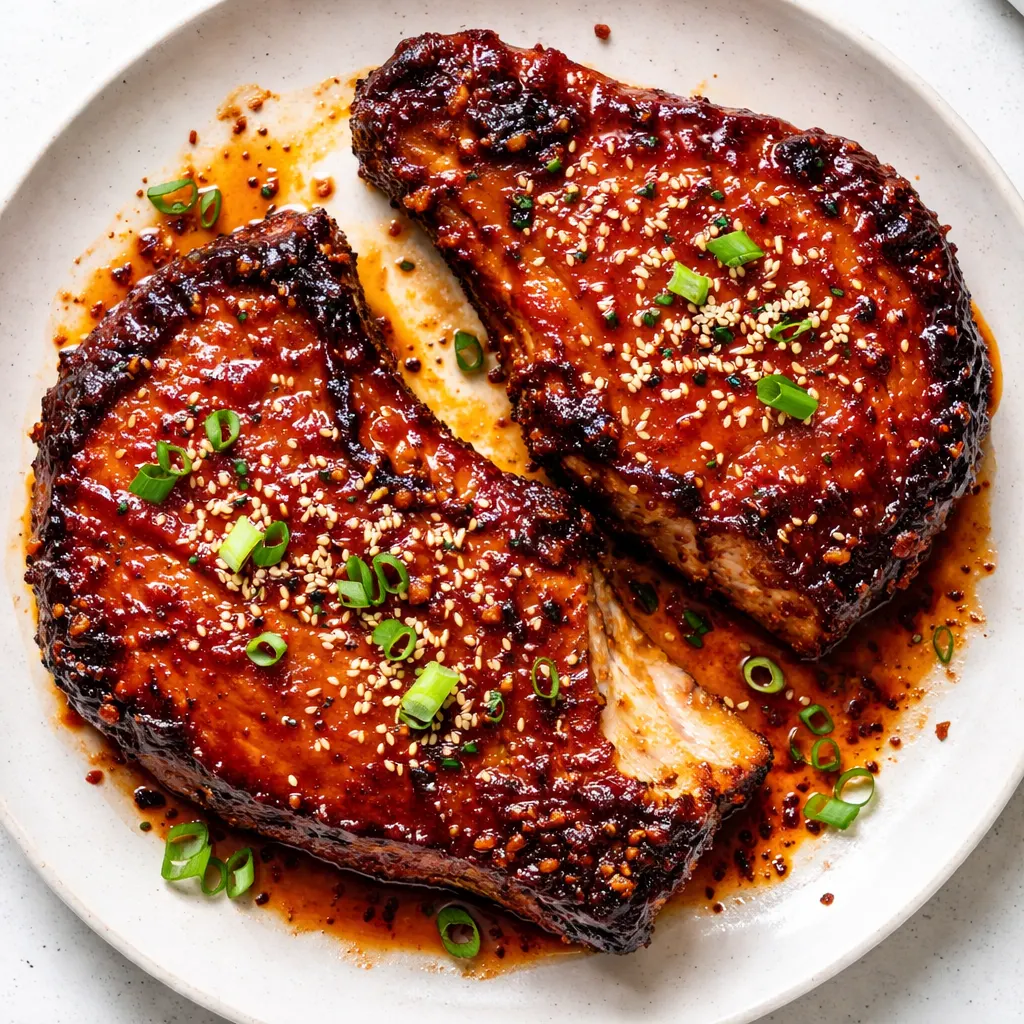
Gochujang is a superhero in a red tub. It’s fermented, so it’s got this deep, funky flavor you can’t get from just mixing hot sauce and sugar. When it hits a screaming hot pan, the sugars in it do this beautiful thing—they create a lacquered, almost glassy crust that traps the juices inside the pork. The rice vinegar in the glaze cuts through the richness, so the finish is clean and bright, not heavy.
I learned the hard way not to rush the caramelization. If you add the glaze too early, it just steams. You need that initial sear first, then the glaze goes on to finish the job. That’s the secret to the perfect sticky crust.
What You’ll Need (Plus My Honest Notes)
- 4 bone-in pork chops, about 1 inch thick: The bone keeps the meat from drying out. If you only have boneless, that’s fine—just watch the temperature closely. My kids actually prefer boneless, so I often use those for a quick school-night dinner.
- 3 tablespoons gochujang (Korean chili paste): Look for it in a red tub in the international aisle. It’s not the same as sriracha or sambal oelek. It’s thick, savory, and slightly sweet. If you can’t find it, it’s worth ordering online—it keeps in the fridge for months.
- 2 tablespoons low-sodium soy sauce: I use low-sodium so I can control the salt. The gochujang has salt too, so this keeps things balanced.
- 1 tablespoon toasted sesame oil: This is not optional. It gives the glaze that unmistakable Korean flavor.
- 2 tablespoons brown sugar: Helps the caramelization and balances the heat. You can use honey or maple syrup instead.
- 4 cloves garlic, grated: Grate it on a microplane so it melts into the glaze.
- 1-inch piece of ginger, grated: Same as the garlic. Fresh makes a difference here.
- 1 tablespoon rice vinegar: Adds the acid that keeps everything from tasting too heavy.
- Neutral oil for the pan: Avocado or vegetable oil. Something with a high smoke point.
- Toasted sesame seeds and sliced scallions for topping: Non-negotiable for the finish.
The Tools You’ll Actually Need
- Large cast-iron skillet (or a heavy-bottomed stainless steel pan)
- Small bowl for the glaze
- Tongs
- Instant-read thermometer
Making the Best Korean Pork Chops (Start to Finish)
This goes fast, so read through it once and have everything ready. Trust me, the active time is only about 15 minutes.
Prep and Preheat: Take the pork chops out of the fridge 15 minutes before cooking. Pat them very dry with paper towels. A dry surface is the key to a good sear.
- Make the glaze: In a small bowl, whisk together the gochujang, soy sauce, sesame oil, brown sugar, grated garlic and ginger, and rice vinegar. Set it aside. (📸 Photo tip: Your glaze should be the consistency of thick maple syrup—a little looser than ketchup.)
- Score and season the pork: Use a sharp knife to make shallow cuts through the fat cap on the edge of each chop (this stops them from curling up). Season both sides generously with salt and pepper.
- Heat your pan: Set your cast iron over medium-high heat for a solid 3 minutes. Add a thin layer of neutral oil. It should shimmer and ripple.
- Sear the chops: Lay the pork chops in the pan in a single layer. Leave them alone for 4 minutes. You want a deep, dark golden-brown crust. (📸 Photo tip: Lift one edge with your tongs to check the color. It should look like well-toasted bread.)
- Flip and glaze: Flip the pork chops. Immediately brush a generous layer of the gochujang glaze onto the cooked side. Let it cook for 2 minutes.
- Baste and finish: Flip again, brush the other side with more glaze. Spoon the pan juices over the top. Cook for another 2–3 minutes, until the internal temperature hits 135°F. The glaze will be dark and sticky. If it starts to burn, add a tablespoon of water to the pan to cool it down.
- Rest: Transfer the pork chops to a cutting board. Let them rest for a full 5 minutes. The temperature will carry over to 145°F. Do not skip this—it’s the difference between juicy and dry.
- Serve: Pour the remaining glaze over the top. Sprinkle with sesame seeds and scallions. Serve with rice and a side of something crisp.
How I Prep These for a Busy Week
If I know dinner is going to be rushed, I’ll mix the glaze on Sunday night. It keeps beautifully in a jar in the fridge for up to a week. I’ll even score the pork chops and season them with salt and pepper, then just pull them out right before cooking. It makes the whole process feel effortless.
- Fridge: Cooked pork chops last 3 days in an airtight container. I slice them thin and reheat in a hot pan with a splash of water to revive the glaze.
- Freezer: Yes! Combine the raw pork chops with the glaze in a zip-top bag and freeze flat. Thaw overnight in the fridge and cook directly in the marinade.
- Reheat: The microwave works in a pinch, but the oven or a hot skillet keeps the crust crisp.
Mistakes I Made So You Don’t Have To
- Don’t crowd the pan. If the pork chops are touching, they’ll steam instead of sear. Cook in batches if you need to. I know it’s annoying, but it makes a real difference.
- Wait on the glaze. I ruined a batch early on by adding the glaze too early. It just burned and turned bitter. Sear the pork first, then glaze during the last few minutes.
- Use a thermometer. I’ve cooked a lot of pork in my day, but a thermometer is the only way to be sure. 145°F is perfect. Even a minute too long can dry it out.
- Rest the meat. I know you want to dig in, but those five minutes of resting are non-negotiable. The juices need to settle back into the meat.
Make It Yours (Easy Swaps)
- Chicken Thighs: This glaze is incredible on boneless, skinless chicken thighs. Cook them to 165°F.
- Salmon: Same glaze, different protein. Perfect on a filet. Adjust your cooking time to the thickness.
- Vegetarian: I make this with extra-firm tofu often. Press it well, cube it, toss it in the glaze, and pan-sear until crispy.
- Gluten-Free: Use tamari or coconut aminos instead of soy sauce.
- Milder Version for Kids: My youngest is not a fan of heat. I swap half the gochujang for ketchup. It’s still delicious, just less spicy.
The Questions I Always Get About This Recipe
Q: Why did my glaze burn?
A: Ugh, I’ve been there. It usually means the pan was too hot when you added the glaze, or you added it too early. Next time, sear the pork first, lower the heat just a little, then brush on the glaze. If it starts looking too dark, add a splash of water to the pan.
Q: Can I use gochugaru instead of gochujang?
A: Good question, but no—gochugaru is a flaky pepper and gochujang is a fermented paste. They’re not interchangeable here. If you can’t find gochujang, look in the international aisle of your grocery store, or just order it online. It’s worth the effort.
Q: How long do leftovers last?
A: They’ll keep in the fridge for about 3 days in an airtight container. The pork might dry out a little, so I like to slice it thin and reheat it in a hot pan with a splash of water to bring the glaze back to life.
Q: What do you serve with this?
A: My go-tos are steamed white rice and a quick cucumber salad—just sliced cucumber, rice vinegar, sesame oil, and a pinch of salt. Sometimes I add a side of kimchi. The kids love it with buttered noodles if I need to keep things simple.
More Recipes My Family Makes on Repeat
If you liked this one, here are a few others that get the same reaction at our table:
- Gochujang Chicken Thighs — The same beautiful glaze, but on crowd-pleasing bone-in chicken.
- Quick Cucumber Kimchi — The perfect crunchy, cool side dish for these pork chops.
- [INTERNAL LINK PLACEHOLDER: My Go-To Weeknight Bibimbap] — Another 30-minute Korean favorite that clears out the fridge.
This one’s too good not to make a regular in your own kitchen. I think you’re going to love it as much as we do.
If you give it a try, let me know how it goes—drop a comment below or tag me in your photo. I love seeing what you’re cooking.
📌 Save this Korean pork chops recipe for the sticky-sweet, spicy weeknight dinner you’ll be craving every Tuesday.
Korean Pork Chops That Are Caramelized, Juicy, and on the Table in 30 Minutes
Equipment
- Large Cast-Iron Skillet
- Small bowl
- Tongs
- Instant-read thermometer
Ingredients
For the Gochujang Glaze
- 3 tablespoons gochujang (Korean chili paste)
- 2 tablespoons low-sodium soy sauce
- 1 tablespoon toasted sesame oil
- 2 tablespoons brown sugar
- 4 cloves garlic, grated
- 1 inch fresh ginger, grated
- 1 tablespoon rice vinegar
For the Pork Chops
- 4 bone-in pork chops, about 1 inch thick
- 2 tablespoons neutral oil (avocado or vegetable)
- 1 teaspoon salt
- 1/2 teaspoon black pepper
For Serving
- 1 tablespoon toasted sesame seeds
- 3 scallions, sliced
Instructions
- Take the pork chops out of the fridge 15 minutes before cooking. Pat them very dry with paper towels. This is key for a good sear.
- Make the glaze: In a small bowl, whisk together the gochujang, soy sauce, sesame oil, brown sugar, grated garlic and ginger, and rice vinegar. Set aside.
- Score and season the pork: Use a sharp knife to make shallow cuts through the fat cap on the edge of each chop to prevent curling. Season both sides generously with salt and pepper.
- Heat your pan: Set a large cast-iron or heavy-bottomed skillet over medium-high heat for a solid 3 minutes. Add a thin layer of neutral oil. It should shimmer and ripple.
- Sear the chops: Lay the pork chops in the pan in a single layer. Do not crowd. Leave them alone for 4 minutes to develop a deep, dark golden-brown crust. Lift one edge with tongs to check the color — it should look like well-toasted bread.
- Flip and glaze: Flip the pork chops. Immediately brush a generous layer of the gochujang glaze onto the cooked side. Let it cook for 2 minutes.
- Baste and finish: Flip again, brush the other side with more glaze. Spoon the pan juices over the top. Cook for another 2–3 minutes, until the internal temperature hits 135°F. The glaze will be dark and sticky. If it starts to burn, add a tablespoon of water to the pan to cool it down.
- Rest: Transfer the pork chops to a cutting board. Let them rest for a full 5 minutes. The temperature will carry over to 145°F. This step is non-negotiable for juicy meat.
- Serve: Pour any remaining glaze over the top. Sprinkle with sesame seeds and scallions. Serve with rice and a crisp side dish.
Notes
Related posts:
 Mini Quiche Recipe: The Store-Bought Crust Version That Tastes Like You Made It From Scratch
 The Slow Cooker Cowboy Casserole That Saves Tired Weeknights (No Soggy Tots Allowed)
 Creamy Beef and Shells for Tuesday Nights: The One-Pot Dinner My Kids Actually Ask For
 Quick Lemon Ricotta Pasta for Busy Weeknights: Creamy, Bright, and on the Table in 20 Minutes
 Juicy Oven Baked Chicken Thighs That Stay Golden and Tender — in 40 Minutes
 Lemon Garlic Butter Baked Salmon in Foil That’s Ready in 25 Minutes — No Fuss, No Mess