
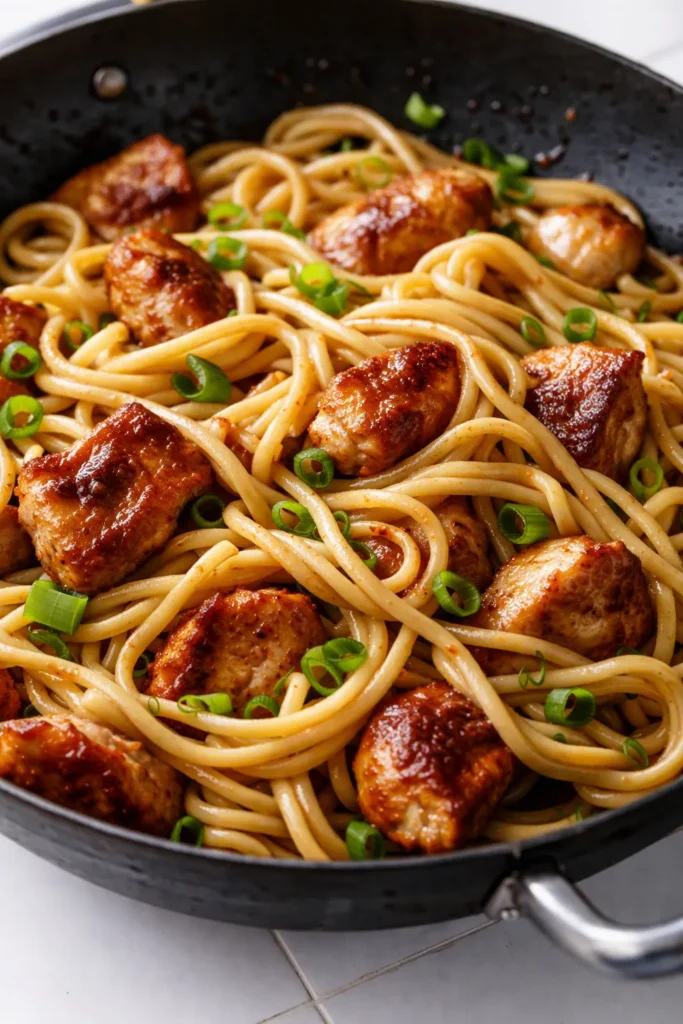
Friday nights at my house used to mean white takeout boxes and a pile of chopsticks nobody could ever get the hang of. These days I’ve made this chicken chow mein so many times that the local Chinese place actually asked me what I do different. There’s no secret ingredient involved. The whole trick is the order of operations, and it’s all written out in plain English below.
The short version: Saucy, lightly smoky chow mein with crisp vegetables and tender chicken — one pan, 25 minutes.
I’ve tested this through twenty-one batches since my daughter Nora left for Savannah, and it’s the recipe she requests on homesick phone calls. That’s my bar for success: it has to knock the craving out the same way the paper bag used to.
- Serves: 4 as a main
- Hands-On Time: 25 min | Total Time: 25 min
- Difficulty: Easy, even on a school night
- Cost per serving: ~$3.50
- Calories: ~480 per serving
- Dietary Notes: Adaptable for gluten-free — details below
(Photo above: overhead shot of the chow mein in a large dark ceramic bowl, wooden chopsticks lifting a glossy tangle of noodles, cabbage, and chicken, bright scallion greens scattered on top, late-afternoon light from the left making the sauce shine.)
What Makes This Taste Like the Takeout Box (Without the Grease)
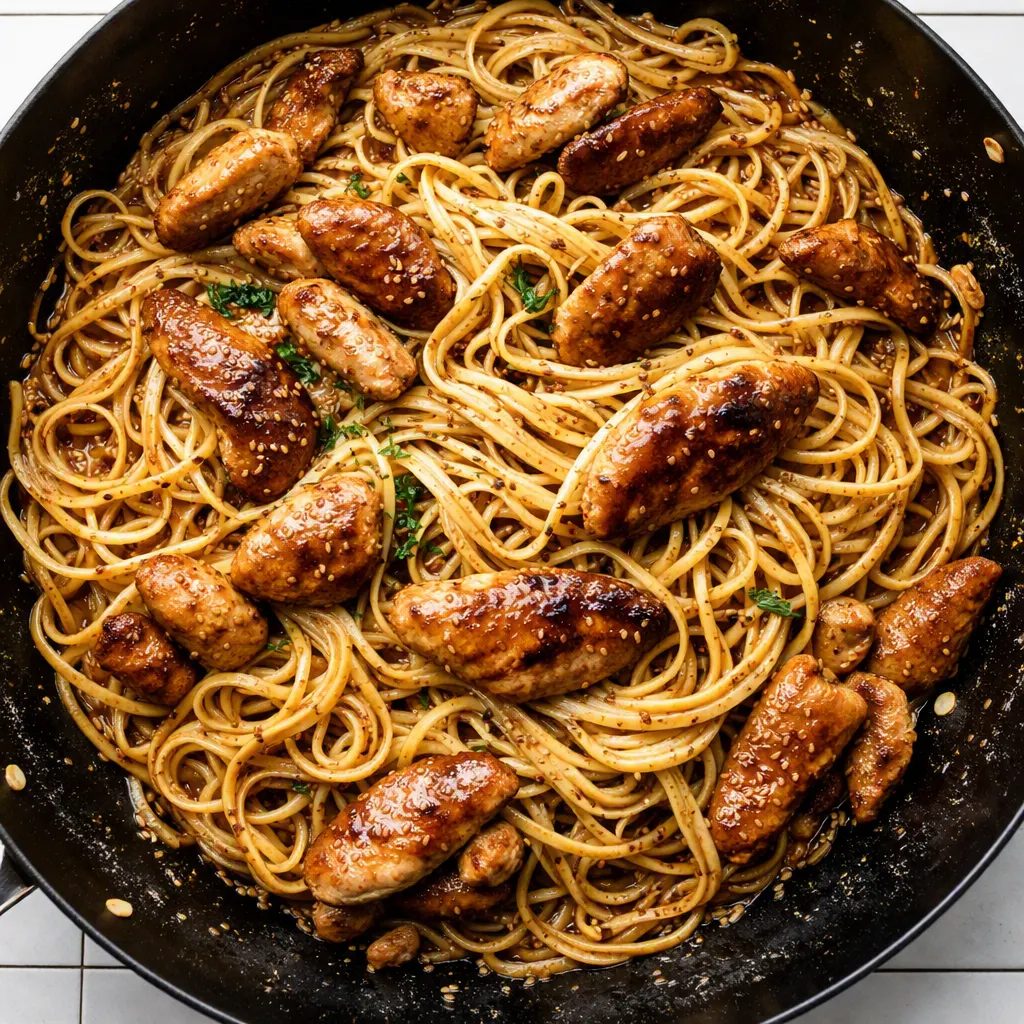
The sauce is doing most of the work, and I’m not underselling the rest by saying that. Chicken broth, soy sauce, a little oyster sauce for that dark savory depth, and a spoonful of sugar to balance it — that’s the whole flavor profile. The cornstarch slurry is what turns it from a thin, sad broth into a glossy coating that clings to every noodle. Skip it and you’ve made stir-fried noodles. Keep it and you’ve made chow mein.
The second trick is the noodles themselves. Takeout places boil their noodles, shock them in cold water, and drain them well before the wok ever sees them. That cold rinse stops the cooking dead in its tracks and washes off the extra starch that turns sticky noodles into a gummy block. I started doing it right around the eleventh batch and genuinely wondered why I’d been wrestling with sticky noodles for months.
And then there’s the vegetables. Cabbage and carrots get a head start in the pan; bean sprouts and celery go in last so they keep their snap. Soft noodle, crisp vegetable, glossy sauce — that contrast is the entire appeal of takeout chow mein, minus the twenty-minute drive and the fortune cookies.
Everything You Need (Plus My Honest Notes on What Matters)
- 12 oz fresh chow mein noodles (or 8 oz dried): The fresh ones in the refrigerated produce section are the closest to takeout texture. If you only have dried, cook them about a minute less than the package says because they finish cooking in the pan. My honest note: I’ve used spaghetti in a pinch when the store was out, and it worked — but it’s not the same. Make the trip for the real ones.
- 1 lb boneless skinless chicken thighs (or breasts): Thighs stay juicier through a high-heat sear; breasts are fine if that’s what you have. Slice them thin, against the grain, so they cook in about two minutes. My kids can tell when I swap in breast meat — they don’t complain, but they eat slower. I’ve stopped swapping because I don’t want to know what the slow eating means.
- 2 cups green cabbage, thinly sliced: The backbone of the vegetable mix. It softens slightly but keeps a little chew. Shortcut: pre-shredded coleslaw mix works beautifully and I use it on tired nights without a single ounce of shame.
- 2 medium carrots, julienned: For the color and the touch of sweetness they let go in the pan.
- 2 ribs celery, sliced thin on the diagonal: That watery crunch in the middle of all that rich sauce is doing more work than you’d think.
- 1 cup fresh bean sprouts: The closest thing to that specific takeout flavor you’ll find in a produce aisle. If they’re not at your store, don’t substitute — just leave them out.
- 4 scallions, white and green parts separated: The whites go in with the aromatics at the start. The greens go on top at the very end, no exceptions.
- 3 cloves garlic, minced, and 1 tbsp fresh ginger, minced: The aroma that tells everyone in the house dinner is coming. Pre-minced from the jar works in a hurry — I’ve used it on school nights and it’s fine.
- ⅓ cup chicken broth, 3 tbsp soy sauce, 2 tbsp oyster sauce, 1 tsp sugar: This is the entire flavor profile. Oyster sauce is non-negotiable for that dark, slightly sweet, umami back note. I tried making it without once and the whole family asked what was missing. It’s a yes.
- 1 tbsp cornstarch mixed with 2 tbsp cold water: The thickener. Mix it right before you use it — it settles fast.
- 2 tbsp neutral oil (canola or peanut) and 1 tsp toasted sesame oil: The neutral oil is for heat; the sesame oil is for flavor and it goes in at the very end, off the heat. Toasted sesame oil is dark and smells like the restaurant. Regular sesame oil is pale and mild. Check the bottle — they’re not the same.
What to Pull Out Before You Start
- A large wok or 12-inch cast iron skillet — a heavy stainless steel pan works too, just give it time to heat up before anything goes in.
- A big pot for boiling the noodles, if you’re using dried.
- Kitchen tongs with a good grip — the flimsy ones make tossing a large pile of noodles feel like wrestling.
- A small bowl for the sauce and a plate for the cooked chicken.
That’s the whole list. No special wok tools, no gadgets. This is a one-pan recipe and it stays that way.
Let’s Make It (Step by Step)
Read through this once before you turn on the burners — the cooking part moves fast, but every step is easy and I’ve flagged the one shortcut I use on my lowest-effort nights.
- Cook the noodles: Bring a pot of salted water to a boil and cook the noodles just until al dente — about 2 minutes for fresh, 4 to 6 for dried. Drain, rinse them under cold water until they’re cool to the touch, and toss with a few drops of the sesame oil so they don’t glue themselves together while you cook the rest. (📸 Photo tip: You should see individual glossy noodles sliding around the bowl — not one sad, sticky clump.) This cold rinse is the single most important detail in the whole recipe and it takes 30 seconds.
- Mix the sauce: In the small bowl, whisk together the chicken broth, soy sauce, oyster sauce, sugar, cornstarch, and cold water until the cornstarch dissolves. Give it another stir right before you pour it in — the cornstarch sinks to the bottom like a stubborn kid at bedtime.
- Sear the chicken: Pat the sliced chicken dry with paper towels — this is the difference between golden edges and gray steam. Heat 1 tablespoon of the neutral oil in the wok over high heat until it shimmers and you see a single wisp of smoke. Add the chicken in one layer and let it sit undisturbed for 2 minutes. When the edges release from the pan on their own, they’re ready to flip. Stir-fry until just cooked through, about 1 more minute, then move it to the plate. Don’t poke at it too early — I’ve pulled up half-browned chicken more times than I care to admit.
- Start the aromatics: Add the remaining tablespoon of neutral oil to the hot pan. Toss in the garlic, ginger, and the white parts of the scallions. Stir for about 30 seconds until you can smell them — that shift from raw to warm and fragrant is your signal that dinner is actually happening.
- Cook the hearty vegetables: Add the cabbage, carrots, and celery. Stir-fry for 2 to 3 minutes until the cabbage starts to wilt at the edges but still holds its shape. This is where I use the bagged coleslaw mix on my low-effort nights — it’s the same thing pre-shredded, and nobody at my table has ever noticed. (📸 Photo tip: The colors should stay bright — orange carrot, deep green cabbage — not dull and sweaty.)
- Add the quick vegetables: Toss in the bean sprouts and stir-fry for 30 seconds. They’re in there for texture, not cooking — you want them to keep that watery crunch.
- Return the chicken and noodles: Put the chicken and all its juices back in the pan, then pile the noodles on top. Let them sit for about 15 seconds before you toss — they warm up faster that way.
- Add the sauce and toss: Give the sauce one more stir and pour it over everything. Toss with your tongs, keeping the heat high, for 1 to 2 minutes. Watch the change — the sauce goes from watery to glossy as the cornstarch kicks in, and you’ll see it coat each noodle like a thin lacquer. (📸 Photo tip: This is the shine that says “takeout” — you should be able to see the kitchen light reflecting off the sauce.) If it’s too thick, splash in a tablespoon of warm water. If it’s too thin, give it 30 more seconds of heat.
- Finish and serve: Turn off the burner. Drizzle in the toasted sesame oil, toss once, and taste. It should be savory with a little sweetness at the back. Add salt only if it truly needs it — the soy and oyster sauce are already doing that job. Scatter the scallion greens on top and serve straight from the pan, because there’s no point making something that looks this good and then hiding it in a bowl.
Make-Ahead Notes (Because We’re All Busy)
This chow mein is fast enough for a Tuesday as-is, but it’s also a dream for Sunday prep. I chop all the vegetables and mix the sauce the night before — everything in separate containers in the fridge — and the actual cooking drops to about 15 minutes on the night I make it. When I’m really organized, I make a double batch of the sauce and freeze half for the next time.
- Fridge: 3 to 4 days in an airtight container. Reheat in a hot skillet with a splash of chicken broth or water to loosen the sauce back up.
- Freezer: Technically yes, up to a month — but the noodles lose their spring and the sprouts turn sad. I’d rather you made it fresh; it’s fast enough.
- Reheat: Skillet over medium-high with a splash of broth or water, tossing until the sauce clings again — about 2 minutes. The microwave works in a pinch, but it softens the vegetables into mush, and I’m not going to pretend it doesn’t.
Things I’ve Learned the Hard Way (So You Don’t Have To)
- Hot pan, dry chicken: If the chicken is damp, it steams instead of searing, and you lose that browned flavor that makes the whole dish taste like it came from a restaurant. Pat it dry. Let the pan get properly hot with the oil in it. If the oil is rippling, you’re ready.
- Don’t skip the noodle rinse: I’ve said it twice now and I’ll say it once more — it’s the one step that separates restaurant chow mein from sticky, clumpy home versions. Even if you mess up everything else a little, this rinse saves you.
- A crowded pan is a sad pan: Cook in batches if you need to and keep the heat on high. Pile everything in at once and the temperature drops, turning your stir-fry into a steam bath. The vegetables need direct contact with hot metal to get those browned edges.
- Taste before you salt: Soy sauce and oyster sauce are both salty, and it’s easy to overshoot. I’ve done it more than once and while it’s still edible, it’s not the same. Taste at the end and let your palate be the boss.
- Fix a broken sauce instead of panicking: If the sauce looks separated or the cornstarch clumps, kill the heat and whisk in a tablespoon of warm water. It won’t be perfect but it’ll be entirely fine — take it from someone who’s fixed it mid-panic more than once.
Swaps That Actually Work
- Shrimp instead of chicken: Use 1 lb of peeled shrimp and skip the chicken searing step entirely — just stir-fry the shrimp for the last 2 minutes alongside the vegetables. My daughter asks for this “fancy” version when she comes home from Savannah.
- Beef: Flank steak or sirloin, sliced thin against the grain. Sear it exactly like the chicken — 2 minutes undisturbed, then a quick stir-fry. The dark sauce plays beautifully with beef.
- Vegetarian: Pan-sear mushrooms or cubed firm tofu until golden before the aromatics go in. Use mushroom broth in place of chicken broth, and look for vegetarian oyster sauce — it’s made from mushrooms and it’s widely available now.
- Gluten-free: Tamari instead of soy sauce, a gluten-free oyster sauce (or hoisin for a sweeter kick), and rice noodles or a gluten-free chow mein noodle. It’s a little softer and less springy than the original — that’s the gluten-free tradeoff — but the flavor holds up completely. My nephew, who has celiac, requests this version every time he visits.
- Spicy: A spoonful of chili crisp stirred into the sauce at the very end turns this into a completely different meal. I do it for the adults’ portion after my kids have their milder serving.
The Questions I Get About This Recipe All the Time
Q: Why did my noodles turn out mushy?
A: Ugh, I’ve been there — it’s the most frustrating chow mein failure. You’re almost certainly doing one of two things: overcooking the noodles before they hit the pan, or not getting the pan hot enough when you add them. Boil fresh noodles for just 2 minutes, rinse them in cold water, and make sure that wok is properly screaming hot before the noodles go in. If they’re still mushy after that, try a thicker noodle — the thin ones just can’t hold up to the tossing. You’ve got this next time.
Q: Can I make this gluten-free?
A: Yes — I’ve tested it and it works. Use tamari in place of soy sauce, a gluten-free oyster sauce (most stores carry one now, or you can use hoisin for a slightly sweeter taste), and rice noodles or a gluten-free chow mein noodle. It’s a little softer and less springy than the original, but the flavor holds up completely. My nephew with celiac requests this version every holiday.
Q: How long does chow mein last in the fridge? Can I freeze it?
A: Keep it in an airtight container in the fridge for 3 to 4 days. The flavors actually settle in nicely overnight — I’ve made it on Sunday and eaten it for two lunches straight. Freezing works but the noodles get soft, so I’d only freeze if you absolutely have to — up to a month — and reheat in a hot skillet with a splash of broth or water to bring the sauce back to life. Skip the microwave if you can; it turns everything floppy.
Q: What do you serve with chow mein?
A: Chow mein is the main event at our house, honestly. But when I’m making a full takeout-style spread — frozen egg rolls baked in the oven (zero shame), steamed pork dumplings from the freezer aisle, and something cold to drink. For the adults that’s a crisp beer; for the kids, jasmine iced tea. When my kids were little, I put mandarin orange slices on the side, and the sweetness against the salty sauce was an actual hit.
More Recipes My Family Makes on Repeat
If this chow mein becomes part of your regular rotation the way it has mine, here’s what else gets the same reaction at our table:
- Easy Soy-Ginger Chicken — Sticky, glossy, and perfect over rice — my answer to the other half of the takeout menu.
- Fried Rice with Whatever’s in the Fridge — The day-after cleanout recipe that my kids request even when there’s no leftover rice.
- My Grandmother Marta’s Apple Cake — For when the dinner craving is done and the dessert one kicks in.
I’ll be honest — I still order takeout some Fridays. There’s a rhythm to the phone call and the paper bags that’s hard to replace. But on the Fridays I make this, the kitchen smells like ginger and garlic, and my kids know the sound of the tongs clicking against the wok. That’s the ritual I actually want them to remember.
If y’all make it, drop me a comment and tell me how it went — I love hearing about other people’s takeout nights! And save this one on Pinterest for the next time the delivery menu starts calling your name.
📌 Better-than-takeout chicken chow mein in 25 minutes from one pan — save this recipe for your next weeknight takeout-craving dinner.
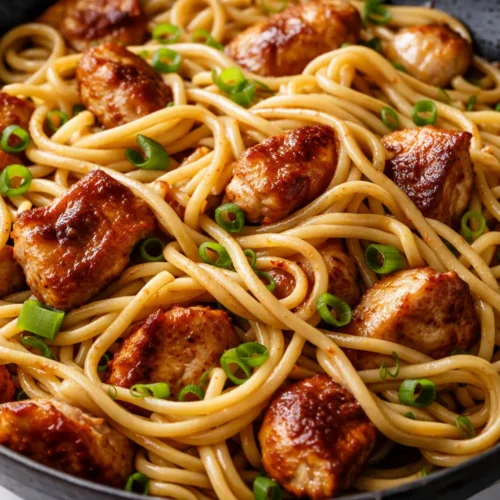
Better-Than-Takeout Chicken Chow Mein — One Pan, 25 Minutes From Craving to Done
Equipment
- Large Wok or 12-Inch Cast Iron Skillet
- Large Pot
- Kitchen Tongs
- Small bowl
- Plate
Ingredients
Noodles and Chicken
- 12 oz fresh chow mein noodles (or 8 oz dried)
- 1 lb boneless skinless chicken thighs, sliced thin against the grain
Vegetables and Aromatics
- 2 cups green cabbage, thinly sliced
- 2 medium carrots, julienned
- 2 ribs celery, sliced thin on the diagonal
- 1 cup fresh bean sprouts
- 4 scallions, white and green parts separated
- 3 cloves garlic, minced
- 1 tbsp fresh ginger, minced
Sauce
- 1/3 cup chicken broth
- 3 tbsp soy sauce
- 2 tbsp oyster sauce
- 1 tsp sugar
- 1 tbsp cornstarch
- 2 tbsp cold water
Oil and Finish
- 2 tbsp neutral oil (canola or peanut), divided
- 1 tsp toasted sesame oil
Instructions
- Cook the noodles: Bring a pot of salted water to a boil and cook the noodles just until al dente — about 2 minutes for fresh, 4 to 6 for dried. Drain, rinse under cold water until cool, and toss with a few drops of sesame oil so they do not stick together. This cold rinse is the single most important detail.
- Mix the sauce: In the small bowl, whisk together the chicken broth, soy sauce, oyster sauce, sugar, cornstarch, and cold water until the cornstarch dissolves. Stir again right before pouring it in.
- Sear the chicken: Pat the sliced chicken dry with paper towels. Heat 1 tablespoon of the neutral oil in the wok over high heat until it shimmers and a single wisp of smoke appears. Add the chicken in one layer and let it sit undisturbed for 2 minutes. When the edges release from the pan on their own, flip and stir-fry until just cooked through, about 1 minute. Move the chicken to a plate.
- Start the aromatics: Add the remaining tablespoon of neutral oil to the hot pan. Toss in the garlic, ginger, and white parts of the scallions. Stir for about 30 seconds until fragrant — that shift from raw to warm is your signal.
- Cook the hearty vegetables: Add the cabbage, carrots, and celery. Stir-fry for 2 to 3 minutes until the cabbage wilts at the edges but still holds its shape.
- Add the quick vegetables: Toss in the bean sprouts and stir-fry for 30 seconds. They are there for texture, not cooking, so keep the crunch.
- Return the chicken and noodles: Add the chicken and any juices back to the pan, then pile the noodles on top. Let them sit for about 15 seconds before tossing.
- Add the sauce and toss: Give the sauce one more stir and pour it over everything. Toss over high heat for 1 to 2 minutes until the sauce turns glossy and coats every noodle. If too thick, splash in a tablespoon of warm water; if too thin, give it 30 more seconds.
- Finish and serve: Turn off the burner. Drizzle in the toasted sesame oil, toss once, and taste. Add salt only if it truly needs it. Scatter the scallion greens on top and serve straight from the pan.
Notes
Related posts:
 The Slow Cooker Cowboy Casserole That Saves Tired Weeknights (No Soggy Tots Allowed)
 Quick Lemon Ricotta Pasta for Busy Weeknights: Creamy, Bright, and on the Table in 20 Minutes
 Lemon Garlic Butter Baked Salmon in Foil That’s Ready in 25 Minutes — No Fuss, No Mess
 Lipton Onion Soup Meatloaf for Tuesday Nights: Moist, Savory, and the Only One You’ll Ever Need
 Kielbasa Sausage Cheesy Potato Casserole That Tastes Like Sunday Dinner — In Under an Hour
 Quinoa Chicken Sausage Bowls That Are Ready in 30 Minutes (And Actually Keep Well)