
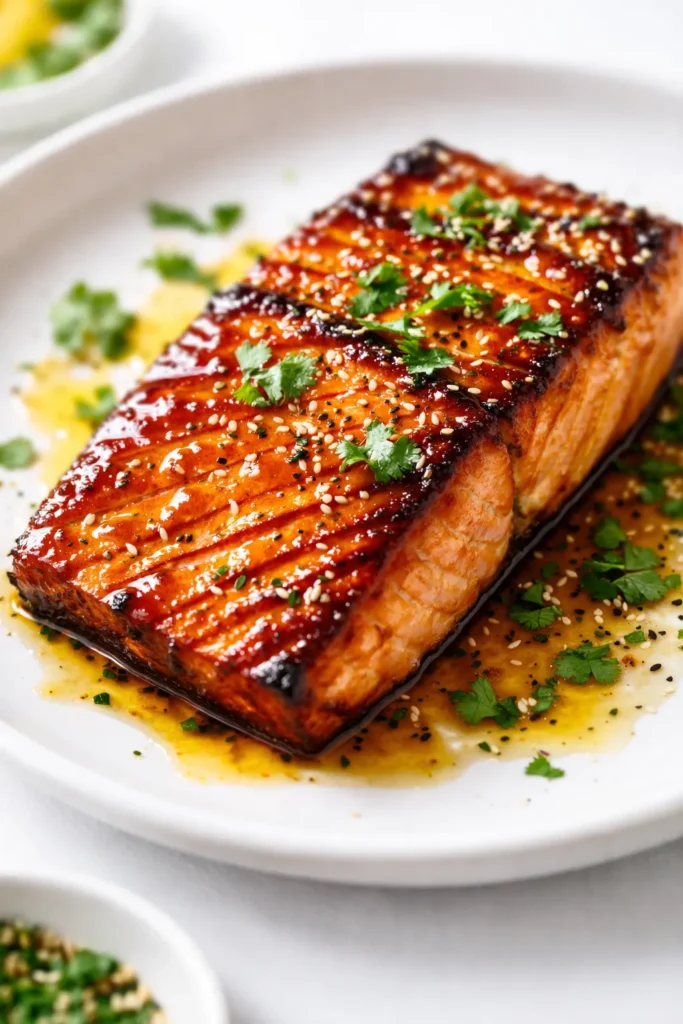
The first time I tried to make pineapple glazed salmon, I ended up with a sticky, burnt mess cemented to my favorite stainless steel pan. My grandmother Marta would have scraped it clean and started over, but I stubbornly salvaged the edible bits and took furious notes. The trick, I learned, is treating the pineapple juice like a delicate caramel — it needs patience and attention, not just high heat. This version has never let me down since, and it’s been the one my family asks for on nights when we need something that feels special but takes almost no effort.
The short version: Sticky, savory glazed salmon with crispy skin, from stovetop to table in under half an hour.
I’ve made this about twenty times now, and the first three were honestly just okay. The fourth one was the turning point — the glaze clung to the fish like it belonged there, and my then-ten-year-old asked for seconds of the sauce on her rice. That was the moment I stopped rushing the reduction.
- Serves: 4 as a main
- Hands-On Time: 15 min | Total Time: 25 min
- Difficulty: Easy, but keep an eye on the glaze
- Cost per serving: ~$3.50
- Calories: ~400 per serving
- Dietary Notes: Naturally dairy-free; adaptable for low-sugar
(Photo above: overhead shot of two glazed salmon filets resting on a bed of jasmine rice, garnished with sliced green onions and a sprinkle of sesame seeds. The salmon has a glossy, deep amber lacquer catching the afternoon light from the left, and the skin side is perfectly crisp and golden.)
The Trick That Changed Everything for Me
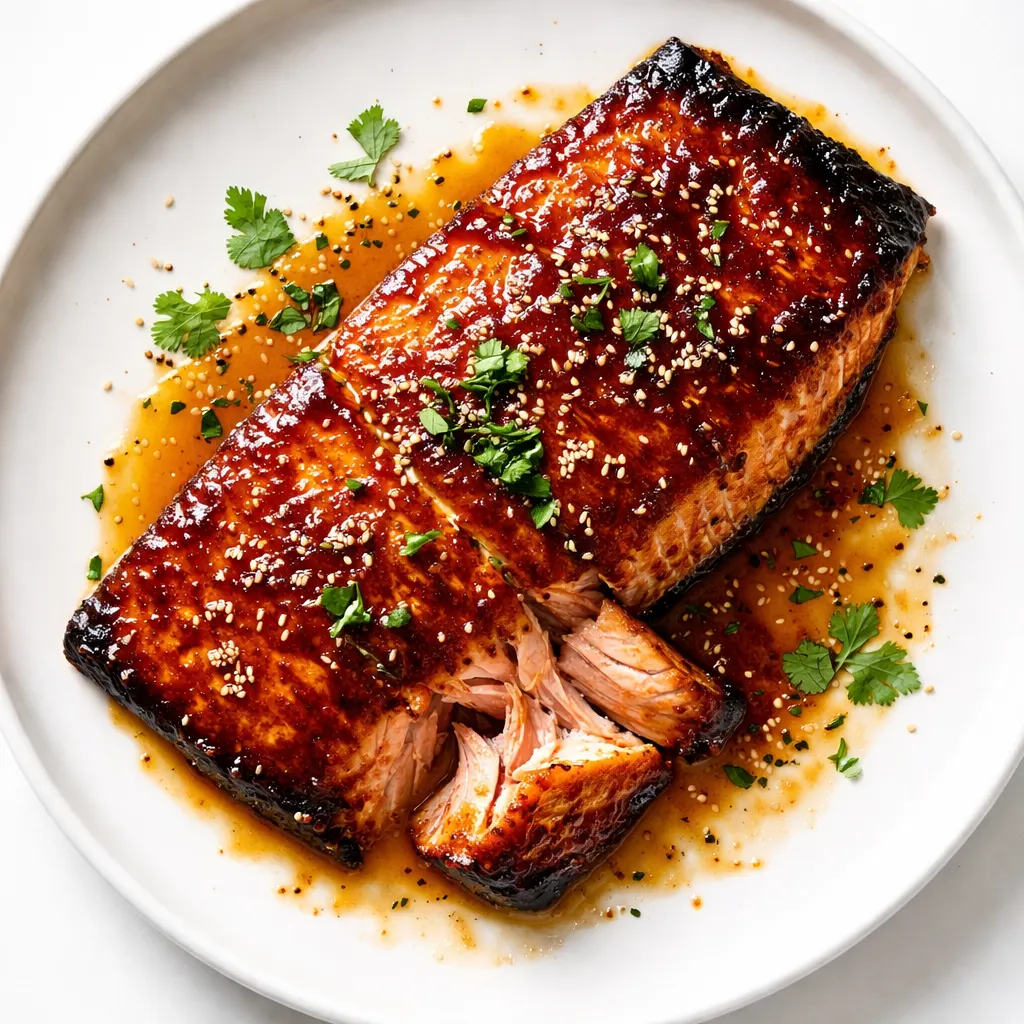
The secret to this pineapple glazed salmon is something my grandmother did with her fruit jams: reduce the liquid slowly until it’s almost syrupy before it hits the protein. If you pour straight pineapple juice over raw fish in a hot pan, you end up with a watery, steamed filet that tastes vaguely sweet but never develops that sticky, lacquered finish. By reducing the juice first with a little soy and ginger, you get a glaze that clings and caramelizes without burning. It’s the difference between a sauce that just sits on the fish and one that becomes part of it.
I learned this the hard way after a few soggy filets. The patience required in that first eight minutes of simmering is the entire secret. Walk away and you’ll miss the moment it shifts from thin juice to thick syrup — it happens fast.
What this produces is a salmon filet with crackling crisp skin, a sweet-and-savory top that pulls apart in glossy strands, and a sauce that soaks into whatever you serve it with.
What Goes In — Plus My Honest Notes
- 4 (6-ounce) salmon filets, skin on: The skin crisps up beautifully under the glaze and protects the delicate flesh from overcooking. I buy center-cut filets so they’re all roughly the same thickness. My kids actually prefer the crispy skin to the fish itself — they call it “salmon chips.”
- 1 cup unsweetened pineapple juice: This is important. The sweetened stuff burns too fast and leaves a bitter aftertaste. I’ve tested both, and unsweetened gives you a clean, bright caramelization. If all you have is sweetened, cut the sugar in the recipe by half.
- 2 tablespoons low-sodium soy sauce: We’re reducing this by more than half, so regular soy sauce will make it too salty. Low-sodium lets the pineapple shine. For gluten-free, use tamari or coconut aminos.
- 1 tablespoon honey or brown sugar: Just a touch to help the glaze tighten. Brown sugar adds a deeper molasses note, honey keeps it lighter. I use honey when I want the glaze to be shinier.
- 2 cloves garlic, smashed: Smashed, not minced. They infuse the reduction with a gentle warmth, and you can fish them out before the glaze goes on the fish. My husband once ate a whole garlic clove by accident — he said it was the best part.
- 1 thumb-sized piece of fresh ginger, peeled and sliced: Same deal as the garlic — it’s an aromatic, not a topping. I slice it into thin coins so they’re easy to remove. If your family doesn’t mind the tiny bits, you can grate it on a microplane for a more forward heat.
- 2 tablespoons neutral oil (avocado or grapeseed): For searing. Olive oil will burn at the temperature we need for crispy skin.
- Salt and white pepper: White pepper keeps the visual clean, but black pepper works just fine.
What to Pull Out Before You Start
- A large skillet — non-stick or well-seasoned cast iron. I use cast iron because it holds heat evenly and gives the skin a better crust.
- A small saucepan for the glaze reduction.
- A microplane or fine grater if you’re going the grated ginger route.
- A fish spatula — it’s thin enough to slide under the delicate filet without breaking it.
- Paper towels (for drying the salmon — this step truly matters).
Pineapple Glazed Salmon, Start to Finish
This moves fast, so have everything prepped and ready by the stove. The glaze reduction is the only part that needs a watchful eye; the rest is straightforward searing.
Start the glaze first: It needs time to reduce while you prep the fish.
- Combine and reduce: In a small saucepan, combine the pineapple juice, soy sauce, honey (or brown sugar), smashed garlic cloves, and sliced ginger. Bring it to a gentle simmer over medium heat — not a rolling boil. Let it reduce until it’s syrupy and coats the back of a spoon, about 8 to 10 minutes. You should have about 1/3 cup left. (📸 Photo tip: The bubbles will get larger and slower as it thickens. When you tilt the pan, the liquid should move like warm honey, not water.)
- Dry and salt the salmon: While the glaze reduces, pat the salmon filets completely dry with paper towels. This is the single most important step for crispy skin. Season the flesh side generously with salt and a pinch of white pepper. Let them sit at room temperature for 10 minutes — this takes the chill off and helps them cook evenly.
- Heat the skillet: Add the neutral oil to your large skillet and set it over medium-high heat. Swirl to coat the bottom. When the oil shimmers and you see the first wisp of smoke, the pan is ready.
- Sear the skin side: Place the filets skin-side down, laying them away from you so the oil doesn’t spatter. Press gently on each filet with your spatula for 5 seconds to ensure the skin makes full contact. (📸 Photo tip: The skin should sizzle immediately — if it barely whispers, the pan isn’t hot enough yet.) Cook undisturbed for 4 to 5 minutes. The skin will turn deep golden and release easily from the pan when it’s ready.
- Flip and glaze: Using your fish spatula, carefully flip each filet. The skin should be shatteringly crisp and a deep amber color. Pour the reduced pineapple mixture into the pan around the filets (avoid pouring directly over the crispy skin so it stays crunchy). Let it bubble for 1 minute, then start spooning the glaze over the tops of the filets. Cook for another 2 to 3 minutes for medium, or 4 minutes for well-done.
- Finish and serve: The glaze will tighten and become sticky as it reduces around the fish. It should look glossy and dark amber — not black. Transfer the filets to your serving platter or individual plates. Spoon any remaining glaze from the pan over the top. If the glaze sticks to the pan, add a splash of water or rice vinegar and swirl to loosen it — that’s liquid gold.
How I Meal Prep These for the Week
This is one of my favorite recipes to batch-cook. I make a double batch of the glaze on Sunday, and then I can have crispy salmon on a Tuesday night in the time it takes to heat the pan. I’ll often make extra filets just to have cold leftovers for salads the next day — the glaze soaks into the fish overnight in the most delicious way.
- Fridge: Store cooked salmon in an airtight container for up to 3 days. I wrap it loosely in foil so the skin doesn’t steam and soften. To reheat, place it skin-side up on a wire rack in a 350°F oven for 5 minutes — this re-crisps the skin.
- Freezer: I don’t freeze the cooked salmon because the glaze weeps when it thaws and the texture suffers. However, the reduced glaze freezes beautifully in a small jar for up to 3 months. Thaw it overnight in the fridge before using.
- Reheat: Avoid the microwave if you can — it turns the crispy skin rubbery. The oven method is worth the extra 5 minutes.
My Honest Advice After Making This 20 Times
- Dry the salmon like you mean it: Wet salmon steams. Steamed salmon has pale, flabby skin and dulls the glaze. I pat mine dry, let it sit uncovered in the fridge for 10 minutes, then pat it dry again. It sounds obsessive, but the result is a crust that shatters when you bite into it.
- Don’t walk away during the reduction: Pineapple juice is sugary, and sugar burns fast. As soon as it coats the back of a spoon and the bubbles are large and slow, pull it off the heat. If it turns dark brown and smells bitter, you’ve gone too far — start over. I’ve done it twice, and it’s still worth being careful.
- Even if the glaze sticks to the pan, don’t scrub it out: That sticky residue is pure concentrated flavor. Deglaze the pan with a splash of water or rice vinegar after you remove the fish. Pour that over the salmon or rice — it’s the best part. I learned this trick from Marta, who never wasted a bit of fond in her life.
- Let the skin get truly crispy before you flip: The fish will tell you when it’s ready. When you nudge it with your spatula and it moves easily on the pan, it’s time. If it resists, leave it alone for another minute. Pulling it too early will tear the skin and leave half of it stuck to the pan.
Swaps That Actually Work
- Spicy version: Add one minced serrano pepper to the glaze reduction. I do this when my husband wants something with more heat. It mellows as it reduces and leaves a pleasant warmth behind.
- Low-sugar: Use a sugar-free pineapple juice and replace the honey with a monk fruit sweetener. The reduction will take a bit longer to thicken, but it still works.
- Sheet pan supper: Instead of searing, toss broccoli florets and sliced bell peppers with oil and salt, then roast at 400°F for 10 minutes. Add the salmon to the same pan, brush with the reduced glaze, and broil for 4 to 5 minutes. The glaze caramelizes beautifully, and the vegetables catch the drippings.
- Make it a bowl: Serve the glazed salmon over coconut rice with a squeeze of lime and a handful of fresh cilantro. This is my default meal prep bowl — it reheats wonderfully.
Questions I Get About This Recipe All the Time
Q: Why did my glaze turn out thick and sticky in the pan but then burned on the fish?
A: Ugh, I’ve done that. It usually means the pan was too hot when you added the glaze, or the glaze was already too reduced. Next time, pull the glaze off the heat a little earlier — it should be syrupy but still pourable. And after you flip the salmon, reduce the heat to medium-low before you add the glaze. It needs to coat the fish slowly, not seize up instantly.
Q: Can I make this with frozen salmon? What do I need to do differently?
A: Yes, but you have to thaw it completely and dry it very well. Frozen salmon holds more water, so pat it dry, then place it on a paper towel-lined plate in the fridge for 20 minutes. Pat it dry again before salting. You’ll also need to add a minute or two to the searing time.
Q: How long does the cooked salmon last in the fridge? Can I freeze the leftovers?
A: Cooked salmon stays good in the fridge for up to 3 days in an airtight container. I don’t recommend freezing the cooked fish — the glaze weeps when it thaws and the texture turns mealy. But the reduced glaze freezes perfectly for up to 3 months, so I always make extra sauce to have on hand.
Q: What do you serve with this for a complete weeknight dinner?
A: I keep it simple. Jasmine rice or coconut rice soaks up the extra glaze. A crisp cucumber salad with rice vinegar and sesame oil cuts the richness beautifully. And honestly, steamed broccoli tossed with a little soy sauce is my go-to because it’s fast and my kids eat it without complaint.
More Recipes My Family Makes on Repeat
If this one lands in your regular rotation (and I think it will), here are a few others that get the same happy reaction at our table:
- [INTERNAL LINK PLACEHOLDER: Miso Brown Butter Salmon] — Another weeknight salmon that feels fancy. The miso adds a salty depth that pairs perfectly with a quick cucumber salad.
- [INTERNAL LINK PLACEHOLDER: Coconut Rice with Lime] — The creamy, tangy base that loves this glaze. I make it in big batches for grain bowls all week.
- [INTERNAL LINK PLACEHOLDER: Roasted Asparagus with Parmesan] — A five-minute prep side that roasts alongside the salmon. The salty cheese is a perfect counterpoint to the sweet glaze.
This sticky, savory pineapple glazed salmon has become my go-to for nights when I want dinner to feel intentional without spending an hour in the kitchen. The glaze does the heavy lifting, the crispy skin earns the praise, and the whole thing comes together in the time it takes to get everyone to the table. I hope it becomes that for you too.
If you try it, drop a comment below — I love hearing how it goes in your kitchen. And tag me on Pinterest so I can see your beautiful filets!
📌 Save this pineapple glazed salmon recipe for the next time you need a quick, impressive dinner that hits both sweet and savory — perfect for busy weeknights or a special at-home date night.
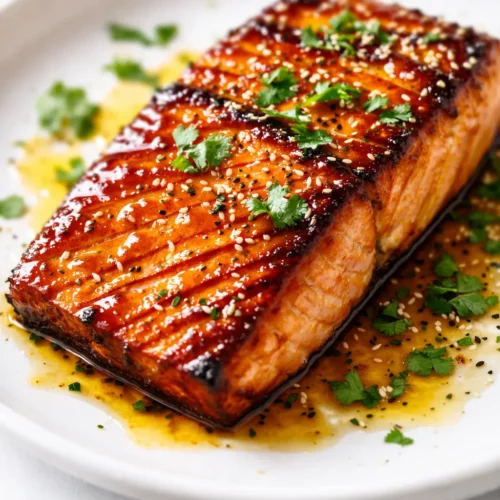
Pineapple Glazed Salmon That’s Sticky, Savory, and Ready in 25 Minutes
Equipment
- Large Skillet (non-stick or cast iron)
- Small saucepan
- Fish Spatula
- Paper towels
Ingredients
For the Glaze
- 1 cup unsweetened pineapple juice
- 2 tablespoons low-sodium soy sauce (or tamari for GF)
- 1 tablespoon honey or brown sugar
- 2 cloves garlic, smashed
- 1 thumb-sized piece fresh ginger, peeled and sliced
For the Salmon
- 4 (6-ounce) salmon filets, skin on
- 2 tablespoons neutral oil (avocado or grapeseed)
- Salt and white pepper, to taste
Instructions
- Start the glaze: In a small saucepan, combine pineapple juice, soy sauce, honey (or brown sugar), smashed garlic, and sliced ginger. Bring to a gentle simmer over medium heat. Let reduce until syrupy, about 8 to 10 minutes, until it coats the back of a spoon. You should have about 1/3 cup left. Remove from heat and set aside.
- Dry and season the salmon: Pat the salmon filets completely dry with paper towels. Season the flesh side generously with salt and a pinch of white pepper. Let rest at room temperature for 10 minutes.
- Heat the skillet: Add the neutral oil to a large skillet over medium-high heat. Swirl to coat. When the oil shimmers and just begins to smoke, the pan is ready.
- Sear skin-side down: Place the filets skin-side down, laying them away from you. Press gently on each filet with a spatula for 5 seconds to ensure full contact. Cook undisturbed for 4 to 5 minutes, until the skin is deep golden and releases easily.
- Flip and glaze: Carefully flip each filet. Pour the reduced pineapple mixture into the pan around the filets (not over the skin). Let it bubble for 1 minute, then spoon glaze over the tops of the filets. Cook for 2 to 3 more minutes for medium, or 4 minutes for well-done.
- Finish and serve: The glaze should be glossy and dark amber. Transfer filets to a platter. Spoon any remaining pan glaze over the top. If glaze sticks to the pan, add a splash of water or rice vinegar and swirl to loosen — pour that over the salmon.
Notes
Related posts:
 Mini Quiche Recipe: The Store-Bought Crust Version That Tastes Like You Made It From Scratch
 Easy Shrimp Lo Mein That’s Faster Than Delivery (Ready in 30 Minutes)
 The Slow Cooker Cowboy Casserole That Saves Tired Weeknights (No Soggy Tots Allowed)
 Creamy Beef and Shells for Tuesday Nights: The One-Pot Dinner My Kids Actually Ask For
 Quick Lemon Ricotta Pasta for Busy Weeknights: Creamy, Bright, and on the Table in 20 Minutes
 Juicy Oven Baked Chicken Thighs That Stay Golden and Tender — in 40 Minutes