
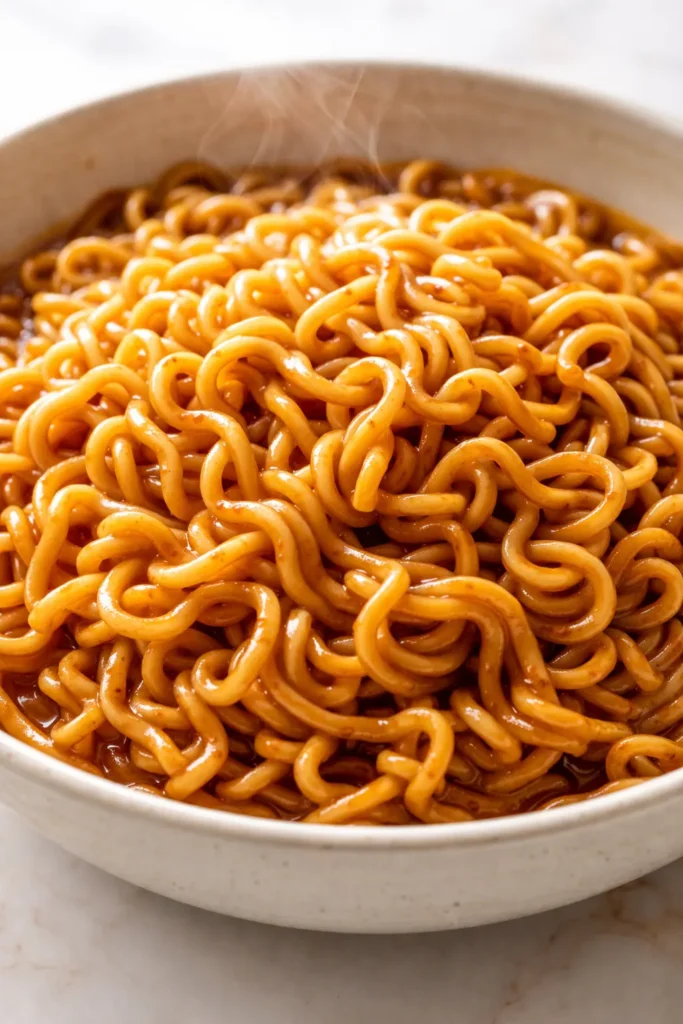
The first time I made these noodles, I was standing over the stove eating straight from the pan because I couldn’t find a clean bowl fast enough. That was maybe four years ago, and they’ve been a regular in our weeknight rotation ever since. The sauce clings to every single strand — thick enough to coat, savory enough to scratch that takeout itch without waiting forty minutes for delivery. My 19-year-old, Nora, called me after she made them in her dorm kitchen and said, “Mom, this is dangerous.”
The short version: A deeply savory, garlicky, slightly sweet sauce coats tender ramen noodles in one skillet in 15 flat.
I’ve made this dozens of times, and the thing that still gets me is how something this fast can feel this satisfying. My kids ask for it on school nights when the afternoon got away from us. I make it for myself on nights when cooking feels like the last thing I want to do, and somehow it still feels like a treat.
- Serves: 2 as a main, 4 as a side
- Hands-On Time: 10 min | Total Time: 15 min
- Difficulty: Easy enough for a busy weeknight
- Cost per serving: ~$2.50
- Calories: ~420 per serving
- Dietary Notes: Vegetarian if using veg broth
(Photo above: an overhead shot of the glossy noodles in a dark ceramic bowl, chopsticks lifting a tangled bite, steam rising against a moody blue kitchen towel. Every strand glistens with the dark, rich sauce.)
What Makes These Different From Every Other Quick Noodle Dish I’ve Tried
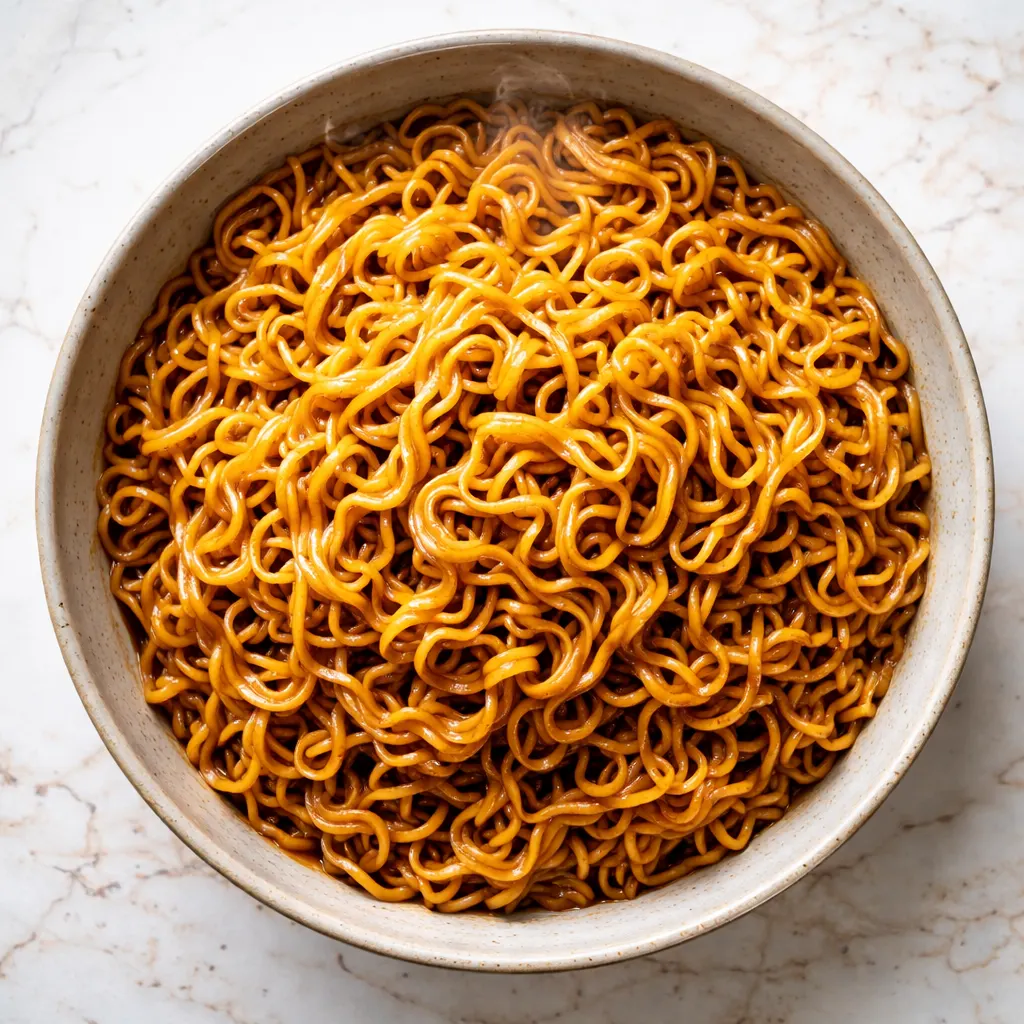
The thing that makes these noodles weeknight material — and not a sad, watery bowl of disappointment — is the order of operations. The aromatics hit the hot oil first, building a base that tastes like you spent way more time than you actually did. Then the sauce ingredients go in, and they reduce slightly before the noodles even hit the pan. That head start is everything.
The second trick is one I learned after a few too many bowls where the noodles tasted like nothing. You cook the ramen for a full minute less than the package says. It finishes cooking in the hot sauce, soaking up flavor instead of water. That one minute changed the whole dish for me. The noodles stay firm, they taste like the sauce, and they don’t turn into mush the second you look away.
What Goes In — Plus My Honest Notes
- 2 packs instant ramen (discard the flavor packets): You want the squiggly, curly kind here — the texture holds the sauce better than straight noodles. I use the cheap stuff. It’s what works.
- 3 tablespoons soy sauce: Use a good one if you can. I keep Kikkoman in my pantry. If you’re gluten-free, tamari or coconut aminos work the same way.
- 1 tablespoon brown sugar: Just enough sweetness to balance the salt and heat. Light or dark doesn’t matter. My family likes it slightly closer to savory, so I usually go light.
- 1 to 2 tablespoons gochujang (Korean chili paste): This is the secret. It’s thick, savory, slightly sweet, and totally different from hot sauce. My kids call it “the red stuff” but they love it. Start with 1 tablespoon if you’re unsure.
- 1 teaspoon sesame oil: Adds that nutty, toasty note that makes it taste like it came from a restaurant.
- 4 cloves garlic, minced: Don’t use the jarred stuff. Fresh garlic takes thirty seconds to mince and it makes a real difference here.
- 1 teaspoon fresh ginger, grated: I grate mine on a microplane right over the pan. The smell alone tells you you’re on the right track.
- 1 tablespoon butter: This is the step everyone wants to skip when they’re trying to be virtuous. Don’t. The butter stirred in at the end makes the sauce velvety and balances the heat. It’s the difference between a good noodle dish and one you’ll dream about.
- For serving: Soft-boiled egg, sliced green onions, sesame seeds, chili crisp.
What to Pull Out Before You Start
- A 10-inch skillet or nonstick pan
- A pot for boiling the noodles
- A small whisk or fork
- A cutting board and knife
- A microplane (if you have one — it makes the garlic and ginger disappear into the sauce)
Here’s How I Do It
I’ll walk you through this exactly the way I make it in my own kitchen. It moves fast, so read through once before you start.
Start the water: Fill a medium pot with water and bring it to a boil. You’ll cook the noodles in a minute.
- Build the foundation: Heat a splash of neutral oil (or a teaspoon of sesame oil) in your skillet over medium heat. Add the minced garlic and grated ginger. Let them sizzle until fragrant — about 30 seconds. Don’t let them brown. The smell should hit you immediately. (📸 Photo tip: You want the garlic and ginger sweating, not coloring. If you see brown, your heat is a touch high — turn it down.)
- Make the sauce: In a small bowl or directly in a liquid measuring cup, whisk together the soy sauce, brown sugar, gochujang, sesame oil, and about 2 tablespoons of water. Pour it into the skillet with the aromatics. Let it come to a gentle simmer and cook for about 2 minutes, stirring occasionally. You’ll see it thicken slightly — it should coat the back of a spoon. Taste it here and adjust if needed. I sometimes add an extra pinch of brown sugar if it feels too sharp.
- Boil the noodles: When the water is boiling, drop in the ramen noodles. Cook them for 1 minute less than the package directs. If the package says 4 minutes, pull them at 3. (📸 Photo tip: The noodles should still look a little too firm. That’s exactly where you want them.)
- Reserve the water (optional but smart): Right before you drain the noodles, scoop out about a quarter cup of the starchy cooking water. This is your emergency sauce loosener. You might not need it, but if the sauce tightens up, a splash of this will fix it in seconds.
- Toss and finish: Drain the noodles well — don’t rinse them — and add them directly to the skillet with the sauce. Turn the heat to low. Toss the noodles in the sauce using tongs or two forks. Add the tablespoon of butter and keep tossing until it melts and the sauce clings to every strand. The butter makes it glossy. If the sauce looks too thick, add a splash of that reserved pasta water.
- Serve immediately: Divide the noodles between bowls. Top with a soft-boiled egg cut in half, a generous handful of sliced green onions, and a sprinkle of sesame seeds. A drizzle of chili crisp never hurt anyone either. The egg yolk should be jammy — that’s the moment people will save this recipe for.
How I Meal Prep These for the Week
This is the kind of recipe I keep in my back pocket for nights when the fridge looks empty and the day has already taken everything out of me. Here’s how to make it even easier:
- Fridge: Make the sauce base up to 5 days ahead. Store it in a jar in the fridge. When you’re ready, cook the fresh noodles and toss everything together. The sauce actually gets better as it sits — the flavors find each other.
- Freezer: The sauce freezes beautifully. Pour it into an ice cube tray and pop out a cube whenever you need one. The noodles themselves are best fresh, so don’t freeze the whole dish.
- Reheat: If you have leftovers (rare in my house), reheat them in a skillet over low heat with a splash of water or soy sauce to loosen the sauce back up. The microwave works in a pinch but the stovetop keeps the texture right.
Things I Wish I’d Known the First Time
- The butter makes it restaurant-quality. I know it sounds like something a food blogger would say, but I mean it literally. I’ve skipped it when I was trying to be “healthy,” and the sauce was still good. But it wasn’t this. The butter at the very end gives the sauce a gloss and a richness that makes you think someone worked way harder than they actually did. Even my kids noticed the difference when I left it out once. “Mom, this one tastes different.” They were seven and nine. They knew.
- Don’t skip the gochujang. You can use sriracha or chili crisp in a pinch, but gochujang has a sweetness and depth that makes the sauce taste like it’s been simmering for an hour. It’s a thick, fermented chili paste — totally different from just hot sauce. Most grocery stores carry it now. If you buy it, you’ll find yourself putting it on everything. I promise.
- Taste and adjust as you go. The soy sauce and gochujang both bring salt, but the brown sugar balances it. Taste the sauce before you add the noodles. If it needs a pinch more salt (or a squeeze of lime), do it then. The recipe is a guide, not a contract. Your palate is the authority.
- Reserve that pasta water. I almost skipped this step a hundred times. Don’t. Starchy water is the secret weapon of any good sauce. If your sauce tightens up or the noodles seem dry, a splash of that water brings it back to life. It’s insurance you’ll be glad you have.
Swaps That Actually Work
- Lower Spice (Kid-Friendly): Use 1 teaspoon gochujang instead of 1 tablespoon. Add a tiny pinch of red pepper flakes if you want a whisper of heat. My kids call this version “butter noodles” and have no idea it’s the same base. I make it for them on school nights and they clean the bowl every time.
- Add Protein: Leftover shredded chicken, seared tofu, or crispy pork belly all work beautifully. Add them to the skillet right at the end, with the noodles, and toss everything together to heat through.
- Make it a Veggie Bowl: Toss in a handful of baby spinach, shredded carrots, or chopped bok choy in the last minute of cooking. It wilts right into the sauce and adds color without extra effort.
- Gluten-Free: Use gluten-free ramen noodles (Lotus Foods makes a good one) and swap the soy sauce for tamari or coconut aminos. The texture is slightly different, but the flavor is still there.
- Dairy-Free: Skip the butter and use a tablespoon of toasted sesame oil or a vegan butter substitute. The sauce will still be glossy, just a little lighter.
Questions I Get About This Recipe All the Time
Q: Why did my noodles turn out mushy?
A: Overcooking them is the number one culprit. Ramen cooks fast — faster than you think. Pull them a full minute before the package says they’re done. They’ll finish cooking in the hot sauce and stay firm to the bite. I learned this the hard way after a few too many sad bowls.
Q: Can I make this gluten-free?
A: Yes! Use gluten-free ramen (like Lotus Foods) and tamari or coconut aminos instead of soy sauce. I’ve tested it with a few different brands and it works. The noodles are a little more delicate, so handle them gently when you toss them in the sauce.
Q: How long do leftovers last? Can I freeze this?
A: The noodles themselves are best the day you make them. Leftovers keep in the fridge for about a day, but the texture softens. The sauce, however, keeps beautifully — store it in a jar in the fridge for up to a week or freeze it for months. I freeze the sauce in small containers so I can pull it out whenever the craving hits.
Q: What do you serve with these noodles?
A: We love them with a simple cucumber salad (rice vinegar, sesame oil, pinch of sugar, sliced cucumber) and a soft-boiled egg on top. Nora adds edamame and a handful of frozen peas to hers. On weekends, I’ll add a piece of crispy salmon or some pan-fried dumplings. It’s flexible — that’s the beauty of it.
More Recipes My Family Makes on Repeat
If you liked this one, here are a few others that get the same reaction at our table:
- [INTERNAL LINK PLACEHOLDER: Gochujang Glazed Meatballs] — Sticky, spicy, and on the table in 20 minutes. My kids ask for them every other week.
- [INTERNAL LINK PLACEHOLDER: 15-Minute Garlic Butter Udon] — Even faster, if you can believe it. Perfect for the laziest nights of the week.
- [INTERNAL LINK PLACEHOLDER: My Favorite Weeknight Chicken Thighs] — A sheet pan dinner I make when I want something hands-off that still feels like a real meal.
The first night I made these noodles, I ate them out of the skillet because I couldn’t wait the extra thirty seconds to find a bowl. I still eat them that way sometimes. They’re the kind of recipe you make when you need something to feel like a treat but don’t have the energy for a project. I hope they become that for you too.
If you make a batch, drop a comment below and tell me how it went — especially if you found yourself standing over the stove with a fork. And if you save this one for later, make sure you Pin it so you can find it the next time the takeout craving hits and you want something faster.
📌 Save these Easy Saucy Ramen Noodles for your next weeknight dinner emergency — they come together in 15 minutes, taste like takeout from scratch, and use ingredients you probably already have in your pantry.
Saucy Ramen Noodles That Taste Better Than Takeout in 15 Minutes
Equipment
- 10-inch skillet or nonstick pan
- Pot for boiling noodles
- Small whisk or fork
- Cutting board and knife
- Microplane (optional)
Ingredients
- 2 packs instant ramen (discard flavor packets)
- 3 tablespoons soy sauce (or tamari/coconut aminos for gluten-free)
- 1 tablespoon brown sugar
- 1-2 tablespoons gochujang (Korean chili paste)
- 1 teaspoon sesame oil
- 4 cloves garlic, minced
- 1 teaspoon fresh ginger, grated
- 1 tablespoon butter (or vegan alternative for dairy-free)
For serving:
- Soft-boiled egg, sliced green onions, sesame seeds, chili crisp (optional)
Instructions
- Start the water: Fill a medium pot with water and bring it to a boil. You’ll cook the noodles in a minute.
- Build the foundation: Heat a splash of neutral oil (or a teaspoon of sesame oil) in your skillet over medium heat. Add the minced garlic and grated ginger. Let them sizzle until fragrant — about 30 seconds. Don’t let them brown.
- Make the sauce: In a small bowl, whisk together the soy sauce, brown sugar, gochujang, sesame oil, and about 2 tablespoons of water. Pour into the skillet and let it come to a gentle simmer. Cook for about 2 minutes, stirring occasionally, until it thickens slightly. Taste and adjust if needed.
- Boil the noodles: When the water is boiling, drop in the ramen noodles. Cook them for 1 minute less than the package directs. (If the package says 4 minutes, pull them at 3.) The noodles should still look a little too firm — that’s perfect.
- Reserve the water (optional but smart): Right before you drain the noodles, scoop out about a quarter cup of the starchy cooking water. This is your emergency sauce loosener.
- Toss and finish: Drain the noodles well (don’t rinse them) and add them directly to the skillet with the sauce. Turn the heat to low. Toss the noodles in the sauce using tongs. Add the tablespoon of butter and keep tossing until it melts and the sauce clings to every strand. If the sauce looks too thick, add a splash of reserved pasta water.
- Serve immediately: Divide the noodles between bowls. Top with a soft-boiled egg cut in half, sliced green onions, and a sprinkle of sesame seeds. A drizzle of chili crisp never hurt anyone either.
Notes
Related posts:
 Mini Quiche Recipe: The Store-Bought Crust Version That Tastes Like You Made It From Scratch
 Easy Shrimp Lo Mein That’s Faster Than Delivery (Ready in 30 Minutes)
 The Slow Cooker Cowboy Casserole That Saves Tired Weeknights (No Soggy Tots Allowed)
 Creamy Beef and Shells for Tuesday Nights: The One-Pot Dinner My Kids Actually Ask For
 Quick Lemon Ricotta Pasta for Busy Weeknights: Creamy, Bright, and on the Table in 20 Minutes
 Creamy Roasted Tomato and Garlic Ricotta Pasta That Tastes Like It Simmered All Day (Ready in 45 Minutes)