
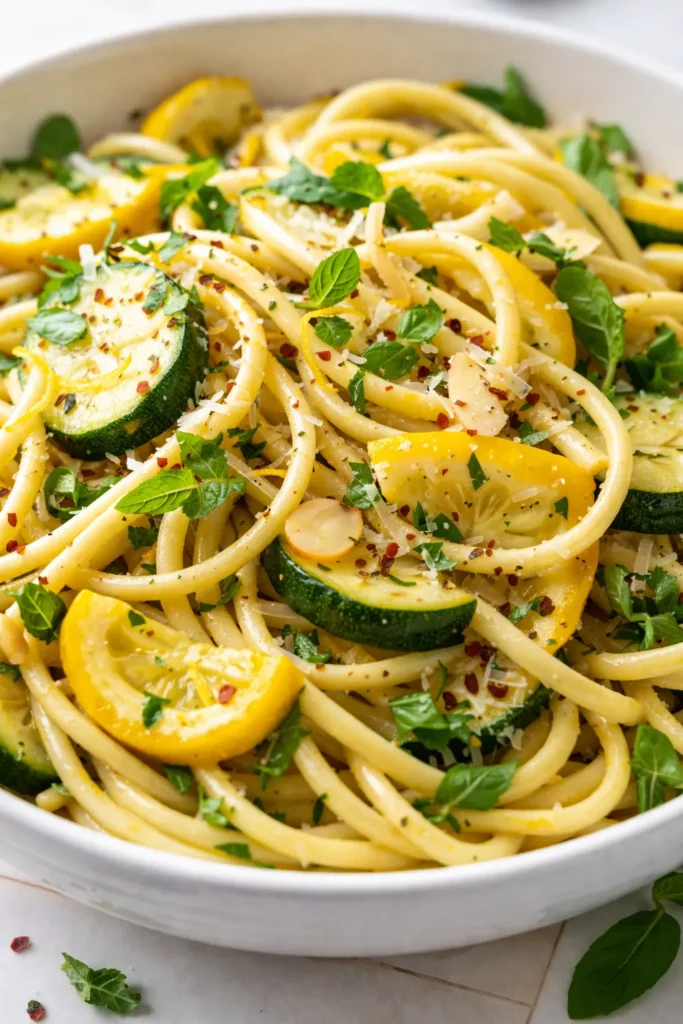
Every summer squash pasta I made before this one ended up in a watery mess. Not this one. The trick is salting the squash first — it draws out the excess moisture so it stays tender and light, never mushy. We’re tossing it with pasta, lemon, herbs, and a generous shower of Parmesan. It’s exactly what you want for those hot evenings when you don’t want to turn on the oven for long.
The short version: Salty, lemony, herb-packed pasta that comes together in 25 minutes and doesn’t get weighed down by soggy squash.
I’ve made this version about fifteen times this summer alone — it’s the one my neighbor Deb specifically asks for when we do porch dinners. Even my squash-skeptic kid cleans his bowl.
- Serves: 4 as a main, 6 as a side
- Hands-On Time: 15 min | Total Time: 25 min
- Difficulty: Easy, even on a busy weeknight
- Cost per serving: ~$2.50
- Calories: ~350 per serving
- Dietary Notes: Vegetarian. Easily vegan (skip cheese) or gluten-free (GF pasta)
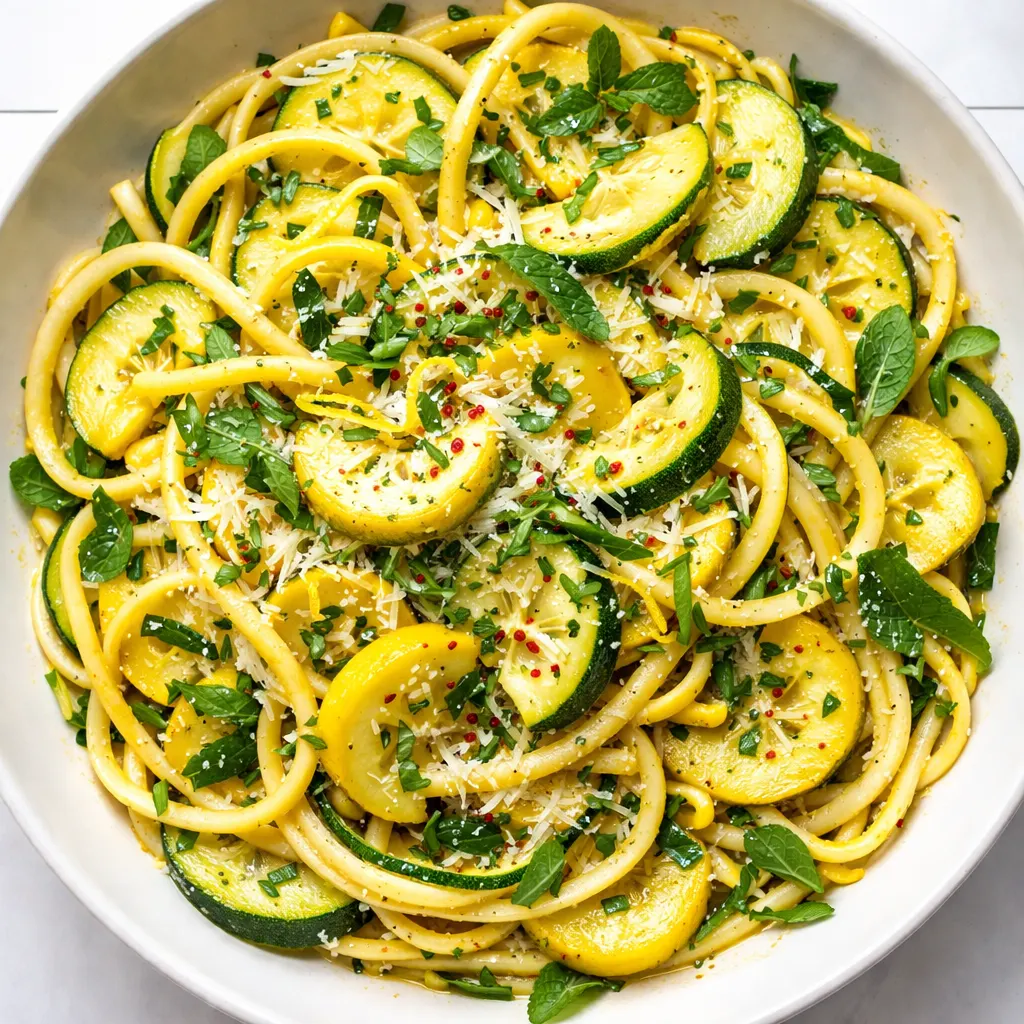
(Photo above: overhead shot of the pasta in a wide white bowl, zucchini ribbons tangled with thin spaghetti, bright yellow squash half-moons, fresh basil leaves scattered on top, and a fine dusting of Parmesan — shot in late afternoon sun on a wooden farm table.)
The Trick That Keeps This Pasta Light (Not Waterlogged)
Summer squash is mostly water. That’s great for staying hydrated, terrible for pasta if you don’t handle it right. When you cook it directly in the pan without treating it first, all that water releases into the sauce and you end up with a thin, watery broth instead of a coating.
Salting the squash before cooking draws that extra moisture out. You’ll see beads of water on the surface after about 10 minutes — just pat it dry before you toss it in the pan. What’s left is tender, concentrated flavor without the puddle. Total game changer for weeknight pasta.
Ingredients Worth Talking About (Plus My Honest Notes)
- 2 medium summer squash or zucchini (about 1 lb): The star. I use a mix of yellow squash and green zucchini for color. Salting tip: Don’t skip this. I know it’s an extra step, but it’s what keeps the pasta from turning into soup. My kids actually prefer the texture now — no slimy bits.
- 12 oz pasta (spaghetti, linguine, or bucatini): Something long and twirly works best here. I use De Cecco every time — it holds its bite better than other brands.
- 3 tbsp extra-virgin olive oil: Good quality matters since it’s a primary flavor. I use the California Olive Ranch one for everyday cooking.
- 3 cloves garlic, thinly sliced: Not minced — sliced so they soften into sweet little morsels without burning. Marta always used sliced. She said minced was for rubes.
- 1 lemon (zest and juice): Brightens the whole dish. Roll it on the counter before juicing to get every drop out.
- 1/2 cup grated Parmesan (plus more for serving): Salty, nutty, necessary. The real stuff in the wedge, not the green can — I swear it melts better.
- 1/2 cup fresh basil and mint, chopped: The herb combo makes it taste garden-fresh. My daughter Nora calls this the “summer in a bowl” herb mix.
- Red pepper flakes (optional): A pinch for warmth. I add it. My husband skips it. We make it work.
What to Pull Out Before You Start
- Large pot for boiling pasta (I use a 6-quart)
- Large skillet (12-inch) — stainless steel or non-stick both work
- Colander for draining pasta and rinsing squash
- Box grater (for the Parmesan — freshly grated melts so much better)
- Chef’s knife and cutting board
That’s it. Nothing fancy required.
Here’s How I Make It (Step by Step)
This moves fast once you start cooking, so have everything prepped and ready by the stove.
Prep the squash: Start this before the pasta water boils.
- Salt the squash: Slice the squash into half-moons or ribbons. Toss with 1/2 tsp salt in a colander set over a bowl. Let sit for 10 minutes — you’ll see beads of water form. Pat dry with a clean towel. (📸 Photo tip: after 10 min, you’ll see tiny drops of water on the squash surface — that’s the salt doing its job. Wipe them off and proceed.)
- Boil the pasta: Bring a large pot of salted water to a boil. Cook pasta until 1 minute shy of al dente. Reserve 1 1/2 cups pasta water before draining. I always forget this step when I’m in a hurry — set a timer to remind yourself to scoop out that water!
- Cook the aromatics: While pasta cooks, heat olive oil in the large skillet over medium heat. Add sliced garlic and red pepper flakes (if using). Cook 1 minute until fragrant — don’t let the garlic brown. Burnt garlic is bitter garlic. Low and slow is the way.
- Add the squash: Increase heat to medium-high. Add the dried squash and a pinch of salt. Cook 2–3 minutes, stirring occasionally, until just tender — it should have some bite left. Overcooking makes it mushy. We want it to soften but still hold its shape.
- Combine everything: Add the drained pasta, 1/2 cup pasta water, lemon zest and juice, and Parmesan to the skillet. Toss vigorously for 1 minute, adding more pasta water as needed to create a silky sauce that coats each strand. This is where the magic happens — the starch in the water and the cheese emulsify into a light, creamy sauce with no cream!
- Finish and serve: Remove from heat. Toss in the fresh basil and mint. Taste — add salt or red pepper if needed. Serve immediately with extra Parmesan and a drizzle of olive oil. (📸 Photo tip: the herbs should look fresh and bright, not cooked down — add them off the heat.)
Make-Ahead Notes (Because Weeknights Are Busy)
This is one of those rare pastas that actually keeps well. I make a double batch on Sundays and we eat it for lunch all week.
- Fridge: Store in an airtight container for up to 4 days. A splash of olive oil or reserved pasta water helps loosen it up when reheating.
- Freezer: I don’t recommend freezing — the squash texture changes and gets a bit too soft for my liking.
- Reheat: Skillet is best — a splash of water or broth, medium heat, toss until warmed through. Microwave works in a pinch but the texture is better on the stove.
Things I’ve Learned the Hard Way (So You Don’t Have To)
- Don’t skip the salting step. I know it looks like an extra 10 minutes you don’t have. But it’s the single difference between a light, bright pasta and a watery, sad one. Your future self will thank you.
- Reserve more pasta water than you think you need. The starchy water is liquid gold for creating a sauce. If you’re nervous, save 2 cups. You don’t have to use it all, but it’s better to have extra than to be stuck with dry pasta.
- Taste as you go. Summer squash can be wildly different in moisture and sweetness. Adjust lemon, salt, and herbs at the end. I’ve had batches that needed a whole extra squeeze of lemon and others that were perfect with just the zest.
- Use good Parmesan. It makes a difference. Pre-grated stuff contains anti-caking agents that prevent it from melting smoothly. Grate it yourself — it takes 30 seconds and the texture is infinitely better.
Ways to Make It Your Own
- Vegan/Dairy-Free: Skip the Parmesan and use 2 tbsp nutritional yeast plus 1 tbsp miso paste dissolved in the pasta water. It sounds weird but it works. My plant-based sister-in-law asks for this version.
- Gluten-Free: Use your favorite gluten-free pasta. Brown rice pasta works great here — just watch the cooking time so it doesn’t get mushy.
- Add Protein: Toss in a cup of cooked chickpeas, white beans, or shredded rotisserie chicken. My husband insists on adding chicken and I have to admit, it’s good.
- Herb Swap: No basil? Use parsley, dill, or chives. Each gives a different personality. Dill is surprisingly good with lemon and squash.
- Spicy: Double the red pepper flakes or add a finely chopped Fresno chile with the garlic. This is how Nora eats it — she says it “wakes up the whole dish.”
The Questions I Get About This Pasta All the Time
Q: Why did my pasta turn out watery even after salting?
A: It’s possible you didn’t dry the squash thoroughly enough after salting. Pat it dry with paper towels — really press in there. Also, make sure you’re not overcrowding the pan. If the squash steams instead of sautés, it releases more water. Work in batches if needed.
Q: Can I use yellow squash and zucchini interchangeably?
A: Absolutely. They have slightly different water content (zucchini is a touch firmer) but both work perfectly. I like using a mix for the color contrast — it makes the dish look prettier on the table.
Q: How long does this pasta last in the fridge?
A: Up to 4 days in an airtight container. It’s one of the few pastas that reheats well because the sauce is light and doesn’t separate. Add a tablespoon of water or olive oil when reheating to bring it back to life.
Q: What do you serve with this for a complete meal?
A: A simple green salad with lemon vinaigrette and some crusty bread for soaking up the extra sauce. For a protein, grilled chicken, shrimp, or white beans all work beautifully. In the summer, I serve it alongside a caprese salad — tomatoes, basil, fresh mozzarella. It’s the perfect no-cook side.
More Light and Easy Recipes from My Kitchen
If you loved this pasta, I think you’ll really enjoy these other favorites that get us through the summer:
- One-Pan Lemon Chicken with Orzo and Dill — Tender chicken and orzo cooked in one pan with lemon and fresh herbs. 30 minutes, minimal cleanup.
- Cold Peanut Noodles with Crunchy Veggies — My go-to for hot nights. A creamy, spicy peanut sauce tossed with noodles and whatever veggies are in the fridge.
- Simple Tomato and Peach Salad with Basil Vinaigrette — No cooking required. Sweet, tangy, and absolutely perfect with this pasta on the side.
The first time I made this for my family, the silence at the table told me everything I needed to know. That’s the kind of recipe I save for the nights when I want something simple but special — and I hope it becomes that for you, too.
If you make it, would you tag me on Pinterest or leave a comment below? I love seeing how it turns out in your kitchen — it honestly makes my day.
📌 Light summer squash pasta recipe that stays perfectly al dente, not soggy — save it for your busiest weeknights when you need a quick, healthy dinner.
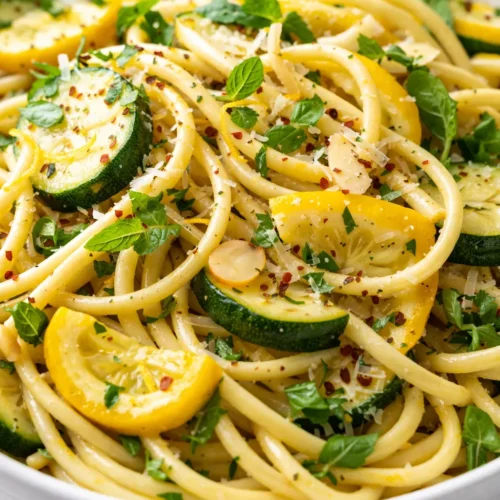
Light Summer Squash Pasta That Doesn’t Get Soggy — Ready in 25 Minutes
Equipment
- Large Pot (6-quart)
- Large Skillet (12-inch)
- Colander
- Box Grater
- Chef’s Knife
- Cutting Board
Ingredients
- 2 medium summer squash or zucchini (about 1 lb)
- 12 oz pasta (spaghetti, linguine, or bucatini)
- 3 tbsp extra-virgin olive oil
- 3 cloves garlic, thinly sliced
- 1 whole lemon (zest and juice)
- 1/2 cup grated Parmesan (plus more for serving)
- 1/2 cup fresh basil and mint, chopped
- 1/4 tsp red pepper flakes (optional)
Instructions
- Salt the squash: Slice the squash into half-moons or ribbons. Toss with 1/2 tsp salt in a colander set over a bowl. Let sit for 10 minutes — you’ll see beads of water form. Pat dry with a clean towel. (Photo tip: after 10 min, you’ll see tiny drops of water on the squash surface — that’s the salt doing its job. Wipe them off and proceed.)
- Boil the pasta: Bring a large pot of salted water to a boil. Cook pasta until 1 minute shy of al dente. Reserve 1 1/2 cups pasta water before draining. (I always forget this step when I’m in a hurry — set a timer to remind yourself to scoop out that water!)
- Cook the aromatics: While pasta cooks, heat olive oil in the large skillet over medium heat. Add sliced garlic and red pepper flakes (if using). Cook 1 minute until fragrant — don’t let the garlic brown. (Burnt garlic is bitter garlic. Low and slow is the way.)
- Add the squash: Increase heat to medium-high. Add the dried squash and a pinch of salt. Cook 2–3 minutes, stirring occasionally, until just tender — it should have some bite left. (Overcooking makes it mushy. We want it to soften but still hold its shape.)
- Combine everything: Add the drained pasta, 1/2 cup pasta water, lemon zest and juice, and Parmesan to the skillet. Toss vigorously for 1 minute, adding more pasta water as needed to create a silky sauce that coats each strand. (This is where the magic happens — the starch in the water and the cheese emulsify into a light, creamy sauce with no cream!)
- Finish and serve: Remove from heat. Toss in the fresh basil and mint. Taste — add salt or red pepper if needed. Serve immediately with extra Parmesan and a drizzle of olive oil. (Photo tip: the herbs should look fresh and bright, not cooked down — add them off the heat.)
Notes
Related posts:
 The Slow Cooker Cowboy Casserole That Saves Tired Weeknights (No Soggy Tots Allowed)
 Quick Lemon Ricotta Pasta for Busy Weeknights: Creamy, Bright, and on the Table in 20 Minutes
 Lemon Garlic Butter Baked Salmon in Foil That’s Ready in 25 Minutes — No Fuss, No Mess
 Lipton Onion Soup Meatloaf for Tuesday Nights: Moist, Savory, and the Only One You’ll Ever Need
 Kielbasa Sausage Cheesy Potato Casserole That Tastes Like Sunday Dinner — In Under an Hour
 Quinoa Chicken Sausage Bowls That Are Ready in 30 Minutes (And Actually Keep Well)