
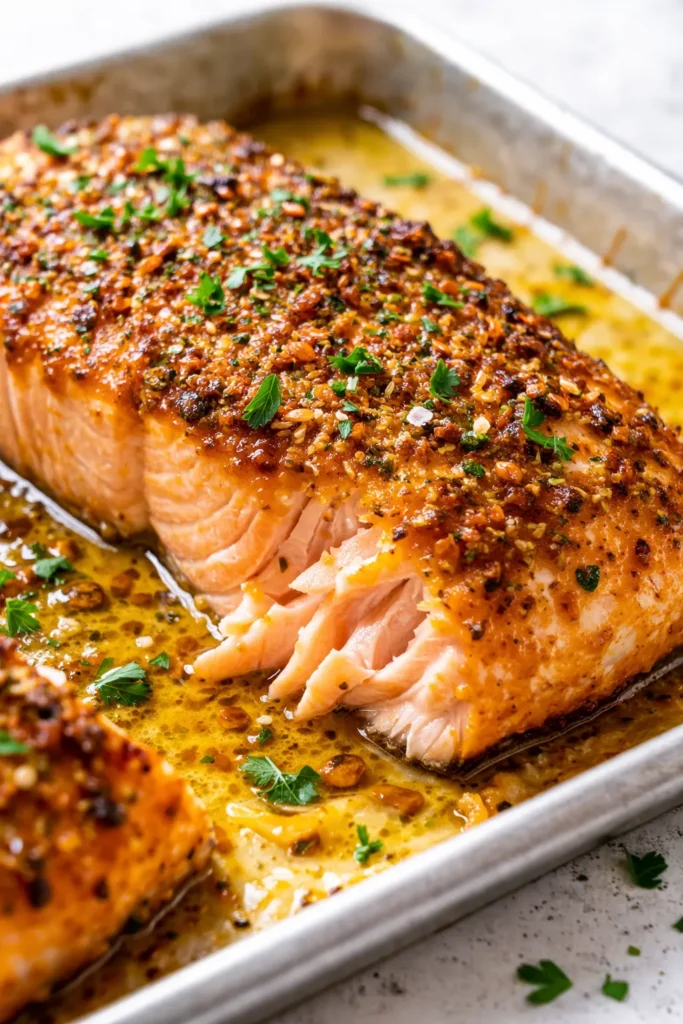
The first time you break into that salmon with a fork — how it flakes into perfect ribbons, the golden crust of Dijon and herbs giving way to tender, buttery fish underneath — you’ll wonder why you ever made it any other way. It’s the kind of dinner that feels fancy enough for a Friday night but fast enough for a Wednesday when you’ve got fifteen minutes to get something on the table.
The short version: Ten minutes of hands-on time, twenty minutes total, and you get perfectly cooked salmon with a tangy, caramelized crust every single time.
I’ve made this for my family about thirty times now. Even my youngest, who usually picks around the “green stuff,” licks the lemon-dill coating off the top. It’s that good.
- Serves: 4 as a main (with sides) or 6 as a lighter meal
- Hands-On Time: 10 min | Total Time: 20 min
- Difficulty: Easy enough for a Tuesday — even my husband can make this
- Cost per serving: ~$4.50 (wild-caught frozen is great too)
- Calories: ~350 per serving (with a drizzle of extra olive oil)
- Dietary Notes: Naturally gluten-free, low-carb, and keto-friendly if you skip the honey
(Photo above: close-up overhead of a salmon fillet on a sheet pan, the Dijon glaze golden and slightly caramelized at the edges, garnished with fresh dill and lemon wedges, soft afternoon light streaming from the left.)
Why the Dijon Crust Works (And Why You Shouldn’t Skip the Rest Step)
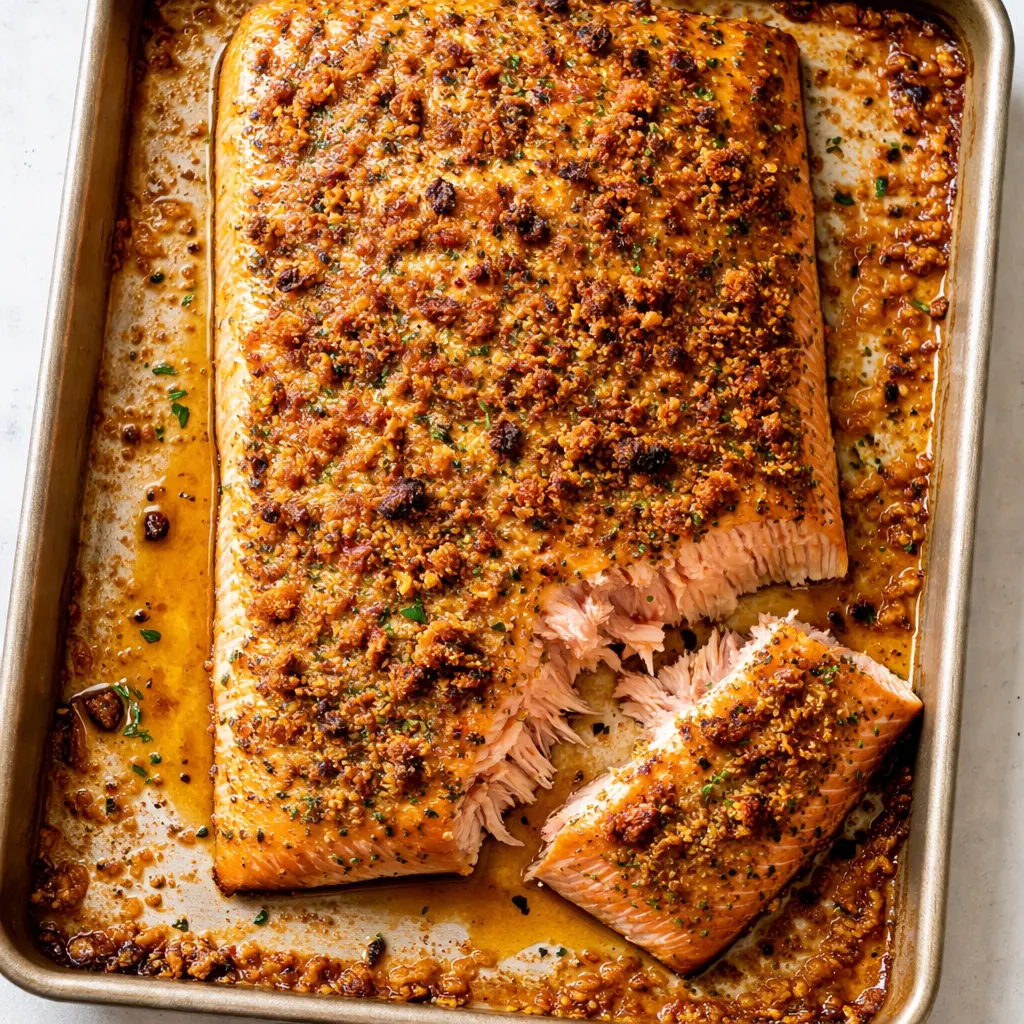
The real trick here is that the mustard mixture acts like a seal — it keeps the moisture in while the outside gets that beautiful golden crust. If you just brush it on and call it done, you’ll still get good salmon. But letting it sit for five minutes before baking? That’s the difference between good and “can I have the recipe?”
Also important: pulling the salmon at 130°F internal temp, not 145°F. It’ll continue cooking as it rests (that’s carryover cooking). Trust me on this one. Dry salmon is a tragedy I’ve committed enough times to know better.
The result? Fish that flakes when you touch it with a fork, not fish that flakes when you look at it. Juicy, tender, and that Dijon-honey tang that hits right at the end.
Everything You Need (And a Few Notes From Me)
- 1½ pounds salmon fillet (4 servings, skin on or off): I prefer center-cut fillets — they cook evenly. If you buy a whole side, just cut it into equal portions. My kids actually like it better with the skin on because it gets crispy in the oven — we fight over the skin pieces.
- ¼ cup Dijon mustard: Not the whole-grain kind for this — smooth Dijon gives that silky coating. If all you have is whole-grain, it’ll still taste great but the texture will be a little bumpy. I’ve used the fancy Maille Dijon and the store brand — honestly, they both work fine. Save your money.
- 1 tablespoon honey (or maple syrup for paleo/keto): Just enough sweetness to balance the mustard’s sharpness. When I’m out of honey, I’ve used a teaspoon of brown sugar — it melts right in.
- 2 cloves garlic, minced: Fresh, please. Garlic powder is a backup but fresh gives that little punch. I mince a whole head and keep it in olive oil in the fridge — one less step on busy nights.
- 1 tablespoon fresh lemon juice (plus lemon wedges for serving): Brightens the whole thing. Bottled works in a pinch but fresh really does make a difference here.
- 1 tablespoon olive oil (for the pan): Keeps the salmon from sticking and helps the crust brown. I use my everyday cooking oil — nothing fancy needed.
- Salt and black pepper: I use about ½ teaspoon salt per pound of fish. Don’t be shy — salmon needs it. My dad used to say “season it like you mean it” and he was right.
- Optional but highly recommended: fresh dill, chopped (about 1 tablespoon) and fresh parsley for color: They add that “I actually know what I’m doing” finish. Dried dill works too — use half the amount.
What to Pull Out Before You Start
- Baking sheet (quarter-sheet pan or half-sheet — doesn’t matter)
- Parchment paper or aluminum foil (for easy cleanup — my secret weapon for weeknights)
- Small bowl for mixing the glaze
- Instant-read thermometer (if you have one — after years of guessing, I finally gave in and bought one. Wish I’d done it sooner)
You really don’t need anything special here. If you’ve got a spoon and a fork, you’re set.
Let’s Make It (Step by Step)
This goes fast, so read through once before you start. The only real waiting is the five-minute rest — which is also when I throw together a quick salad or steam some broccoli.
Preheat and prep your pan: Preheat your oven to 425°F. Line a baking sheet with parchment paper or foil (foil is fine, but parchment makes cleanup even easier). Drizzle a little olive oil on the paper and spread it around with your fingers — keeps the fish from sticking.
- Pat the salmon dry: Use paper towels to gently pat both sides of the fillet dry. This is non-negotiable — any excess moisture will steam the fish instead of letting it brown. (📸 Photo tip: After patting, the surface should look matte, not shiny. That’s when you know it’s dry enough.)
- Season the fish: Sprinkle salt and black pepper evenly over all sides. Don’t forget the sides — that’s where the fat cap is, and it needs love too.
- Mix the glaze: In a small bowl, whisk together the Dijon mustard, honey, minced garlic, and lemon juice. Taste it — it should be tangy with a hint of sweetness. If it’s too sharp for you, add another drizzle of honey. This is the moment my daughter always sneaks a finger into the bowl. I pretend not to see.
- Coat the salmon: Place the salmon skin-side down (if using skin) on the prepared baking sheet. Spoon the mustard mixture over the top and spread it evenly with the back of the spoon. Don’t worry about perfection — it’ll spread as it bakes. (📸 Photo tip: You want a thick, even blanket — no bare spots. I use a pastry brush for even coverage when I’m feeling fancy.)
- Bake: Slide the pan into the preheated oven and bake for 10–12 minutes, depending on the thickness of your fillet. For a 1-inch thick fillet, 11 minutes is about right. The glaze will bubble and caramelize — that’s what we want. If you have a thermometer, pull it at 130°F for medium (it’ll rise to 135°F as it rests). If you don’t have one, use the fork test: gently press the thickest part — it should flake easily but still look moist, not dry.
- Rest (this is the secret step): Remove the salmon from the oven and let it rest on the baking sheet for 3–5 minutes. Do NOT skip this. The carryover cooking finishes the fish, and the juices redistribute so every bite is moist. I know you want to dive in — I want to too — but trust me, those three minutes are the difference between “good” and “oh my god.”
- Finish and serve: Sprinkle with fresh dill and/or parsley, squeeze a lemon wedge over the top, and serve immediately. Leftovers (if any) keep well in the fridge for a couple of days — great flaked over a salad or thrown into pasta.
How I Meal Prep This for the Week
I often make a double batch on Sunday nights. It’s one of those recipes that’s actually better as leftovers — the flavors meld together and the fish stays moist if you reheat it gently. Here’s my system:
I bake the full batch, let it cool completely, then store the fillets in an airtight container with a tight lid. When I want a quick lunch, I flake the salmon over a bed of greens or reheat a piece in the air fryer for 3 minutes at 350°F. No mushy microwave texture that way.
- Fridge: In a glass container with a lid — up to 3 days. To reheat, place it in a 300°F oven for 5–7 minutes, or microwave in 30-second bursts if you’re in a hurry (I won’t judge).
- Freezer: Honestly, I don’t recommend freezing this one. The texture changes — the fish turns a little mealy. But if you have leftover glaze, you can freeze that separately for up to a month. Just thaw and brush onto fresh salmon.
- Reheat: Best: air fryer or oven. Good: microwave with a damp paper towel over it (30 seconds, check, repeat). Not good: high heat for 2 minutes — turns it into rubber.
Things I Wish I’d Known the First Time (After Making This 30+ Times)
- Let your salmon come to room temperature first. Cold fish from the fridge cooks unevenly — the outside can get overdone while the middle stays raw. Just leave it on the counter for 10–15 minutes before you start. I know, I know, food safety. But honestly, 15 minutes on a clean plate is fine. I’ve done it dozens of times. My mom did it. Her mom did it.
- Don’t crowd the pan. If you’re making more than two fillets, use two pans or do it in batches. Overcrowding creates steam, and steam = soggy crust. This is the mistake I made for an entire year before I figured it out. So much wasted potential.
- Use a fish spatula. That thin, slotted metal spatula is perfect for flipping or transferring delicate salmon without it falling apart. But if you don’t have one, two regular spatulas work too — one to lift, one to support. Even if you don’t have a fish spatula, you can still make this. I used a pancake turner for years.
- If you forget the rest step, all is not lost. I’ve done it. The fish will still taste fantastic. Just cut into it and let it sit on the plate for a minute — the juices will redistribute. Life happens. The recipe is forgiving.
Swaps That Actually Work (For Real Life)
- Dairy-Free / Keto: Use this exact recipe as written — the Dijon, garlic, and lemon are naturally dairy-free. Omit the honey or use a keto-friendly sweetener like monk fruit syrup. My keto friend loves this version; she says it’s the only salmon recipe she doesn’t get tired of.
- Spicy Adult Version: Add a pinch of cayenne pepper or a squirt of sriracha to the mustard mixture. My husband goes crazy for this — I make a separate spicy batch on his fillet. No one in my house likes spice except me, so I just put a few dashes of hot sauce on my piece after it bakes.
- Crunchy Topping: After brushing the glaze, sprinkle a tablespoon of panko breadcrumbs per fillet. Toss with a little olive oil first for extra goldenness. My mother-in-law does this and it’s amazing — but honestly, I’m usually too lazy to breadcrumb. The plain version is still incredible.
- Herb Swap: No dill? Use fresh tarragon, basil, or even a pinch of dried oregano. Each gives a totally different vibe — tarragon is anise-y and fancy, basil is summery, oregano is Greek-ish. My favorite swap is basil with a squeeze of lemon — tastes like summer on a plate.
- Make It For a Crowd: Use a whole side of salmon (about 2–2½ pounds) and increase the glaze by 50%. Baking time goes up to 15–18 minutes — same temperature. I do this for Christmas brunch and it’s always gone in five minutes.
Questions I Get About This Recipe All the Time
Q: Why did my salmon turn out dry? I followed the time exactly.
A: Oof, I’ve been there. The most common culprit is overcooking — even a minute too long can push it over the edge. Oven temperatures also vary. I strongly recommend an instant-read thermometer. Pull it at 130°F and let it rest. The second most common issue? Not patting the fish dry. That moisture turns to steam and the interior ends up overdone while the crust stays pale. You’ve got this next time.
Q: Can I use whole-grain mustard instead of smooth Dijon?
A: Yes, you can. The texture will be a little different — you’ll see the mustard seeds — but the flavor is still great. The honey and garlic balance it out. I’ve done it when I was out of regular Dijon and it worked fine. My kids didn’t even notice.
Q: How long does this keep in the fridge? Can I freeze it?
A: Keeps beautifully in the fridge for up to 3 days in an airtight container. I wouldn’t freeze it — the texture changes when you thaw it. But if you have leftover cooked salmon, flake it and use it in salmon cakes or over a salad. You won’t regret it. To reheat: 300°F oven for 5–7 minutes, or microwave in 30-second bursts with a damp paper towel.
Q: What do you serve with this to make it a full meal?
A: My go-to is a simple lemon-herb couscous or quinoa, and roasted asparagus or green beans tossed in olive oil and salt (roast at 400°F while the salmon bakes — everything finishes at the same time). If I’m feeling fancy, I do a cucumber-dill salad and some crusty bread for wiping up the juices. My kids love it with rice and buttered peas — totally fine. Honestly, it’s so good you could eat it with just a fork and no sides.
More Recipes My Family Makes on Repeat
If you liked this one, here are a few others that get the same reaction at our table — week after week, no complaints.
- Garlic Butter Roasted Chicken Thighs — Juicy, crispy skin, and the garlic butter sauce is good enough to drink. 30 minutes, one pan.
- Sheet Pan Lemon Herb Cod with Potatoes — Another 20-minute fish dinner that makes clean-up a joke. My kids eat the potatoes first, then the fish.
- The Best Oven-Roasted Broccoli (Parmesan & Lemon) — The perfect side for this salmon: crispy edges, salty, and a little tangy. I make double and they still fight over it.
This salmon has become our family’s go-to for busy nights, quiet Sundays, and everything in between. There’s something about that golden, tangy crust and the way it gives way to perfectly flaky fish — it feels like a meal you worked hard on, even though you barely lifted a finger.
If you try it, drop a comment below — I love hearing how it goes for you. Did your kids ask for seconds? Did you find a new favorite side to go with it? Tell me everything. And tag me on Pinterest or Instagram so I can see yours — I’m @heidiinthekitch over there.
📌 This baked Dijon salmon recipe stays juicy and flavorful every time — save it for your next busy weeknight dinner craving something fast, healthy, and restaurant-worthy.
Baked Dijon Salmon with Honey and Garlic
Equipment
- Baking Sheet
- Parchment paper or aluminum foil
- Small bowl
- Instant-read thermometer (optional but recommended)
- Fish spatula or two regular spatulas
Ingredients
Salmon
- 1½ pounds salmon fillet (center-cut, skin on or off)
- 1 tablespoon olive oil (for the pan)
- to taste salt and black pepper (about 1/2 teaspoon salt per pound of fish)
Dijon Glaze
- ¼ cup smooth Dijon mustard (not whole-grain)
- 1 tablespoon honey (or maple syrup for paleo/keto)
- 2 cloves garlic, minced
- 1 tablespoon fresh lemon juice
Optional but recommended
- 1 tablespoon fresh dill, chopped (or 1/2 tablespoon dried)
- fresh parsley, chopped (for color)
- lemon wedges (for serving)
Instructions
- Preheat your oven to 425°F. Line a baking sheet with parchment paper or aluminum foil. Drizzle a little olive oil on the paper and spread it around with your fingers to prevent sticking.
- Pat the salmon fillet dry with paper towels on both sides. The surface should look matte, not shiny — this ensures browning, not steaming.
- Sprinkle salt and black pepper evenly over all sides of the salmon, including the sides (the fat cap).
- In a small bowl, whisk together the Dijon mustard, honey, minced garlic, and lemon juice. Taste — it should be tangy with a hint of sweetness. Adjust honey if needed.
- Place the salmon skin-side down (if using skin) on the prepared baking sheet. Spoon the mustard mixture over the top and spread it evenly with the back of a spoon or a pastry brush. There should be no bare spots.
- Bake for 10–12 minutes, depending on thickness. For a 1-inch fillet, 11 minutes is about right. The glaze should bubble and caramelize. If using an instant-read thermometer, pull the salmon at 130°F for medium (it will rise to 135°F as it rests). Without a thermometer, gently press the thickest part — it should flake easily but still look moist, not dry.
- Remove from the oven and let the salmon rest on the baking sheet for 3–5 minutes. Do not skip this step — the carryover cooking finishes the fish and the juices redistribute for the most tender bite.
- Sprinkle with fresh dill and/or parsley, squeeze a lemon wedge over the top, and serve immediately. Leftovers keep in the fridge for up to 3 days — great flaked over salad or reheated gently in a 300°F oven.
Notes
• Let your salmon come to room temperature for 10–15 minutes before baking to ensure even cooking.
• Don’t crowd the pan — use two sheets if making more than two fillets to avoid steaming.
• For a spicy version, add a pinch of cayenne or a squirt of sriracha to the glaze.
• Crunchy topping: after glazing, sprinkle with panko breadcrumbs tossed in olive oil.
• No dill? Try fresh tarragon, basil, or dried oregano. Storage: Refrigerate in an airtight container for up to 3 days. Reheat in a 300°F oven for 5–7 minutes or microwave in 30-second bursts with a damp paper towel. Freezing is not recommended — the texture becomes mealy. Leftover glaze can be frozen separately for up to a month.
Related posts:
 Mini Quiche Recipe: The Store-Bought Crust Version That Tastes Like You Made It From Scratch
 Easy Shrimp Lo Mein That’s Faster Than Delivery (Ready in 30 Minutes)
 The Slow Cooker Cowboy Casserole That Saves Tired Weeknights (No Soggy Tots Allowed)
 Creamy Beef and Shells for Tuesday Nights: The One-Pot Dinner My Kids Actually Ask For
 Quick Lemon Ricotta Pasta for Busy Weeknights: Creamy, Bright, and on the Table in 20 Minutes
 Juicy Oven Baked Chicken Thighs That Stay Golden and Tender — in 40 Minutes