
That first sizzle when the shrimp hit the hot butter — it’s a sound that means dinner is about to save itself. Fifteen minutes later, you’re sitting down to something bright and buttery that tastes like it took twice as long, and the pile of dishes is embarrassingly small. This is the lemon garlic shrimp and asparagus I make on nights when I need something fast, but I also want to feel like I actually cooked.
The short version: Plump, juicy shrimp, crisp-tender asparagus, and a glossy lemon-garlic butter sauce, all in one skillet in 20 minutes.
Nora learned to make this the first time she came home from Savannah for a visit. She stood right where I’m standing now, tongs in hand, and declared it “the official weeknight dinner of this house.” I’ve made it so many times I don’t need the recipe card anymore, but I still remember the version where I crowded the pan and the shrimp turned into rubber. You won’t make that mistake after reading this.
- Serves: 4 as a main / 6 as a generous appetizer
- Hands-On Time: 20 min | Total Time: 20 min
- Difficulty: Easy enough for a Tuesday, impressive enough for company
- Cost per serving: ~$4.50
- Calories: ~330 per serving
- Dietary Notes: Naturally low-carb, gluten-free, and adaptable for dairy-free
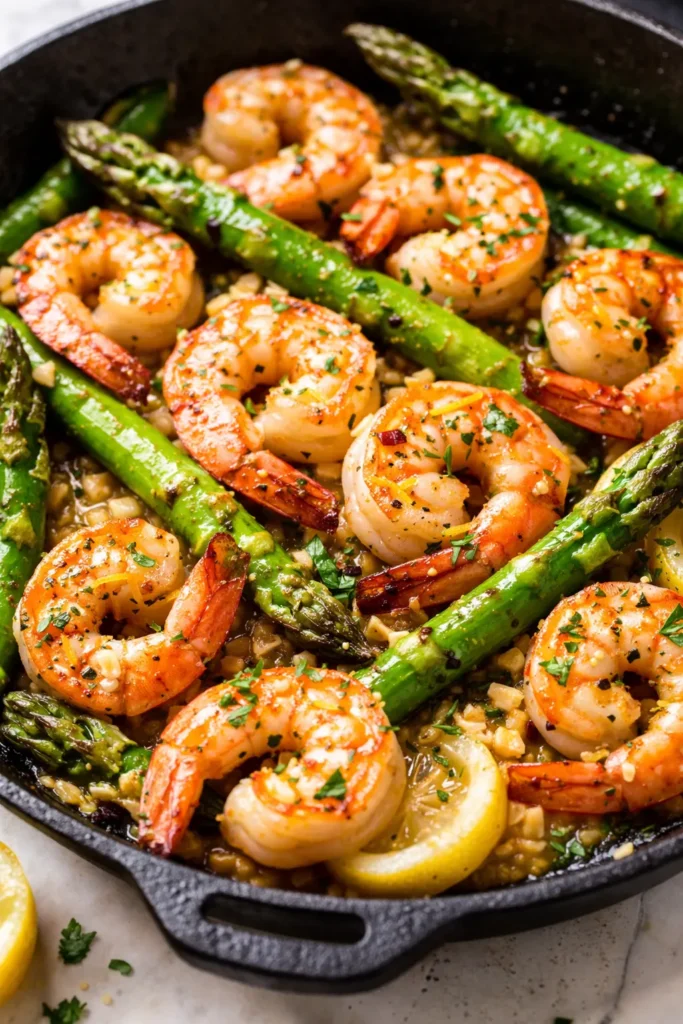
(Photo above: overhead shot of the black cast iron skillet, pink curls of shrimp nestled among bright green asparagus spears, all glistening in a pale golden butter sauce with specks of fresh zest and red pepper flakes, a half-cut lemon resting on the wooden board beside it, late afternoon sun from the west window catching the steam.)
Why This Beats Takeout Every Time
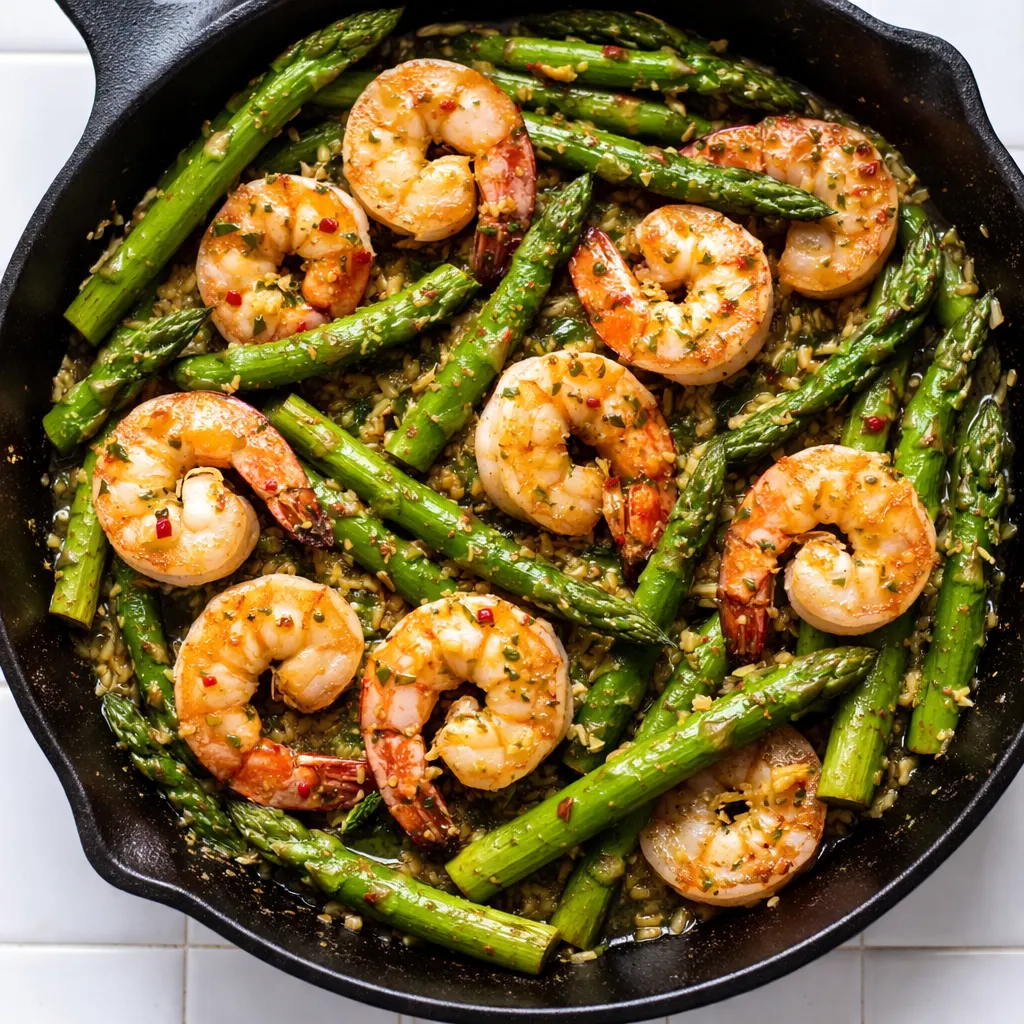
It’s the order of operations. The asparagus gets a head start in hot oil, just long enough to turn that brilliant green and take on a little char without going soft. Then the shrimp get their own moment in the butter — high heat, single layer, no crowding. That’s what keeps them plump instead of rubbery. They curl into a loose C shape and you pull them out.
The sauce is the easiest part, but it’s where the magic lives. A quick sizzle of garlic in the residual butter, a splash of lemon juice, a pinch of zest, and suddenly the whole pan comes together. Everything goes back in for a quick toss, and you’re done. No sugary mystery sauces, no waiting for delivery, no disappointment.
The result is something that feels both indulgent and clean. The butter and garlic coat each shrimp. The lemon cuts through the richness. The asparagus stays bright and snappy. It’s the kind of meal that makes you feel like you’ve treated yourself, even though it took less time than deciding what to watch on TV.
Ingredients Worth Talking About
- 1 lb large raw shrimp (21-25 count), peeled and deveined: This is the sweet spot for size — big enough to feel substantial, small enough to cook evenly in two minutes. I buy frozen and thaw them in a bowl of cold water. It’s faster than waiting for the store to thaw them, and they haven’t been sitting in the car for an hour. Pat them dry, friend. Wet shrimp steam, they don’t sear.
- 1 bunch asparagus, woody ends snapped off: The thickness doesn’t matter much here. Just bend each spear near the bottom and let it break where it wants to. I’ve watched people cut them with a knife and lose half the spear. Trust the snap.
- 4 cloves garlic, minced: Not three, not five. Four. And please, not from the jar. Fresh garlic melts into the butter and becomes sweet. Jarred garlic burns faster and tastes bitter. I learned this the hard way after ruining a perfectly good pan of butter.
- 1 lemon, zest and juice: You need both. The zest brings a floral brightness that juice alone can’t touch. Meyer lemons are lovely here if they’re in season, but a regular Eureka lemon works beautifully. Zest it before you juice it — trust me, trying to zest a squishy lemon is a recipe for grated knuckles.
- 2 tbsp unsalted butter, divided: The base of the sauce. Using unsalted lets you control the seasoning at the end.
- 1 tbsp olive oil: For the asparagus. It has a higher smoke point than butter, so you get a better sear.
- ½ tsp salt, plus more to taste: I use fine sea salt. Season the shrimp directly before they hit the pan.
- ¼ tsp red pepper flakes (optional but recommended): They don’t make it spicy — they make it interesting. A tiny warmth in the background that makes the lemon and garlic pop. My kids eat this without complaint, so it’s really not hot.
The Setup (It’s Minimal, I Promise)
- A 12-inch skillet. Cast iron is my favorite for this — it holds heat like a champ. Heavy stainless steel works beautifully too. Nonstick will work, but you won’t get the same browning on the asparagus.
- Tongs. For flipping and tossing. A spatula just gets in the way here.
- A microplane or zester. For the lemon zest. A vegetable peeler and a sharp knife will work in a pinch, but it’s harder to get that fine, floral dust.
Let’s Make It (Step by Step)
This moves fast once you start, so read through once and have everything within arm’s reach.
Prep everything first: Pat the shrimp dry with paper towels and season them with a pinch of salt. Snap the woody ends off the asparagus. Mince the garlic. Zest and juice the lemon. Set it all by the stove.
- Cook the asparagus: Heat the olive oil in the skillet over medium-high heat until it shimmers. Add the asparagus in a single layer. Cook for 3-4 minutes, rolling them with tongs every minute or so, until they’re bright green and crisp-tender. A fork should pierce one easily, but there should still be a little resistance. Transfer them to a plate. (📸 Photo tip: The asparagus should look bright and glossy, with a few charred spots — that’s flavor.)
- Cook the shrimp: Add 1 tablespoon of butter to the same pan. When it melts and foams, add the shrimp in a single layer. Don’t crowd them — if you have to, work in two batches. Cook for 2 minutes on the first side, until the edges are pink and opaque. Flip and cook for 1 minute more. They should curl into a loose C shape. An O shape means they’re overdone, so watch closely. Transfer them to the plate with the asparagus. (📸 Photo tip: The shrimp should be pink on the edges with a little golden brown spot where they touched the pan.)
- Make the sauce: Reduce the heat to medium-low. Add the remaining 1 tablespoon of butter. When it melts, add the minced garlic and the red pepper flakes. Stir constantly for about 30 seconds, until the garlic is fragrant but not browned. Burned garlic is bitter — pull it off the heat briefly if you need to.
- Finish and combine: Add the lemon zest and lemon juice to the pan. Stir and scrape up any brown bits from the bottom of the skillet. Let it bubble for 15 seconds, then return the shrimp and asparagus to the pan. Toss everything together in the sauce until it’s evenly coated. Taste and add more salt if it needs it.
- Serve immediately: This dish does not wait. Spoon it onto a platter or straight onto plates. Eat it while the shrimp are still warm and the asparagus still has its snap.
How I Meal Prep This for the Week
This is one of those dishes that’s best the moment it’s made, but you can absolutely set yourself up for a lightning-fast dinner. I do the prep on Sunday when I’m already chopping things. Then on a busy Tuesday, the actual cooking takes less than 10 minutes.
- Fridge: Store the raw, prepped components separately. Pat the shrimp dry and store them in a covered bowl. Snap the asparagus and store it in a bag with a paper towel. Mince the garlic and store it in a tiny jar with a little olive oil. Zest and juice the lemon and store the zest and juice in separate containers. Cooked leftovers keep for up to 2 days in a sealed container.
- Freezer: I don’t recommend freezing the finished dish. The shrimp and asparagus both lose their texture. But you can freeze the raw shrimp and thaw them the day you need them.
- Reheat: The microwave works in a pinch, but it will continue to cook the shrimp and they’ll tighten up. A better option: a warm skillet over low heat with an extra splash of lemon juice or water to bring the sauce back.
Things I Wish I’d Known the First Time
- Dry those shrimp like your dinner depends on it: Wet shrimp create steam. Steam makes the pan temperature drop. A low pan temperature means the shrimp boil instead of sear. Boiled shrimp are rubbery shrimp. Pat them dry with paper towels right before they hit the pan. It takes 30 seconds and changes everything.
- The C-shape is your signal: Raw shrimp are straight. Perfectly cooked shrimp curl into a loose C. If they curl into a tight O, they’re overdone. Watch for the C and pull them off immediately. Even if you miss it by a few seconds, the sauce will save you — that lemon butter covers a multitude of small mistakes.
- Don’t skip the zest: Lemon juice gives you acid. Lemon zest gives you the floral, aromatic part of the lemon that juice alone can’t provide. Together, they make the sauce taste like the whole fruit instead of just the sour part. Nora used to skip it and always wondered why her sauce wasn’t as good as mine. This is the reason.
- If you have time, let the shrimp sit with the salt for 5 minutes: Season them right after you pat them dry. Even five minutes of resting with salt helps the seasoning penetrate beyond the surface. It’s a small step that makes a difference in every single bite.
Swaps That Actually Work
- Dairy-free version: Use a good quality olive oil instead of butter. It changes the character — less richness, more fruitiness — but it’s still genuinely delicious. I make this for my neighbor who can’t do dairy and she asks for the recipe every time.
- Add a starch for a bigger meal: Serve it over angel hair pasta, a bed of rice, or with a crusty piece of bread to soak up every drop of sauce. Orzo is our family favorite — those little grains catch the sauce beautifully.
- Swap the protein: Large scallops work wonderfully here (cook them the same way, 2 minutes per side). Diced boneless chicken thighs also work — just cook them through, about 5-6 minutes per side, before starting the asparagus.
- Bulk it up with vegetables: Add a handful of cherry tomatoes with the asparagus. They’ll blister and burst, adding sweetness to the sauce. A handful of fresh spinach stirred in at the end wilts down beautifully.
- Make it spicy: Double the red pepper flakes, or add a splash of sriracha with the lemon juice. This is the version I make after a long week when I need something to wake me up.
Questions I Get About This Recipe All the Time
Q: Why did my shrimp turn out rubbery?
A: Ugh, I’ve been there. It’s almost always one of two things: too much heat for too long, or shrimp that went into the pan wet. Solution: pat them completely dry before they hit the oil, and watch for the C-shape. As soon as they curl into a loose C, get them out of the pan. You’ve got this next time.
Q: Can I use frozen asparagus?
A: Fresh is really best here. Frozen asparagus releases a lot of water as it heats up, which makes it limp instead of crisp-tender. If that’s what you have on hand, don’t thaw it first — add it to the skillet frozen and cook it a little longer, but understand the texture will be softer.
Q: How long does the finished dish last in the fridge?
A: Up to 2 days in a sealed container. The asparagus will soften as it sits, and the shrimp will tighten up slightly. It’s still good — I’ve eaten it for lunch the next day — but the texture is at its peak the minute it’s made.
Q: What do you serve with this?
A: Depends on the night. We love it with orzo tossed in a little of the leftover lemon butter. A simple arugula salad with shaved parmesan is perfect on a warm evening. My kids prefer it with crusty bread to sop up every last drop of sauce. On low-carb nights, we eat it straight from the skillet and feel very satisfied.
More Recipes My Family Makes on Repeat
If this one finds a permanent spot in your rotation, here are a few others that get the same kind of treatment at our house:
- Creamy Sun-Dried Tomato and Spinach Chicken — One skillet, 30 minutes, and a sauce so good you’ll want to drink it.
- Brown Butter Sage Pork Chops — Elegant enough for company, easy enough for a Wednesday.
- Simple Garlic Butter Noodles with Crispy Chickpeas — Nora’s favorite meatless meal, ready in the time it takes to boil water.
The skillet is still warm when we sit down. There’s something about that — the last bit of steam rising from the plate, the smell of garlic and lemon settling in the fabric of the kitchen. This is the kind of dinner that doesn’t ask for much, but gives back more than you’d expect. If you make it, stop by and let me know in the comments. I always love hearing how it goes in your kitchen.
📌 Save this 20-minute lemon garlic shrimp and asparagus recipe for busy weeknights when you need something quick, healthy, and absolutely delicious.
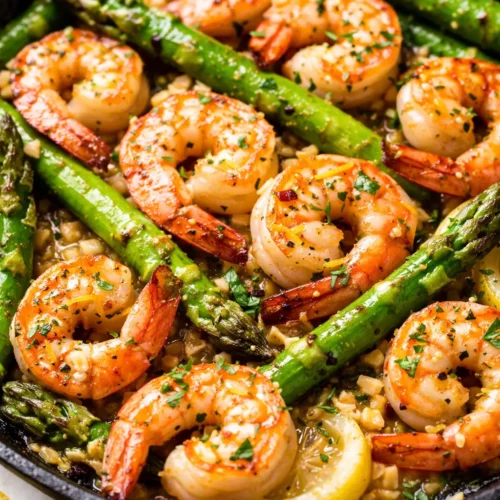
Lemon Garlic Shrimp and Asparagus
Equipment
- 12-inch skillet (cast iron preferred)
- Tongs
- Microplane or zester
Ingredients
- 1 lb large raw shrimp (21-25 count), peeled and deveined
- 1 bunch asparagus, woody ends snapped off
- 4 cloves garlic, minced
- 1 lemon, zest and juice
- 2 tbsp unsalted butter, divided
- 1 tbsp olive oil
- ½ tsp salt, plus more to taste
- ¼ tsp red pepper flakes (optional but recommended)
Instructions
- Prep everything first: Pat the shrimp dry with paper towels and season them with a pinch of salt. Snap the woody ends off the asparagus. Mince the garlic. Zest and juice the lemon. Set it all by the stove.
- Cook the asparagus: Heat the olive oil in the skillet over medium-high heat until it shimmers. Add the asparagus in a single layer. Cook for 3-4 minutes, rolling them with tongs every minute or so, until they’re bright green and crisp-tender. A fork should pierce one easily, but there should still be a little resistance. Transfer them to a plate.
- Cook the shrimp: Add 1 tablespoon of butter to the same pan. When it melts and foams, add the shrimp in a single layer. Don’t crowd them – if you have to, work in two batches. Cook for 2 minutes on the first side, until the edges are pink and opaque. Flip and cook for 1 minute more. They should curl into a loose C shape. An O shape means they’re overdone, so watch closely. Transfer them to the plate with the asparagus.
- Make the sauce: Reduce the heat to medium-low. Add the remaining 1 tablespoon of butter. When it melts, add the minced garlic and the red pepper flakes. Stir constantly for about 30 seconds, until the garlic is fragrant but not browned. Burned garlic is bitter – pull it off the heat briefly if you need to.
- Finish and combine: Add the lemon zest and lemon juice to the pan. Stir and scrape up any brown bits from the bottom of the skillet. Let it bubble for 15 seconds, then return the shrimp and asparagus to the pan. Toss everything together in the sauce until it’s evenly coated. Taste and add more salt if it needs it. Serve immediately.
Notes
Related posts:
 Mini Quiche Recipe: The Store-Bought Crust Version That Tastes Like You Made It From Scratch
 Easy Shrimp Lo Mein That’s Faster Than Delivery (Ready in 30 Minutes)
 The Slow Cooker Cowboy Casserole That Saves Tired Weeknights (No Soggy Tots Allowed)
 Creamy Beef and Shells for Tuesday Nights: The One-Pot Dinner My Kids Actually Ask For
 Quick Lemon Ricotta Pasta for Busy Weeknights: Creamy, Bright, and on the Table in 20 Minutes
 Creamy Roasted Tomato and Garlic Ricotta Pasta That Tastes Like It Simmered All Day (Ready in 45 Minutes)