
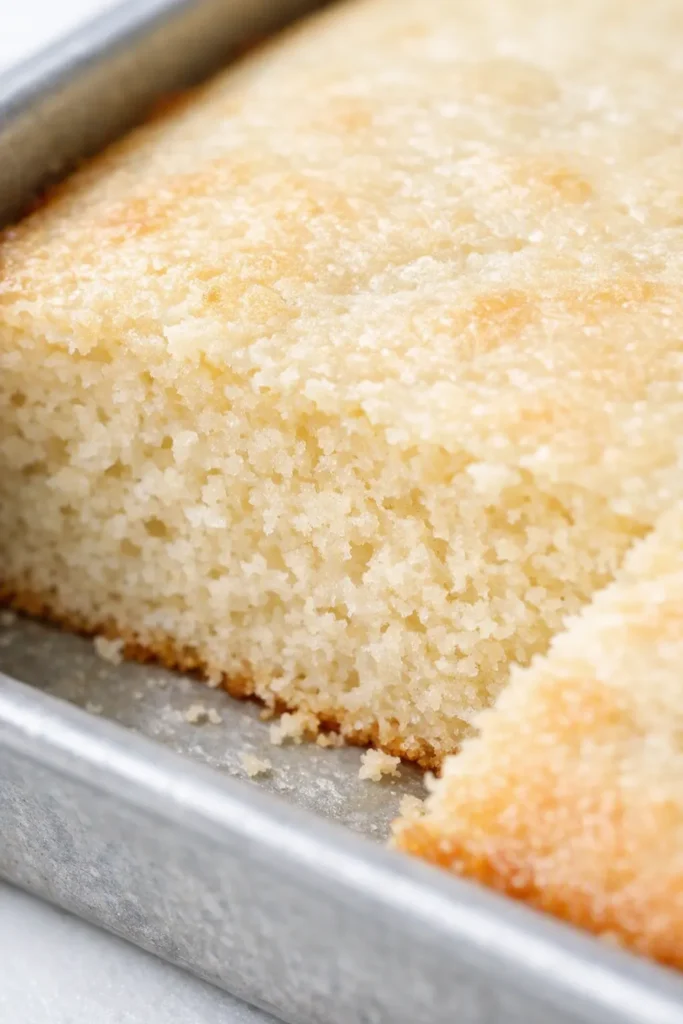
I’ve lost count of how many times I’ve made this fluffy vanilla sheet cake — it’s the one I carry to bake sales in a covered dish, the one my daughter Nora requests for her birthday even now that she’s nineteen, and the one I mix up on random Wednesdays when the week’s been too much and we just need cake. The crumb is soft and springy, the kind that gives a little bounce when you press it gently with two fingers. The vanilla is right up front where it belongs. And it stays moist for days, which is the part people never quite believe until they taste it.
The short version: A truly fluffy vanilla sheet cake with a buttermilk-soft crumb that stays moist for days — about 20 minutes of hands-on work.
I tested this exact version fourteen times over two months to get the crumb where I wanted it. Tall, tender, and light, with no dryness and no tough edges. This is the one I’ll make forever.
- Serves: 15–20 as dessert
- Hands-On Time: 20 min | Total Time: 1 hr 15 min (including cooling)
- Difficulty: Easy enough for a first-ever cake
- Cost per serving: ~$0.55
- Calories: ~340 per serving with frosting
- Dietary Notes: Vegetarian; easily adaptable for dairy-free (see swaps below)
(Photo above: overhead shot of the frosted 9×13 sheet cake in a white enamel pan, soft vanilla buttercream swirled across the top, one corner slice lifted out to show the pale golden crumb, morning light coming in from the left.)
Why This Is the Fluffiest Sheet Cake I’ve Ever Made
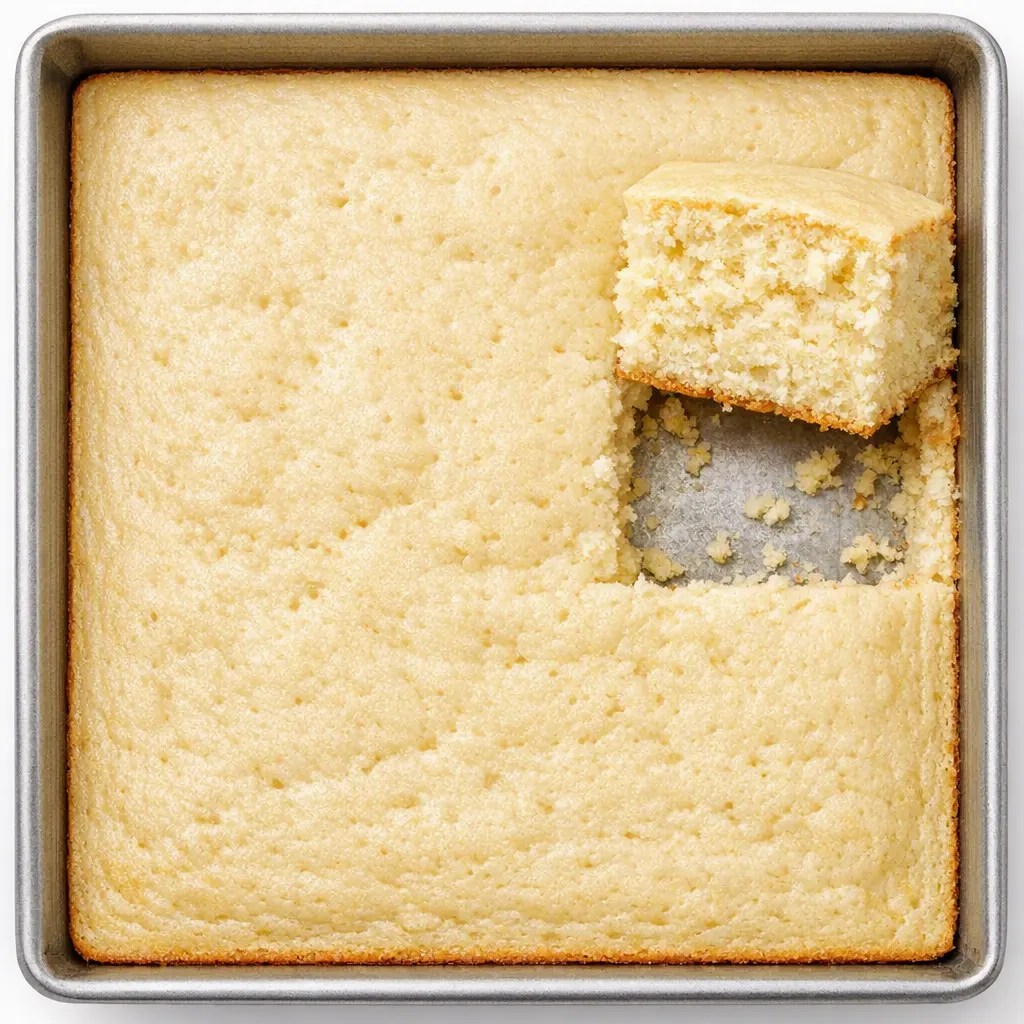
Two things do the heavy lifting here, and neither of them is complicated.
First, the buttermilk and sour cream working together. They keep the crumb incredibly tender, and that faint tang does something wonderful to the vanilla — it makes the flavor taste brighter, more present. You won’t taste buttermilk in the finished cake. You’ll just wonder why every vanilla cake you’ve ever had didn’t taste this good.
Second, the creaming. I know everyone is in a hurry, but the full three to four minutes of beating the butter and sugar together is where the fluff actually comes from. Those tiny air bubbles are what lift the cake into something light instead of something dense. Rush it, and you’ll get a cake that’s fine but not fluffy. Give it the full time, and you’ll feel the difference in the very first bite — that soft, springy give that makes people close their eyes for a second.
Everything You Need (And What Actually Matters)
- 2 1/2 cups all-purpose flour — spoon it into the measuring cup and level it off with a knife. Don’t scoop straight from the bag, or you’ll pack in too much and get a dry cake. This is the most common reason a “fluffy” cake turns out heavy — too much flour, before you’ve even started.
- 1 3/4 cups granulated sugar — plain white sugar. Nothing fancy.
- 3/4 cup unsalted butter, softened — not melted, not cold. Leave it on the counter for an hour. If you need to microwave it, do short 10-second bursts until it’s soft but not liquid — melted butter changes the texture completely.
- 3 large eggs, room temperature — same idea as the butter. Cold eggs can make the batter seize up. In a hurry? Put the eggs in a bowl of warm water for five minutes and they’ll be ready when you are.
- 1 cup buttermilk, room temperature — the secret weapon. It makes the crumb soft and gives the vanilla a little spark. When I’ve run out, I add a tablespoon of lemon juice to a cup of whole milk and let it sit for five minutes. It’s not exactly the same, but it’s close enough for a Tuesday.
- 1/4 cup sour cream, room temperature — extra moisture and tenderness. Trust me on this one — it’s one small extra ingredient and it’s worth every bit of the measuring spoon.
- 1 tablespoon vanilla extract — yes, a full tablespoon. This is a vanilla cake, not a cake with vanilla in it. Marta always said the vanilla was the whole point, and she was right. Use real extract — the imitation stuff tastes flat by comparison, and she would have thrown it out without a second thought.
- 1 1/2 teaspoons baking powder + 1/2 teaspoon baking soda — both of them together give the cake the lift it needs. Check the date on your baking powder. Old baking powder is the reason cakes fail and nobody knows why.
- 1 teaspoon salt — just fine table salt.
For the Vanilla Buttercream
- 1 cup unsalted butter, softened — same rules as the cake butter.
- 4 cups powdered sugar — sifted if it’s lumpy.
- 2 tablespoons heavy cream — plus an extra splash if you need to loosen it.
- 2 teaspoons vanilla extract
- 1/4 teaspoon salt — this keeps the frosting from being cloying. Small detail, big difference.
What to Pull Out Before You Start
- A 9×13 metal baking pan — metal bakes more evenly and gives better browning than glass. If all you have is glass, drop the oven to 325°F and expect a slightly longer bake.
- Stand mixer or hand mixer — either one works fine.
- Two mixing bowls, a whisk, and a spatula
- Measuring cups and spoons
- Parchment paper — I line the bottom of the pan every single time now. It makes lifting the cake out clean and easy.
- A wire cooling rack
Making the Fluffiest Vanilla Sheet Cake, Start to Finish
This moves quickly once you start, so read through once before you begin. It’s not hard — it’s just speed-friendly.
- Preheat and prep: Set the oven to 350°F with the rack in the center. Grease a 9×13 metal pan with butter or cooking spray, then line the bottom with parchment paper. Grease the parchment too, so the cake releases without a fight.
- Whisk the dry ingredients: In a medium bowl, whisk the flour, baking powder, baking soda, and salt together until evenly combined. Set it aside.
- Cream the butter and sugar: In a large bowl, beat the softened butter and sugar on medium-high speed for a full 3 to 4 minutes. Stop and scrape the bowl down halfway through. You’re looking for the mixture to turn pale, glossy, and noticeably lighter — it should look like soft whipped butter. This is the single most important step for fluff. Don’t rush it. I know it feels long. It’s working. (📸 Photo tip: At this point the mixture should be pale yellow and almost doubled in volume, with a soft, mousse-like texture.)
- Add the eggs one at a time: Beat each egg in on medium speed until fully combined before adding the next. Then add the vanilla and beat until it’s all in. If the mixture looks slightly curdled at this stage, don’t panic — it comes back together when the flour goes in.
- Alternate dry and wet: With the mixer on low, add one-third of the flour mixture, then half of the buttermilk and sour cream (stir the sour cream into the buttermilk first so it’s smooth), then another third of flour, the rest of the buttermilk, then the final third of flour. Mix just until the last streaks of flour disappear. About 20 to 30 seconds of mixing after the flour goes in is plenty. Overmixing develops the gluten and makes the cake tough — and nobody wants a tough fluffy cake.
- Pour and smooth: Scrape the batter into the prepared pan and smooth the top with a spatula. Give the pan a gentle tap on the counter to pop any big air bubbles.
- Bake: Bake for 30 to 35 minutes, until the edges are golden brown and pulling slightly away from the pan. Around the 20-minute mark, the kitchen will smell like warm vanilla and toasted butter — that smell is information. It means the cake is close. (📸 Photo tip: At 30 minutes, press the center gently with two fingers. It should spring back completely — if it leaves a slow impression, give it five more minutes.)
- Test and cool: A toothpick inserted into the center should come out clean or with a couple of moist crumbs — not wet batter. Let the cake cool in the pan on a wire rack for 15 minutes, then run a knife around the edges and turn it out onto the rack. When I’m really tired, I skip the unmolding and frost it right in the pan — it works perfectly for everyday cake. Just cool it completely first. A warm cake will melt the frosting into a mess, and it’s the right thing to wait for.
- Make the frosting: Beat the softened butter until creamy, then add the powdered sugar one cup at a time, alternating with the heavy cream and vanilla. Beat on medium-high for 2 to 3 minutes until light and fluffy. If it’s too thick, add another splash of cream. Frost the completely cooled cake and cut it into squares.
Make-Ahead Notes (Because Cake for Tomorrow Morning Is a Good Idea)
This is one of those cakes that genuinely improves the next day. The flavors settle, the crumb firms up just slightly, and the vanilla gets even more pronounced. I’ve been known to bake it the night before a school event and frost it right before I walk out the door.
- Fridge: Frosted or unfrosted, covered, for up to 4 days. Let it sit at room temperature for 20 minutes before serving so the crumb softens back up.
- Freezer: Yes — wrap the unfrosted, completely cooled cake tightly in plastic wrap and foil, and freeze for up to 3 months. Thaw overnight in the fridge, then frost it before serving.
- Reheat: You don’t actually need to. But if you like a warm slice, 15 seconds in the microwave on a plate does the trick. Just don’t warm the whole pan — the frosting will slide right off, and you’ll be sad about it.
Things I Wish I’d Known the First Six Times
- Room temperature is not a suggestion: Cold eggs and cold buttermilk will make your creamed butter seize up into little hard bits, and you’ll end up with a lumpy batter and a cake that’s dense in spots. Set everything out an hour ahead. Even if you forget, five minutes of patience beats a whole cake of regret.
- The toothpick test lies sometimes: A sheet cake can look done and smell done and still be slightly raw in the very center. Always do the finger-press test too — if the center doesn’t spring back, it’s not done. I’ve pulled cakes too early and had to watch the middle sink. Learn from me on this one.
- If you overmix, it’ll still taste good: It won’t be as fluffy as it could be, but it won’t be bad. This is a forgiving recipe in that way — you have to work hard to truly ruin it. I’ve made the slightly denser version more times than I’d like to admit, and it still disappeared every single time.
- Parchment paper is non-negotiable for me: I used to skip it and fight with a stubborn cake stuck in the pan. The parchment means you can lift the whole thing out cleanly and cut perfect squares. It’s worth the thirty seconds.
- Sift the powdered sugar if it’s lumpy: Your frosting will be smooth instead of bumpy. You can skip this if you don’t care, but a smooth frosting is the thing that makes people think you’re secretly a professional.
Swaps That Actually Work
- Dairy-Free: Use a good plant-based stick butter (the kind in the box, not the tub), and make your own buttermilk by adding a tablespoon of lemon juice or white vinegar to a cup of oat or almond milk — let it sit for five minutes. Swap the sour cream for coconut cream. It works, and honestly, nobody at my house noticed the difference.
- Gluten-Free: A 1:1 gluten-free all-purpose flour blend works beautifully here. Add an extra two tablespoons of milk to the batter, since gluten-free flours soak up more liquid. Several readers have told me they’ve made it this way with great results.
- Birthday Cake Mode: Fold a half cup of rainbow sprinkles into the batter just before pouring it into the pan, then pile more sprinkles on top of the frosting. My daughter Nora asked for this exact version every year from age six to sixteen, and I still make it that way for her.
- Lemon-Vanilla: Add the zest of two lemons to the sugar and rub it in with your fingertips before creaming — it releases the oils and makes the whole cake smell incredible. Add a tablespoon of lemon juice to the buttermilk for a brighter finish.
- The Classic Texas Sheet Cake Frosting: If you want to go old-school, skip the buttercream and make a cooked milk frosting instead — the kind with flour, milk, butter, and sugar. It’s fluffier, less sweet, and it’s the traditional partner for a sheet cake. My grandmother’s recipe card for that frosting is stained so badly I can barely read it, which tells you everything about how often we used it.
The Questions I Get About This Cake All the Time
Q: Why did my sheet cake turn out dense and heavy?
A: Ugh, I’ve been there. Nine times out of ten, it’s one of three things: the butter and sugar weren’t creamed long enough, the batter was overmixed, or the baking powder was old. Check the date on your baking powder first — that’s the sneaky one. Then give the creaming the full four minutes next time, and stop mixing the flour in as soon as it disappears. You’ve got this.
Q: Can I make this cake dairy-free?
A: Yes, and it’s one of the few cake recipes where I’ll say the swap works genuinely well. Use a plant-based stick butter, make your “buttermilk” with oat milk and a splash of vinegar, and use coconut cream in place of the sour cream. The texture is slightly more delicate, so let it cool completely before you frost it. I’ve tested it and it’s good — I’d serve it to anybody without a second thought.
Q: How long does this cake last? Can I freeze it?
A: Frosted or unfrosted, it stays moist in an airtight container at room temperature for 3 to 4 days — actually, it’s often better on day two. Unfrosted, it freezes beautifully for up to 3 months. Wrap it tightly in plastic wrap and foil, thaw it in the fridge overnight, and frost it before serving. I’ve done this countless times for bake sales and it always comes out tasting fresh.
Q: What do you serve with this sheet cake?
A: Honestly, it’s perfect on its own with a cold glass of milk or a hot cup of coffee. But if you want to dress it up: a scoop of vanilla bean ice cream on top of a warm slice is unbeatable, fresh strawberries or raspberries cut the sweetness beautifully, and a drizzle of caramel sauce makes it feel like a fancy bakery dessert. My kids love it best with a big glass of cold milk and zero ceremony — just cake on a plate, no fork required.
More Recipes My Family Makes on Repeat
If this one disappears fast at your house like it does at mine, here are a few others that get the same reaction at our table:
- [INTERNAL LINK PLACEHOLDER: Sour Cream Pound Cake] — the dense, buttery cousin to this cake, and just as requested at every family gathering.
- [INTERNAL LINK PLACEHOLDER: Chocolate Sheet Cake with Fudgy Frosting] — the chocolate version of this exact situation, for when only cocoa will do.
- [INTERNAL LINK PLACEHOLDER: Brown Butter Banana Cake] — what happens when your bananas go brown and you need something even better than banana bread.
This is the cake I make when I need something dependable — for a birthday, a bake sale, or just a Wednesday that has gone sideways. It’s soft, it’s simple, and it genuinely makes people happy. I hope it becomes that for you too.
If you try it, drop a comment below and let me know how it went. Or tag me on Pinterest and Instagram — I love seeing your frosting swirls.
📌 Fluffy vanilla sheet cake recipe that stays moist for days with a buttermilk crumb — save this for the next birthday party, bake sale, or Sunday gathering.
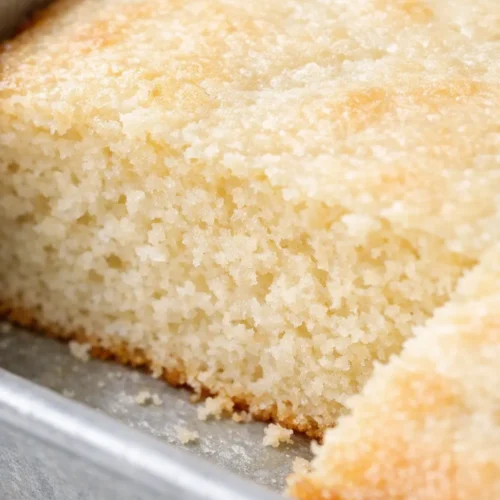
Buttermilk-Soft Fluffy Vanilla Sheet Cake
Equipment
- 9×13 Metal Baking Pan
- Stand mixer or hand mixer
- Mixing Bowls
- Whisk and Spatula
- Parchment Paper
- Wire cooling rack
Ingredients
For the Cake
- 2 1/2 cups all-purpose flour, spooned and leveled
- 1 3/4 cups granulated sugar
- 3/4 cup unsalted butter, softened
- 3 large eggs, room temperature
- 1 cup buttermilk, room temperature
- 1/4 cup sour cream, room temperature
- 1 tablespoon vanilla extract
- 1 1/2 teaspoons baking powder
- 1/2 teaspoon baking soda
- 1 teaspoon salt
For the Vanilla Buttercream
- 1 cup unsalted butter, softened
- 4 cups powdered sugar, sifted if lumpy
- 2 tablespoons heavy cream, plus an extra splash if needed
- 2 teaspoons vanilla extract
- 1/4 teaspoon salt
Instructions
- Preheat the oven to 350°F with the rack in the center. Grease a 9×13 metal pan with butter or cooking spray, then line the bottom with parchment paper. Grease the parchment too, so the cake releases without a fight.
- Whisk the flour, baking powder, baking soda, and salt together in a medium bowl until evenly combined. Set aside.
- Beat the softened butter and sugar on medium-high speed for a full 3 to 4 minutes, scraping the bowl down halfway. Stop when the mixture looks pale, glossy, and noticeably lighter – soft whipped butter texture. This is the most important step for fluff. Do not rush it.
- Add the eggs one at a time, beating each until fully combined before adding the next. Add the vanilla and mix it in. If the mixture looks slightly curdled, do not panic; it comes back together once the flour goes in.
- With the mixer on low, add one-third of the flour mixture, then half of the buttermilk and sour cream (stir the sour cream into the buttermilk first), then another third of flour, the rest of the buttermilk, then the final third of flour. Mix just until the last streaks of flour disappear – about 20 to 30 seconds. Overmixing develops gluten and makes the cake tough.
- Scrape the batter into the prepared pan and smooth the top with a spatula. Tap the pan gently on the counter to pop any big air bubbles.
- Bake for 30 to 35 minutes, until the edges are deep honey-gold and pulling slightly away from the pan. Around 20 minutes the kitchen will smell like warm vanilla and toasted butter – that smell is information. At 30 minutes, press the center gently with two fingers. It should spring back completely; if it leaves a slow impression, give it five more minutes.
- A toothpick inserted into the center should come out clean or with a couple of moist crumbs, not wet batter. Let the cake cool in the pan on a wire rack for 15 minutes, then run a knife around the edges and turn it out onto the rack. Frost only after it is completely cool; a warm cake will melt the frosting.
- For the buttercream, beat the softened butter until creamy, then add the powdered sugar one cup at a time, alternating with the heavy cream and vanilla. Beat on medium-high for 2 to 3 minutes until light and fluffy. Add an extra splash of cream if it is too thick. Frost the cooled cake and cut into squares.
Notes
Related posts:
 The Slow Cooker Cowboy Casserole That Saves Tired Weeknights (No Soggy Tots Allowed)
 Lemon Garlic Butter Baked Salmon in Foil That’s Ready in 25 Minutes — No Fuss, No Mess
 Moist Chocolate Zucchini Bread That Doesn’t Turn Out Rubbery — Finally
 Creamy Homemade Strawberry Dole Whip (That Tastes Just Like the Real Thing)
 Blueberry Peach Bread That Doesn’t Sink or Turn Mushy — Finally
 Quinoa Chicken Sausage Bowls That Are Ready in 30 Minutes (And Actually Keep Well)